
48 Hours in Prestonsburg: Blue Ridge Outdoors Magazine
This article originally appeared on Blue Ridge Outdoors Magazine online, March 2018.
48 Hours in Prestonsburg, Kentucky
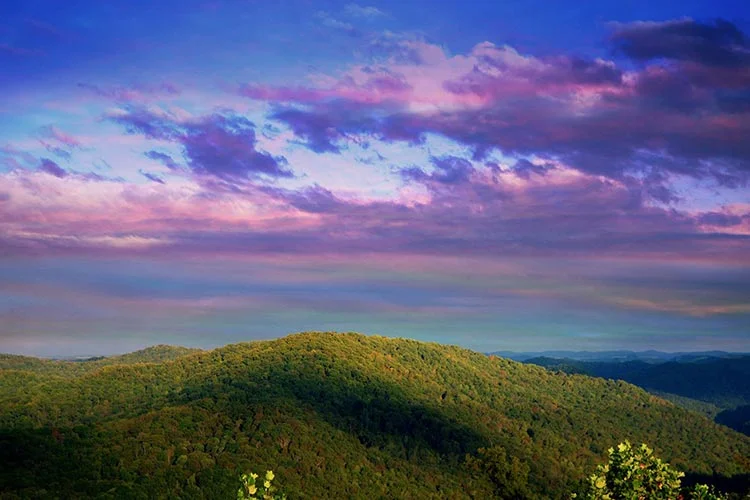
Photo courtesy of Kaye Willis.
It’s no secret Kentucky is a hotspot for outdoor adventure. So it’s a good feeling to know about the state’s under-the-radar locations — the ones where foot traffic isn’t quite as heavy — before the rest of the world finds out.
Allow us to introduce you to Prestonsburg. Whether you’re chasing more technical terrain or looking for a brisk hike with a breathtaking view, this historic town will be your new, favorite hidden gem.
Preston’s Station was the first town established in eastern Kentucky in 1797. Brave, adventurous men and women settled this new frontier, walking the footpaths of these mountains and paddling downstream in the waters of the Levisa Fork River. Present-day Prestonsburg — located 65 miles southeast of the Red River Gorge, 120 miles from Lexington, 136 miles from Bristol, Tennessee, and about 75 miles from Huntington, West Virginia — is a relatively new hub for hikers, bikers and paddlers, with plenty to explore.

Photo credit: Michael Wallace for Print & Pixel.
Day One Options: Breakfast at Billy Ray’s
The spot in Prestonsburg for a home cooking carb-load. Open for breakfast, lunch and dinner, Billy Ray’s is known in these parts for salmon patties and meat-and-three lunch specials. Launch access point for the Levisa Fork of the Big Sandy River is located directly behind the restaurant. There is plenty of parking available and it’s free.
Sugarcamp Mountain Trails: Choose Your Own Adventure
About 20 total miles of trails begin on reclaimed mountaintop and descend into Jenny Wiley State Resort Park. The Sugarcamp Trails system officially opened to the public in July 2017. The project was more than three years in the making, made possible by a collaboration between a team of dedicated volunteers, the city of Prestonsburg and Jenny Wiley State Resort Park. It is a multi-use trail that includes a network of trails for bikers, hikers and horseback riders. It is recommended that riders are at least up to an intermediate skill level to tackle most trails on the mountain, though there are several hiking and biking routes which are accessible to all ages and skill levels. The Sugarcamp Trails website provides a map of the trail system with links to detailed descriptions, technical features and current trail conditions. Be sure to do some research before you head out so that you’re prepared. Read more about all of the adventures you can have on Sugarcamp Mountain.

Photo credit: Michael Wallace for Print & Pixel.
Dinner at Lizzie B’s Cafe Bakery
Lizzie B’s is home of 23 Brewing Company and some of the best spinach and artichoke dip. After a day of literal running around, there are healthy options like mahi mahi and salmon, or you can indulge in a hamburger on a homemade bun. Homemade desserts are made daily and live local music is usually playing in the evenings. Check the restaurant’s Facebook page for the latest updates.
Live music at May Lodge
Have a drink on the patio at the state park’s May Lodge, where local bands play from 6-9 p.m. each week. Dinner is also available. If you’re staying at the lodge, getting back to your room is an easy walk.

Photo credit: Michael Wallace for Print & Pixel.
Day Two Options: Levisa Fork Paddlefest
The fourth Saturday of each month, from May to September, kayakers and canoers launch into the Levisa Fork of the Big Sandy River and make the 16.4-mile trek down river. The voyage begins at 8 a.m. in downtown Prestonsburg, behind Billy Ray’s Restaurant. Participants can bring their own kayak or canoe, or rentals are available. The scenic floating trip lasts four to six hours, depending on how fast the river is moving. Lunch is served once you reach the end of your expedition in Paintsville.
Registration is $10, which includes lunch and shuttle service from Paintsville back to your vehicle in Prestonsburg. To register, call (606) 886-1341.
Dairy Cheer
If you want a dose of east Kentucky nostalgia, stop here. Though Ashland was the original home of the Dairy Cheer, this location in Prestonsburg is one of three remaining locations. In the early 1960s, someone in the Dairy Cheer kitchen discovered how much better a burger could be if you smashed the meat down on the grill with a No. 10 bean can and the “smashburger” was born. Retro charm chasers love to stop for milkshakes and French fries, or their soup beans and cornbread — a mountain staple.

Photo credit: Michael Wallace for Print & Pixel.
Guided Elk Tours, September-March
Jenny Wiley State Resort Park hosts guided elk tours from September through March. You can choose between a red-eye, early morning tour or go out later in the day. The elk herd was reintroduced into its native Kentucky habitat in 1997 by the Kentucky Department of Fish & Wildlife. These powerful herbivores make their home in the scenic mountains that surround Prestonsburg. Reservation price includes transportation to the viewing site and continental breakfast for morning tours. To make reservations call (606) 889-1790. Special group tours are also available.
Dinner at Pig in a Poke
Who says Kentucky don’t know ‘cue? Pig in a Poke is a Prestonsburg original, serving all the usual suspects like pulled pork, beef brisket and ribs. We all know barbecue is only as good as its sides — fresh hand-shredded cabbage for coleslaw, special recipe baked beans, and homemade batter for fried pickles.

Mountain Arts Center
Catch a show at the MAC. See a national musical touring act or discover your new favorite local artist. The MAC also has family friendly mountain comedy, weekly Front Porch Pickin’ open mic and is also home to the legendary Billie Jean Osborne’s Kentucky Opry. Read about Prestonsburg’s role in the Kentucky music revolution.
Where to Stay
Stay in a quiet room at May Lodge or, if you prefer to sleep under the stars, campsites are also available. Campsites include electric and water, a dump station and also includes access to shower facilities and restrooms. There is a small grocery store on site. The campground opens for the season on April 1. For reservations call (606) 889-1790.
German Bridge Campground
German Bridge is located near the headwaters of Dewey Lake and is a prime location for horseback riders. Facilities include a 20-stall barn. Electric and water hook ups are available as well as sites for primitive camping. Shower facilities and restrooms are also available. Call (606) 874-1150 to reserve.
Hotels:
Local Outfitters & Watercraft Rentals
Pro-Fitness
1243 S. Lake Drive
Prestonsburg, KY 41653
(606) 886-8604
Jenny Wiley State Resort & Park
75 Theatre Court
Prestonsburg, KY 41653
(606) 889-1790
Legends Outfitters
606 Beach Road
Louisa, KY 41230

Vickie Bee's Pimento Cheese
‘The cheese light is on!’: Kentucky Proud Vicki Bee’s Pimento Cheese
This post first appeared NOVEMBER 2017, on the Prestonsburg Tourism website.

A tall stack of tart dill pickles sits on the plate next to a beautifully grilled golden-brown pimento cheese sandwich. A bag of potato chips lays within arm’s reach. “We’ll make us a sandwich,” Vicki Burke Brown says and smiles as she shares stories of her childhood in Prestonsburg. She practically grew up in the aisles of her family’s business, the Fountain Korner Drug Store.
Three brothers — Joe, Hern and Johnny Burke — owned and operated the Korner Drug that served the Prestonsburg community for 40 years. The business was a family affair. Along with their wives and children, which included Vicki, the brothers worked at the store and had a role to play in keeping things at the store running smoothly, from sweeping the floors and stocking the shelves, to preparing the food served at the snack bar.
Every morning, a pot of coffee started brewing at 5 a.m. Throughout the day, businessmen, ladies who lunch, and school kids filtered in and out of the store. Prestonsburg folks gathered here daily, whether they got up early for breakfast, stopped in at lunchtime for a hamburger, French fries, and a vanilla Coke, or warmed up with hot chocolate after a day of sledding down Post Office hill. Everyone felt like extended family at the Korner Drug and the food was always a talking point.
Vicki Burke Brown’s mother created the recipe for Vicki Bee’s Pimento Cheese when it was sold at the Korner Drug.
The menu included a little bit of everything but the real standouts were made by her mother and aunts. “My Mom made the pimento cheese up there that they had at the snack bar, my aunt made the potato salad and pies. They said my other aunt made the ham salad but I think it was my uncle, though.”
Vicki began making and selling her mother’s pimento cheese after she found herself in between jobs. Vicki’s husband of 40 years, Wayne Brown, is in the business of food — Brown’s Foodservice, Inc. located in Louisa — and said, “Why don’t you try to make your mom’s pimento cheese?”
“So I found our old grinder and he brought me what they used to buy — as close as we knew it,” Vicki said. “Her recipe doesn’t have any quantities in it.”
Every week to two weeks, she makes her way to the Floyd County Extension Office, where 15 to 30 pounds of American cheese, countless jars of mayonnaise and pimentos wait to be mixed, perfected and packaged. The rest of the recipe is a well-guarded family secret, but nobody’s holding that against her. It’s simple, homemade and delicious. You don’t ask questions, you just reap all the benefits. It is the very same pimento cheese recipe that everyone who ever visited the Korner Drug remembers and loves.
Though three simple ingredients are needed to make pimento cheese, here’s where it can get complicated: everyone has their own opinion on how to embellish their recipe. Some folks experiment with different cheeses (even cream cheese), others swear by a certain brand of mayonnaise, and some take the liberty of adding special ingredients for extra flavor or kick, be it pecans, bacon, pickle juice (seriously), shredded onion, cayenne or jalapeños. It’s all in the hands — and taste buds — of the maker.
Vicki sticks to her family’s straightforward, old fashioned recipe, though every now and again, she’ll whip up batches of spicy pimento cheese. It can be dressed up or dressed down, depending on the occasion.
“You can make this fancy. You can take some of this cheese and put it on a fancy cracker, and put you some chutney on it and maybe some bacon bits or something like that and you’ve got a fancy hors d’oeuvre.” She also suggests spreading some on the top of a hamburger instead of a regular slice of cheese, pushing your omelet over the edge by melting some in the middle, or dropping a dollop in a big bowl of chili.
Even with all those ideas to consider, it’s hard to beat the traditional recipe for the Korner Drug-style grilled pimento cheese sandwich. Get your skillet sizzling, make sure your bread slices are buttered liberally on one side, and slather the pimento cheese on the bread. Place your bread butter-side-down in the pan, let it cook for a couple of minutes, close the sandwich, and “grill it brown, smash it down,” as Vicki says.
If your stomach is rumbling now, it’s for good reason.
In the beginning, Vicki and Wayne sold it weekly at the local farmer’s market. Now, Vicki finds it easier to sell it out of her home, where friends, family and strangers alike in Floyd County and beyond can place their order and stop by to pick it up. Thankfully, it’s never been so easy to get this comfort food staple on a regular basis.
While you’re visiting Prestonsburg, stop in for a meal at Brickhouse Kentucky restaurant, where you can try the PB & J sandwich — pimento cheese, bacon & jalapeno, of course — or the Charleston grilled Chicken sandwich topped with her pimento cheese.
Or maybe it’s time to savor the flavor and take some pimento cheese with you for a travel snack. Reserve enough to share and plenty to stash away for yourself. Vicki even makes homemade pickles on occasion.
How will you know when her next batch is ready? Vicki will put a post on Facebook that says, “The cheese light is on!”
Vicki Bee’s Pimento Cheese is an official Kentucky Proud food product. Visit Vicki Bee’s website to carry her pimento cheese in your store or restaurant, or find her on Facebook to get the latest on where and when you can purchase a container — or two.
Vickie Bee’s Pimento Cheese
12-ounce container: $6
www.facebook.com/vickibeespimentocheese
(606) 886-2307
vickibees2014@gmail.com

Mississippi Culinary Trail

Excerpt from the Mississippi Culinary Trail content
The Mississippi Culinary Trail
Mississippi is considered a foodie’s paradise and we can tell you a million reasons why! The Mississippi Culinary Trail showcases the state’s true flavor. Each of the five regions has its own delicacies like hot tamales, slug burgers and comeback sauce. Whether you are a first-time visitor or a road trip junkie who has been through a million times – pull up a chair, put a napkin in your lap and get ready for an unrivaled eating experience.
The Culinary Trail itineraries work their way around the state highlighting each region’s restaurants, cooks and food traditions that highlight Mississippi’s distinctive cuisine.
THE DELTA – Juke Joints, Hot Tamales & Mississippi Catfish
You don’t forget your first descent into the Delta. Whether you take the back roads from Hernando on Highway 304 or Highway 61 from Memphis: one minute your car winds through the tree-dotted landscapes of the hills and the next it levels out into flat farmland as far as the eye can see. As diverse as the crops that grow here and the music that made it famous, the Mississippi Delta is a melting pot of cultures – from African to Italian to Asian – the people here make this part of the state different from any other. And in no place is the Delta’s diversity more apparent than in its restaurants. Each dish is a prime example of how delicious histories fuse together for the ultimate culinary experience.
One such example is the hot tamale, called so because of its orangey-red color and spicy taste. Its origins began around the turn of the 20th century when migrant Hispanic laborers worked in the cotton fields during autumn cotton picking season alongside African-American hired hands. A cornmeal mixture called "masa" encased the meat inside, keeping it insulated. This ensured a warm lunch for hungry workers at lunchtime. There is also a Tamale Trail through Mississippi, read more about it here.
THE CAPITAL RIVER – Soul Food, Super burgers and Comeback Sauce
Mississippi’s Capital River Region is a delicious blend of old and new. From a mighty river and antebellum mansions to glittering downtowns with exciting nightlife, the restaurants here boast menus featuring soul food, authentic ethnic dishes and modern culinary delights. Personalities like Cool Al and places called Fat Mama’s are why the eclectic heritage of Mississippi is one of its most celebrated treats. It’s the tastiest history lesson you’ve ever had.
THE PINES – Choctaws, Catfish Alley and Family Cafés
This region acquired its name because of the prevalence of the Longleaf Pine Tree. The densely populated wooded bluffs and National Forests make for scenic driving. Outdoorsmen love this area because of the easy access to wilderness camping and hunting on what is considered some of the most beautiful terrain in the state. At one time cotton was king in this region, too, but it was predominately the railroad lines exporting lumber from sawmills that helped industrialize the area.
The small towns of the Pines make for big flavors. With barbecue and bakeries, cheese and cheesecakes, the tastes of this region take their influences from their earthy Native American heritage as well as the vital railroad lines that brought lumber, cotton and other goods into the area. Family-owned restaurants are a staple of this region and when you can stroll down a street known as “Catfish Alley,” you know you’ll find good cookin’!
THE HILLS – Grills, Groceries & Drive-Ins
The characters in Southern fiction gather around tables laden with their favorite dishes – platters of fried green tomatoes, pots of collard greens with a skillet of cornbread, slabs of barbecue pork ribs and slugburgers. Literary references are direct inspiration from the first-hand eating experience of lovingly crafted home-cooked meals. Even today, a meal in the Mississippi Hills doesn't just feed the body it ministers to your soul.
THE COAST – Shrimp, Blowflies & Purple Parrots
Naturally, the Mississippi Gulf Coast has a different feel to it than the rest of the state, but it remains undeniably “Mississippi.” The Coast offers the tourist a little of everything: golf, gambling, art, architecture and, of course, great food. Years ago, immigrants from all over the world—Croatian, Vietnamese and French—came to the region in search of employment in the seafood industry. This delicious blend of cultures has seasoned the cuisine here with a flavor you won’t find anywhere else.

Losing Our Religion

This article was first published in DeSoto Magazine, May 2010. All rights reserved.
Religion has long been at the center southern culture, and that's undoubtedly true of Mississippi. As settlers began forming communities across the state, churches were some of the first buildings constructed. Congregations began meeting in homes, but as the communities grew, the importance of having a physical church home —that served as a central meeting place and a safe place for religious worship — became increasingly important.
Expansion meant that congregations often outgrew their churches. Church buildings were rebuilt, oftentimes on the very same sites. Sometimes they were renovated to suit modern sensibilities. Others, like Our Lady of the Gulf Catholic Church (Bay St. Louis), were demolished by "acts of God" — fires, tornadoes, or hurricanes. These natural disasters left congregations without spiritual homes, forcing church members to start anew. Others were simply abandoned, unwanted. Transitional ebb and flow in local communities also brought necessary and sometimes inevitable changes to buildings, some of which are local landmarks.
"It has been a matter of interest and a matter of concern to me," says Richard Cawthon, author of Lost Churches of Mississippi (University Press of Mississippi, $35). "Landmark buildings, once they have been destroyed, kind of disappear from people's memories. They are not the buildings you see when you drive down the street, so unless you happen to remember them from childhood or see pictures of them in a history book or at the local museum...you may not be aware that they even existed." Lost Churches of Mississippi is an extensive, 200-page collection of photographs, postcards and architectural blueprints that look into the heart of religious communities across the state, showcasing the elegant, the simple, and the ornate structures where religious groups made their early homes.
Lost Churches acquaints the reader with not only the Protestant and Catholic churches that dot the state's landscape but also the lesser-known Jewish synagogues and temples (which many Mississippians might not realize are a part of the state's religious heritage). Many of these churches were built by mail-order plans or by the same architects, and as the book illustrates, other church buildings of the same design can be found in other areas statewide and across the country.
Cawthon credits his piquing interest in churches to the visits to his grandmother's house during his childhood in Louisiana. During those visits, he explored the church next door to her home for hours. This interest ultimately led to him becoming the chief architectural historian at the Mississippi Department of Archives and History in 1985. For almost 20 years, he gathered inspiration for his book during his daily photographic research and travels across the state.
Lost Churches' photographs uphold the memories of budding congregations and give some insight into the early life of a local community. Cawthon's hope is to draw attention to architecture that people take for granted, giving them "an awareness that there is a rich legacy in the architecture of Mississippi of buildings that no longer survive...there are many fascinating and interesting buildings that have been lost in the state."
There are many examples in our own memories of changed or abandoned churches that have seemingly lost their purpose now, where congregations have moved on to other locations. Cawthon hopes the book will motivate readers to "look beyond what their eyes see on a day-to-day basis and remember that there have been fascinating buildings from the past as well as in the present."
Many churches as taken for granted and many more structures could find their way into a future Lost Churches volume.
One can think of many such places like the ghost town of Rodney, where the church ruins remain of the Rodney Presbyterian Church — where a cannonball from a Civil War skirmish is still stuck in the wall over its front door or the abandoned town of Rocky Springs, whose Methodist in the midst of the woods that is the only remaining legacy of a once vibrant and prosperous town.
Other churches have been restored and drastically renovated, so they have missed their chance for inclusion in the book for now. St. Cecelia's Catholic Church in Friars Point was on the path to demolition but it was bought and restored.
Another such example not listed in Cawthon's book is the old Hernando United Methodist Church, which sat across the street from Hernando Baptist on Center Street. All passersby have seen for the past 25 years at that location are townhomes occupied by local residents. The home next door, that was the former Sunday School and nursery was turned into a dentist's office. The newer church, located on Mount Pleasant Road, is ever-growing.
"So many of those buildings are [architecturally] appealing and interesting and have such interesting stories," Cawthon says. "They are worthy of attention and worthy of appreciation."
The book's postcards and photographs capture more than just churches. The photographs offer a time capsule of earlier Mississippi life, with 1930s Model T's lining the street, town folk standing in Victorian-era clothing, and many old building facades.
Though Lost Churches provides a record of the life of these historic buildings, it doesn't tell the full story or the legends surrounding them. In particular, the First Baptist Church in Yazoo City is a structure, which succumbed to flames in 1904, is associated with the well-known tale. The fire that engulfed the entire city was rumored to have been caused by the infamous Witch of Yazoo, whose tale was later made famous by author Willie Morris in his book, My Dog Skip.
Indeed, one book alone cannot begin to tell the full story of these lost landmarks because many of these details exist in people's memories or as a box of photographs in the attic. For all the work put into Lost Churches, the recapturing of this heritage must happen with the help of its readers.
Church buildings hold very special and specific memories for a town and their destruction seems to undermine a sense of cohesiveness and unification among community members. Yet, with help and documentation, these changes can at least be preserved. Cawthon hopes that his book will motivate readers "to find out more about the history of their communities." He encourages them to share their photos and historical knowledge with the Mississippi Department of Archives and History because they are "always trying to gather information from local communities to help preserve local history."
Lost Churches in Mississippi is in stores May 1, 2010 and can also be found on Amazon.com.