
48 Hours in Prestonsburg: Blue Ridge Outdoors Magazine
This article originally appeared on Blue Ridge Outdoors Magazine online, March 2018.
48 Hours in Prestonsburg, Kentucky
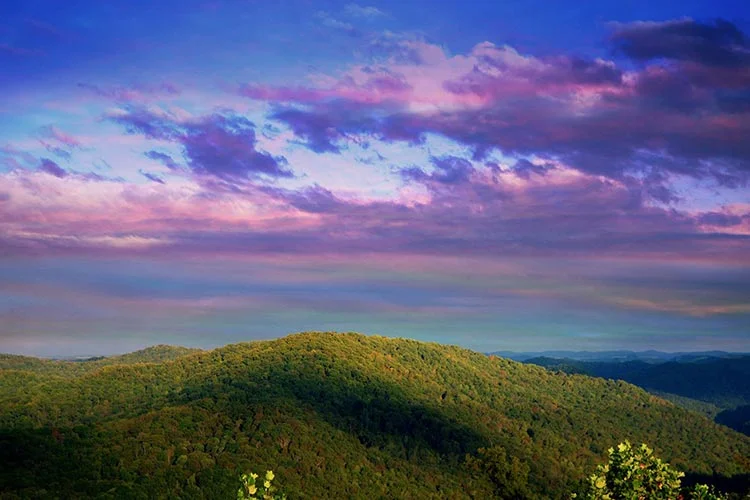
Photo courtesy of Kaye Willis.
It’s no secret Kentucky is a hotspot for outdoor adventure. So it’s a good feeling to know about the state’s under-the-radar locations — the ones where foot traffic isn’t quite as heavy — before the rest of the world finds out.
Allow us to introduce you to Prestonsburg. Whether you’re chasing more technical terrain or looking for a brisk hike with a breathtaking view, this historic town will be your new, favorite hidden gem.
Preston’s Station was the first town established in eastern Kentucky in 1797. Brave, adventurous men and women settled this new frontier, walking the footpaths of these mountains and paddling downstream in the waters of the Levisa Fork River. Present-day Prestonsburg — located 65 miles southeast of the Red River Gorge, 120 miles from Lexington, 136 miles from Bristol, Tennessee, and about 75 miles from Huntington, West Virginia — is a relatively new hub for hikers, bikers and paddlers, with plenty to explore.

Photo credit: Michael Wallace for Print & Pixel.
Day One Options: Breakfast at Billy Ray’s
The spot in Prestonsburg for a home cooking carb-load. Open for breakfast, lunch and dinner, Billy Ray’s is known in these parts for salmon patties and meat-and-three lunch specials. Launch access point for the Levisa Fork of the Big Sandy River is located directly behind the restaurant. There is plenty of parking available and it’s free.
Sugarcamp Mountain Trails: Choose Your Own Adventure
About 20 total miles of trails begin on reclaimed mountaintop and descend into Jenny Wiley State Resort Park. The Sugarcamp Trails system officially opened to the public in July 2017. The project was more than three years in the making, made possible by a collaboration between a team of dedicated volunteers, the city of Prestonsburg and Jenny Wiley State Resort Park. It is a multi-use trail that includes a network of trails for bikers, hikers and horseback riders. It is recommended that riders are at least up to an intermediate skill level to tackle most trails on the mountain, though there are several hiking and biking routes which are accessible to all ages and skill levels. The Sugarcamp Trails website provides a map of the trail system with links to detailed descriptions, technical features and current trail conditions. Be sure to do some research before you head out so that you’re prepared. Read more about all of the adventures you can have on Sugarcamp Mountain.

Photo credit: Michael Wallace for Print & Pixel.
Dinner at Lizzie B’s Cafe Bakery
Lizzie B’s is home of 23 Brewing Company and some of the best spinach and artichoke dip. After a day of literal running around, there are healthy options like mahi mahi and salmon, or you can indulge in a hamburger on a homemade bun. Homemade desserts are made daily and live local music is usually playing in the evenings. Check the restaurant’s Facebook page for the latest updates.
Live music at May Lodge
Have a drink on the patio at the state park’s May Lodge, where local bands play from 6-9 p.m. each week. Dinner is also available. If you’re staying at the lodge, getting back to your room is an easy walk.

Photo credit: Michael Wallace for Print & Pixel.
Day Two Options: Levisa Fork Paddlefest
The fourth Saturday of each month, from May to September, kayakers and canoers launch into the Levisa Fork of the Big Sandy River and make the 16.4-mile trek down river. The voyage begins at 8 a.m. in downtown Prestonsburg, behind Billy Ray’s Restaurant. Participants can bring their own kayak or canoe, or rentals are available. The scenic floating trip lasts four to six hours, depending on how fast the river is moving. Lunch is served once you reach the end of your expedition in Paintsville.
Registration is $10, which includes lunch and shuttle service from Paintsville back to your vehicle in Prestonsburg. To register, call (606) 886-1341.
Dairy Cheer
If you want a dose of east Kentucky nostalgia, stop here. Though Ashland was the original home of the Dairy Cheer, this location in Prestonsburg is one of three remaining locations. In the early 1960s, someone in the Dairy Cheer kitchen discovered how much better a burger could be if you smashed the meat down on the grill with a No. 10 bean can and the “smashburger” was born. Retro charm chasers love to stop for milkshakes and French fries, or their soup beans and cornbread — a mountain staple.

Photo credit: Michael Wallace for Print & Pixel.
Guided Elk Tours, September-March
Jenny Wiley State Resort Park hosts guided elk tours from September through March. You can choose between a red-eye, early morning tour or go out later in the day. The elk herd was reintroduced into its native Kentucky habitat in 1997 by the Kentucky Department of Fish & Wildlife. These powerful herbivores make their home in the scenic mountains that surround Prestonsburg. Reservation price includes transportation to the viewing site and continental breakfast for morning tours. To make reservations call (606) 889-1790. Special group tours are also available.
Dinner at Pig in a Poke
Who says Kentucky don’t know ‘cue? Pig in a Poke is a Prestonsburg original, serving all the usual suspects like pulled pork, beef brisket and ribs. We all know barbecue is only as good as its sides — fresh hand-shredded cabbage for coleslaw, special recipe baked beans, and homemade batter for fried pickles.

Mountain Arts Center
Catch a show at the MAC. See a national musical touring act or discover your new favorite local artist. The MAC also has family friendly mountain comedy, weekly Front Porch Pickin’ open mic and is also home to the legendary Billie Jean Osborne’s Kentucky Opry. Read about Prestonsburg’s role in the Kentucky music revolution.
Where to Stay
Stay in a quiet room at May Lodge or, if you prefer to sleep under the stars, campsites are also available. Campsites include electric and water, a dump station and also includes access to shower facilities and restrooms. There is a small grocery store on site. The campground opens for the season on April 1. For reservations call (606) 889-1790.
German Bridge Campground
German Bridge is located near the headwaters of Dewey Lake and is a prime location for horseback riders. Facilities include a 20-stall barn. Electric and water hook ups are available as well as sites for primitive camping. Shower facilities and restrooms are also available. Call (606) 874-1150 to reserve.
Hotels:
Local Outfitters & Watercraft Rentals
Pro-Fitness
1243 S. Lake Drive
Prestonsburg, KY 41653
(606) 886-8604
Jenny Wiley State Resort & Park
75 Theatre Court
Prestonsburg, KY 41653
(606) 889-1790
Legends Outfitters
606 Beach Road
Louisa, KY 41230

Mississippi Hospitality in the Tar Heel State

Photo by Anna Kline.
This article first appeared in DeSoto Magazine, May 2012. All rights reserved.
"Y'all ready to do some fishin'?" says Greenwood, Mississippi native, and chef Neal Mitchell. It is a chilly, overcast day with the sun peeking out behind the clouds. Mitchell and his business partner, Brandon Hughes, drive the winding road along the East Fork River, which flows through the mountains of Brevard, North Carolina. With their fishing gear in tow, they discuss the best spot to pull over and cast their lines. These longtime friends are daily in search of the best location to fly fish for trout.
A shared passion for food and the outdoors brought these friends together -- along with Brandon's wife and home cook extraordinaire, Emily. It was all the inspiration needed for their business collaboration, East Fork Guides. The East Fork River is a tributary of the larger French Broad River which runs through the area and runs right through Brandon and Emily's backyard.
How did three Mississippians end up in the Tar Heel State?
The trio's history began in the Mississippi Delta. Neal and Emily went high school together in Greenwood. Though Brandon lived in Kentucky at the time, he frequently visited his family's farm in nearby Sunflower County.
Lives converged at the legendary Giardina's Restaurant in The Alluvian Hotel, where they waited tables and learned valuable kitchen secrets. The three friends quickly bonded over their shared passions. Brandon eventually went on to enroll in the Veterinary Medicine Program at Mississippi State, and he and Emily married. Meanwhile, Neal perfected his culinary craft as a Viking-trained chef.
Once Brandon completed veterinary school, the pull to live in the mountains was strong. They soon began to look at houses in the mountains of western North Carolina. "We'd been here before and really loved the area," Brandon said.
Last August, Brandon and Emily pulled up stakes after he completed his residency in Birmingham, moving 30 miles southwest of Asheville in Brevard. Neal was not far behind and arrived about six months later.
Brevard is in Transylvania County, the "Land of Waterfalls." Transylvania County has the unique distinction of being a designated a rain forest. It is a lush, green wonderland with over 200 hundred natural waterfalls and trails to explore. Where there's water, there are fish.
The friends quickly settled into a daily routine of waking up, fly fishing for a few hours, and then headed off to work. Their vision for East Fork Guides is one that includes the food culture and hospitality of their home state with the freedom of western North Carolina's wilderness. They cater to small groups because the experience is more personable and can easily be tailored to suit your cravings, so to speak.
Their guided adventures can be as hands-on or as hands-off as you want. Depending on your skill level and what type of experience you'd like to have, Brandon admits, "I'd almost prefer someone who doesn't have that much experience because every catch is amazing and exciting!"
Brandon, Emily, and Neal study the rivers in the area. Each location has a distinct ecosystem, whether it is one mile or five miles down the road. The river systems contain different varieties of insects, water temperatures, and currents that affect how, when and if the trout bite. Trout are intelligent, stealthy fish that hide beneath the rocks. They only bite if a familiar bug appears on the water, which is why fly fishers create their own lures, tailor-made to the fishing area. The fish will not bite for anything other than an expertly cast fly.
The nearby Davidson River Hatchery manages the rivers in the area and the East Fork is a delayed harvest area. That means from April to September there is a daily limit on how many trout one can catch each day. During the off-season months, from October until the following April, the hatchery re-stocks the rivers.
The guides can coordinate every step of the process from finding lodging to helping acquire local permits and licenses to cooking your catch in their kitchen. That is unless you'd rather have your catch sizzle over an open flame under the stars.
After they agree on a go-to fishing spot, Brandon pulls the car over. He and Neal pull their waders up over their clothes and secure their fishing vests. They take out the tackle boxes, decide on what flies they'll use, and set off with fishing nets and fly rods in hand. They wade into the clear, rushing water and begin casting lines. "On the East Fork, there's not as much pressure. The fish aren't as big, but they are easier to catch," Brandon explains. It doesn't take long for them to get their first bite.
A few choice fishing spots are worth the hike, but plenty of locations are just off the main road. "The stocked, fishable part of the East Fork is 2.8 miles," Brandon points out. "On any given day, there can be up to 10 to 15 people at a time in sections of the river."
After wading through the river for a couple of hours, Emily delivered a lunch of chicken salad sandwiches. Once we'd eaten our fill, Neal and Brandon drove over to another location nearby and began to fish in front of a raging waterfall. "The hard part once we get to fishing is getting us away from it," Neal jokes.
Once we were done fishing for the day, Brandon drove us back to his house where Emily got dinner started. She and Neal worked like a well-oiled machine in the kitchen, talking about how they stayed up late the night before preparing recipes for supper. Dinner included smoked trout dip, fresh vegetables, veal sliders, and catfish cakes drizzled with hot sauce cream. As they cooked, stories spilled out about food, life, Giardina's and fishing.
Neal, Brandon, and Emily plan to expand their services to wild game hunting expeditions. Right now, they are happily dedicated to sharing their passion for fly fishing, food, and entertaining friends. In true Mississippi style, no one is a stranger at their table.

Delta Bistro: Homemade...Straight From the Heart

This story about The Delta Bistro was first published in DeSoto Magazine, March 2010. All rights reserved.
Like so many highly regarded Mississippi cooks, Taylor Bowen Ricketts, chef and proprietor of Delta Bistro in Greenwood, is herself "homemade" in the very best sense of the word. Ricketts declares proudly, "A lot of the food I cook is a. Southern, and b. inspired by my family."
Ricketts was born in Oxford and grew up in Jackson, learning culinary traditions at home in her family's kitchen. It wasn't until she went back Oxford for college — for painting, religion, and philosophy — that she discovered a passion for the restaurant business. She began waiting tables, which, Ricketts says, "kind of got me interested and I was good at it." Her next restaurant experience, at a vegetarian restaurant, changed her point of view drastically. with a menu that changed frequently, Ricketts says, "I was able to create with food for the first time." The opportunity to be involved with menu revisions opened new doors for what she calls "an obsession."
She and her husband, Darby, then went on to help establish several landmark restaurants in Oxford, such as Proud Larry's, Yocona River Inn, and City Grocery, where she was working with her husband and chef John Currence. Ricketts explains, "I got to see that from the ground up. It was a good experience in learning how to open a restaurant."
Rickett's culinary experience came to the attention of Viking founder Fred Carl, Jr. He invited her to come to Greenwood to run the Delta Fresh Market, a gourmet food store and lunch spot. After four years, there wasn't a consistent customer base to sustain both the Market and restaurant, so Ricketts and Viking decided to make a few changes. Delta Bistro opened in 2009 in a downtown location around the corner from the Alluvian Hotel.
The restaurant is in a renovated turn-of-the-century cotton grading facility, complete with massive skylights once used to inspect and grade cotton. The airiness, coupled with a brightly painted ceiling, provides a nice contrast to the dark masonry walls. Both Ricketts and her husband are artists, and their work is displayed throughout the space. The renovated restaurant uses some of the original's interior furniture. "Most of the tables and such came from the Delta Fresh Market," Ricketts points out. "We kind of wanted to have a new start when we moved, but we did bring some things with us to the new location...just to know we're still what we always have been...with a new hairdo."
The white partitions, with hanging glass standing int he middle of the restaurant, help maintain a longstanding Greenwood tradition à la Giardina's and Lusco's. Both landmark restaurants have Prohibition-era roots, whose private booths afforded diners the seclusion to indulge in their brown bag beverage of choice. Delta Bistro continues that tradition for a $2 corkage fee for wine, and the partitions give diners a little privacy in a town where everyone knows everyone else.
Perhaps the Bistro's most unusual inclusion is its herb garden, which is about 20 feet by 2 feet. The builders "thought [she] was crazy," when Ricketts asked them to put in a small plot for such a purpose. The garden, however, has been successful, yielding asparagus, a variety of herbs, and tomatoes to supply the kitchen. This supply, in part, allows Ricketts to create the Bistro's menu with completely fresh ingredients. "Everything is made from scratch," she says. "[We] don't limit ourselves with ingredients, we change the menu seasonally, and daily specials change. Four or five menu items are changed one to two times a day. There's lots of variety and options for your palate."
Delta Bistro's menu is a true art piece and one that Ricketts created with thoughtfulness and flair. It mixes Southern nouveau with the ease of home-cooked comfort food. Her family recipes hold court on the menu. They include her grandmother's pimento cheese, lemon pie, and Caesar salad dressing, a vinaigrette "that [her] grandmother always made." Her grandfather had a special Comeback sauce recipe, which she uses on the Comeback Reuben. Ricketts creates dishes from what she knows, saying, It means a lot to me to be able to carry that tradition with me when I come to work every day."
The Delta Bistro is located on 117 Main Street in Greenwood, Mississippi. Visit them online here.

Venice in the Age of Canaletto
This article originally appeared in DeSoto Magazine, February 2010. All rights reserved.
During any given year, many important exhibits come and go at the Memphis Brooks Museum of Art, yet the chance to showcase one of its permanent pieces is especially poignant when shown within the context of its creation.
Venice in the Age of Canaletto is a collaboration between the Brooks Museum of Art and the John and Mable Ringling Museum in Sarasota, Florida, each of which has a Canaletto in its permanent collection. Ringling's former assistant curator, Alexandra Libby, and Dr. Stanton Thomas, assistant curator at the Brooks Museum, collaborated and co-coordinated the exhibit during its three-year-long project assembly.
The Grand Canal from Campo di San Vio, an oil-on-canvas painting by Giovanni Antonio Canal (Canaletto's real name), is part of the Brooks Museum's permanent collection and is an impressive example of what the artist did best: scenes of Venice's famous waterway, the Grand Canal.
The Canal was Canaletto's favorite artistic subject and one that he could render with life, light, and a sense of realism often lacking in other works in other works of the era. Thomas says, "Canaletto's works — they kind of beguile you — as if they are photographs...and what we know of the decorative arts and the works of other painters...they are much more fantastical [than Canaletto's art]." Canaletto is best known for his portrayal of urban Italian life, depicting scenes of simple people going about their daily lives against the vast backdrop of ancient Roman buildings and landscapes. His "vedute," or view paintings, stand out because of their muted colors, contrasting greatly with other richly-colored, sumptuous creations of the eighteenth-century Venetian art. Thomas says, "One of the unique things about this exhibition is it is the first time, I guess outside of Venice, but really in a scholarly manner, that anyone's looked at Canaletto within the completely broad spectrum of the visual arts of Venice."
The most important component to the exhibit is what Thomas calls a "modern complement to the more traditional way of approaching the city." During the 1700s, Venice was the epicenter of lively culture and extravagant living, which consistently drew European tourists. "People would get on a gondola and they would go up and down the Grand Canal," says Thomas. "[It is] such a great way to see the sights, to see other people, and to experience the city as a tourist, maybe for the first time."
Upon viewing the exhibit for the first time, visitors will not only see a set of 1730s-era prints replicating the experience of traveling along the Grand Canal but most importantly, they are able to experience, first-hand, what it is really like to ride on the water up and down that great waterway. Filmmaker Ralph Leiberman helped create this experience by setting up two high-resolution video cameras on gondolas, shooting a continuous gondola ride, from one end of the Canal to the other. "It doesn't just capture the video image, but also the ambient sound. You have the sounds of the church bells ringing, the water sloshing up and down the gondola," Thomas explains. For those who have never been to Venice, the video footage, projected onto a huge single wall, acts as the introductory process to immediately immerse viewers into Venetian life.
Venice in the Age of Canaletto is a well-conceived, multi-faceted experience for museum-goers. It includes examples of what Thomas calls "pastel, confectionary-looking" gilded furniture, delicate porcelain objects, and mythological and religious paintings. It also features a pale blue and gold damask-covered room emulating the private interiors in which many of these painting were originally displayed, "recreating the luxury and why people went there [Venice]," Thomas explains.
A dazzling example of that decadent era comes in the form of a table decoration made of opaque white and colored glass entitled "Dessert Decoration in the Form of a Glass Garden," and it's just that. In the middle is a glass fountain, complete with glass flowerbeds and balustrades which, during that time, would have set up for the dessert course of a meal. "Cakes and sweetmeats would have been interspersed among that," Thomas points out. It gave guests the experience of walking through a garden and sharing "that sense of wonder, excitement and awe" when browsing the confections on the table.
Chief curator Marina Pacini is thrilled about the collaboration between the museums. "I love the fact that Stanton has, with his fabulous colleague, Alexandra Libby, put [Canaletto's work] in this bigger, wider context. It's such a rich group of objects that tell a wonderful story."
The experience would not be complete without an extensive, fully illustrated catalog that includes essays by art historians and photographs of works within the exhibit, which is available for purchase at the Museum store.
The comprehensive Venice in the Age of Canaletto opens Sunday, February 14, 2010, with a wide variety of events, including featured speakers, an Italian Opera series, Canaletto-themed Art for Lunch, and guided tours. For more information, visit Brooks Museum of Art online or call 901-544-6200.

The Canton Movie Museum
This article originally appeared in Portico Jackson Magazine November 2009. All rights reserved.
The Canton Movie Museum lovingly houses mementos from the days of filming My Dog Skip.
With pages of notes strewn across the desktop in front of an old typewriter, it is as if Willie Morris stepped away mere minutes ago after having typed the words, "I came across an old photograph of him not long ago...taken more than forty years before, even as a grown man, I would admit I still missed him." A faded black and white photograph of Old Skip is on display nearby.
At the corner of Union and Center, in downtown Canton, is a space affectionately referred to as the My Dog Skip Museum. The site, dedicated to Morris and the movie based on his beloved book, features props and sets used in the Canton movie shoot during the hot summer months of 1998. Just as Faulkner devotees explore Rowan Oak and Welty enthusiasts tour her Pinehurst Street home in Jackson, Morris fans can delve into a slice of his life within the walls of Canton's Movie Museum.
"There was something in the air of a small town in the Deep South then, something spooked-up and romantic, which did funny things to the imagination of its bright boys," Willie wrote in My Dog Skip. That rings true for present-day boys, girls and even adults who visit the museum. It is a time capsule, a child's world full of memories with plenty of wonder, excitement, and nostalgia literally from floor to ceiling.
"Everybody wants to touch and feel Hollywood," says Jo Ann Gordon, executive director of the Canton Film Office. Gordon is a former elementary school teacher who still nurtures her desire to educate children and the community. Gordon and her staff, including museum curator Bille Jean McMullen, do so for guests from around the world by giving guided tours through the movie museum and around the neighborhood sites where filming took place. But even more than experiencing a slice of Hollywood, visitors get to absorb romanticized Mississippi and become closer to the characters about which Willie Morris wrote.
The museum's towering green door creaks open to a world frozen in time. Each corner holds its own vignette recalling scenes from Morris' 1940s childhood superimposed on the big screen.
On one side of the museum are poignant scenes with plush stuffed Jack Russell terriers placed at important points to showcase Skip's tear-jerking visit to the veterinarian, the birthday scene with the dog carrier on the table, and even Skip's stuffed, on-screen stand-in.
Billie Jean divulges details of befriending Willie, tales of the production process and the realities of life during World War II, which make for an insightful and heartfelt tour. She points out which props were donations from local households and which are replicas, recalling, "What we did to help them — they made up lists that we put up in all the churches and around: If you have any of these items in your attic, in your storage rooms — would you donate them or either let us borrow them?"
The most exciting piece in the museum is the looming crypt of the Witch of Yazoo which Morris describes as "the resting place of the demon who had burned the town down in 1904, which was marked now with a heavy chain, with one link missing where she had escaped." In actuality, there is no real crypt for the Witch of Yazoo, only a cemetery marker, yet the production team matched his written description verbatim with incredible attention to detail, standing far above the rest, not only in stature but also in infamy.
On the other side of the room hang blown-up newspaper articles about the author which serve as a paper trail to the real-time replica of his office, complete with more photographs of Skip, and various high school memories strewn around. Nearby, a living room with leather chairs evokes scenes of when Morris entertained guests until all hours of the night or as Billie Jean more aptly says, "where he would be holdin' court."
The museum continues to breathe life into the vivid memories, the life and works of a remarkable writer, recalling the wistful words, "He really laid buried in my heart." A famous last line that many might say is true of both Skip and Willie Morris.
To set up a tour of the Film Museum, contact the Canton Film Office, 601-859-1307 and for more information, visit them online here.

A still from My Dog Skip.

Losing Our Religion

This article was first published in DeSoto Magazine, May 2010. All rights reserved.
Religion has long been at the center southern culture, and that's undoubtedly true of Mississippi. As settlers began forming communities across the state, churches were some of the first buildings constructed. Congregations began meeting in homes, but as the communities grew, the importance of having a physical church home —that served as a central meeting place and a safe place for religious worship — became increasingly important.
Expansion meant that congregations often outgrew their churches. Church buildings were rebuilt, oftentimes on the very same sites. Sometimes they were renovated to suit modern sensibilities. Others, like Our Lady of the Gulf Catholic Church (Bay St. Louis), were demolished by "acts of God" — fires, tornadoes, or hurricanes. These natural disasters left congregations without spiritual homes, forcing church members to start anew. Others were simply abandoned, unwanted. Transitional ebb and flow in local communities also brought necessary and sometimes inevitable changes to buildings, some of which are local landmarks.
"It has been a matter of interest and a matter of concern to me," says Richard Cawthon, author of Lost Churches of Mississippi (University Press of Mississippi, $35). "Landmark buildings, once they have been destroyed, kind of disappear from people's memories. They are not the buildings you see when you drive down the street, so unless you happen to remember them from childhood or see pictures of them in a history book or at the local museum...you may not be aware that they even existed." Lost Churches of Mississippi is an extensive, 200-page collection of photographs, postcards and architectural blueprints that look into the heart of religious communities across the state, showcasing the elegant, the simple, and the ornate structures where religious groups made their early homes.
Lost Churches acquaints the reader with not only the Protestant and Catholic churches that dot the state's landscape but also the lesser-known Jewish synagogues and temples (which many Mississippians might not realize are a part of the state's religious heritage). Many of these churches were built by mail-order plans or by the same architects, and as the book illustrates, other church buildings of the same design can be found in other areas statewide and across the country.
Cawthon credits his piquing interest in churches to the visits to his grandmother's house during his childhood in Louisiana. During those visits, he explored the church next door to her home for hours. This interest ultimately led to him becoming the chief architectural historian at the Mississippi Department of Archives and History in 1985. For almost 20 years, he gathered inspiration for his book during his daily photographic research and travels across the state.
Lost Churches' photographs uphold the memories of budding congregations and give some insight into the early life of a local community. Cawthon's hope is to draw attention to architecture that people take for granted, giving them "an awareness that there is a rich legacy in the architecture of Mississippi of buildings that no longer survive...there are many fascinating and interesting buildings that have been lost in the state."
There are many examples in our own memories of changed or abandoned churches that have seemingly lost their purpose now, where congregations have moved on to other locations. Cawthon hopes the book will motivate readers to "look beyond what their eyes see on a day-to-day basis and remember that there have been fascinating buildings from the past as well as in the present."
Many churches as taken for granted and many more structures could find their way into a future Lost Churches volume.
One can think of many such places like the ghost town of Rodney, where the church ruins remain of the Rodney Presbyterian Church — where a cannonball from a Civil War skirmish is still stuck in the wall over its front door or the abandoned town of Rocky Springs, whose Methodist in the midst of the woods that is the only remaining legacy of a once vibrant and prosperous town.
Other churches have been restored and drastically renovated, so they have missed their chance for inclusion in the book for now. St. Cecelia's Catholic Church in Friars Point was on the path to demolition but it was bought and restored.
Another such example not listed in Cawthon's book is the old Hernando United Methodist Church, which sat across the street from Hernando Baptist on Center Street. All passersby have seen for the past 25 years at that location are townhomes occupied by local residents. The home next door, that was the former Sunday School and nursery was turned into a dentist's office. The newer church, located on Mount Pleasant Road, is ever-growing.
"So many of those buildings are [architecturally] appealing and interesting and have such interesting stories," Cawthon says. "They are worthy of attention and worthy of appreciation."
The book's postcards and photographs capture more than just churches. The photographs offer a time capsule of earlier Mississippi life, with 1930s Model T's lining the street, town folk standing in Victorian-era clothing, and many old building facades.
Though Lost Churches provides a record of the life of these historic buildings, it doesn't tell the full story or the legends surrounding them. In particular, the First Baptist Church in Yazoo City is a structure, which succumbed to flames in 1904, is associated with the well-known tale. The fire that engulfed the entire city was rumored to have been caused by the infamous Witch of Yazoo, whose tale was later made famous by author Willie Morris in his book, My Dog Skip.
Indeed, one book alone cannot begin to tell the full story of these lost landmarks because many of these details exist in people's memories or as a box of photographs in the attic. For all the work put into Lost Churches, the recapturing of this heritage must happen with the help of its readers.
Church buildings hold very special and specific memories for a town and their destruction seems to undermine a sense of cohesiveness and unification among community members. Yet, with help and documentation, these changes can at least be preserved. Cawthon hopes that his book will motivate readers "to find out more about the history of their communities." He encourages them to share their photos and historical knowledge with the Mississippi Department of Archives and History because they are "always trying to gather information from local communities to help preserve local history."
Lost Churches in Mississippi is in stores May 1, 2010 and can also be found on Amazon.com.

Lunch in the Capital City

This article was first published in Portico Jackson Magazine, June 2011. All rights reserved.
Restaurants are rapidly popping up in the Capital City, and there are many options for the age-old question, "What do we want to eat for lunch?" No matter what part of Jackson you happen to roll through, there is a restaurant for any and every inclination. Whether it's the perfect lunch spot to meet friends and clients, or a grab-and-go kind of day, here's a guide to help make your decision a little easier.
Keifer's
Keifer's is the place in town for a gyro. Skip the tzatziki sauce, unless you are particularly attached to it, and go for the feta dressing. It's delicious with everything. You can even dip your cottage fries in it. And speaking of cottage fries, the sliced, whole-potato-French-fry spectacular is best shared with a friend. Two locations: downtown and on the edge of Belhaven. Both are great for take-out orders. 705 Poplar Boulevard and 120 N. Congress Street.
Brent's Drugs
Brent's Drugs is a step back in time and so is the menu with its laundry list of sandwich options and salads. But let's not kid ourselves: the reason we walk through those doors is to sit in the retro diner booths (or at the counter to watch the lunchtime action) and fill out our order ticket for a hamburger, crinkle-cut fries, and chocolate milkshake. 655 Duling Avenue.
Cherokee Inn
The Cherokee is a Jackson institution, dimly lit, but packed with a lunch crowd. Each day has a different home-cooked lunch special at the ready. If Comeback sauce isn't immediately brought to the table, be sure to ask for some. Spread a little on a cracker to take the edge off your wait, or order some fried pickles for starters. Out of all the blue plate specials, you can't beat the roast beef on Thursdays. 1410 Old Square Road.
Mimi's Family and Friends Restaurant
If you're looking for something a little to the left of regular blue plate specials, Mimi's is your best choice. Its atmosphere is just as colorful and eclectic as the food. Fresh, made-to-order lunch specials like chicken enchiladas, smoked barbecue on Cuban bread or red beans and rice are just a few of the options. Try the salad sampler with honey chicken salad (a family recipe), tuna salad, and bleu cheese egg salad. If you like the pickle on your plate, don't forget they are homemade and you can buy a jar to take home. 3139 North State Street.
Walker's Drive-In
Walker's on the Fondren strip is a meet, greet and be seen kind of place during the bustling lunch hour. Walker's has affordable meat and three specials, and great soup, salad, sandwich combinations. But since we're talking about Walker's, you know it's not going to be any run-of-the-mill option. For something a little different, try the fried green tomato BLT, the chili-crusted tuna salad, or the grilled veggie sandwich. 3016 North State Street.
Steve's Downtown Deli & Bakery
Watch the specials like a hawk and make sure Steve's Senegalese Peanut soup is on tap for the day. It's the clear stand-out on the menu. They make a lot daily for good reason because it's a popular dish and it often sells out quickly. Other lunch specials include dishes like chicken pot pie, lasagna, chicken and black bean tacos with fresh cantaloupe salsa, or veggie quiche. Don't forget about the salads, either. Steve's special vinaigrette dressing is too good to pass up. 125 South Congress Street.
Tony's Tamales
Tony's Tamales is an easy drive-thru option, and if you're factoring in healthy options, don't even think twice. Tony makes his tamales with turkey, and you know only because I just told you. Tamales aren't the only thing on the menu worth having. The tacos, filled with meat, lettuce, tomatoes and shredded cheese will hit the spot. Between you and me, he also makes a mean hamburger. 230 West Woodrow Wilson Avenue.
Lumpkin's BBQ
Who doesn't love it when lunch is done right? Known for their soul food buffet that offers a spread of beef brisket, catfish, chicken, and myriad veggies, the Lumpkins family uses their own recipes as the foundation to feeding and educating people about healthy ways to eat. Their "waste not" philosophy helps people stay mindful about how much they eat, taking no more than they can stomach. 182 Raymond Road.

Star & Micey's Feel-Good Pop

Wednesday, December 16, 2009
This article was first published by The Jackson Free Press, December 16, 2009. Read it online.
At Cups in Fondren, strings of draped Christmas lights glow in front of a whimsical backdrop in shades of blue. Underneath hanging props of clouds and stars, Geoff Smith, Joshua Cosby and Nick Redmond of Memphis' Ardent Records act Star & Miceybegin to perform.
These three troubadours have crisscrossed the Southeast this fall on their first tour in support of "Star & Micey," their self-titled debut album released in October.
Star & Micey are multi-instrumentalists whose intricate harmonies and dynamic melodies are electrifying. Lead singer and primary songwriter Josh Cosby plays acoustic guitar and sings with a lilting Conor Oberst-esque vibrato. He sometimes gets on the floor to pound out a beat on the bass drum.
Geoff Smith can groove out a bass line while singing harmony vocals; or he can play the organ, plink out notes on a glockenspiel and simultaneously keep time with an orange shaker֖the equivalent to patting your head and rubbing your stomach. Nick Redmond churns out guitar licks and sings harmony while playing the harmonica strapped around his neck. And he can play the keys, too.
Friends since middle school, Memphis natives Cosby and Smith have an easy chemistry. They bonded back in the day, as misfits often do.
"He was the cool, poor kid and I was the weird kid no one liked," Smith says. They began to write songs and play music together in high school. Redmond came on the scene in 2008 when he met Cosby at a singer-songwriter night at Neil's Bar & Grill in midtown Memphis.
"It was one of the last places I thought I'd meet someone who would play such a pivotal role in my life," Cosby says. Cosby gave Redmond his self-made CD, but they lost track of each other. Redmond listened to the CD "for the next seven days straight," he says.
Redmond, whose day job is as a recording engineer at Ardent Records, had ears keen enough to know he was on to something and wanted to bring Cosby and Smith into the studio to record. But there was a snag. Cosby wasn't sure he was interested in pursuing music as a career.
"He's the kind of guy who would be happy just playing for himself," Redmond says. Cosby says he was writing songs in the first place to make himself "feel better." Luckily for the music world, the desire to share and inspire people outweighed any initial drawbacks he may have had.
The guys went into the studio and came out with what they thought was a great product. Redmond presented the end result to the "studio brass," as he calls the studio bosses. Redmond said because of the band's adaptability to different genres, the studio bosses weren't sure what to make of it. So, Star & Micey decided to re-record, this time pulling out the big guns. Redmond asked friend, co-worker and Grammy-nominated producer Curry Weber (John Hiatt, North Mississippi Allstars, Beau Soleil) to assist the fledgling band in refining their musical focus. The elements of this collaboration produced a gem of a pop-rock album, and an Ardent Records recording contract.
Redmond also recruited studio manager and Big Star alum Jody Stephens to play drums on the '70s-rock inspired "Nelson," named for the street in Memphis. It's a slow burn of an unrequited love song, with strong, syncopated rhythmic bursts. A delicate blend of harmonies chime in, emphasizing the conflict of emotions: "if it hurts somebody else/even if it hurts myself." Rick Steff (Cat Power, Lucero) played organ on "She's On Fire," a finely crafted balancing act of lyrical pop-rock angst. Cosby's strong falsetto soars over the lulls and the powerful horns-infused crescendos.
Weber's friend, Luther Dickinson (North Mississippi Allstars, Black Crowes), laid down the lead guitar track on "So Much Pain," infusing the feel-good song with Hill Country twang. Despite the underlying sadness fueled by lyrics such as: "I lost all my friendships/they all sailed away/from that deadly storm that/was named after me/so much pain/I caused so much pain." Buoyed by the lively, lighthearted music, the song ends with a sunny pop breakdown, complete with handclaps and a head-bopping refrain of "I just feel so grateful"celebrating the freedom of forgiveness. Each poignant track on the album has a similar story of searching the depths of human connection and love in a musically candid and expressive way.
In the afterglow of its fall tour, Star & Micey recorded a holiday track entitled "Memphis Christmas," and headed on the road again. As their fan base grows, Cosby says the band's aspiration to "meet more people and play for more people" is a genuine thrill.
Star & Micey's third visit to Jackson is Friday, Dec. 18, at the Ole Tavern on George Street at 10 p.m. The band will also play Monday, Dec. 28, at Cups in Fondren. Listen to the band's music at http://www.starandmicey.com.