
The Stars Come Out At Night: Jenny Wiley Amphitheatre
This post first appeared JUNE 2018, on the Prestonsburg Tourism website.

It was the summer of 1964, and as the house lights came up, the first notes from the overture of South Pacific drifted into the treetops. The first production at Jenny Wiley Amphitheatre came to life.
Now in its 54th year, the Jenny Wiley Amphitheatre is one of the longest-running outdoor theaters in the United States, and, in turn, has established itself as one of the premier regional venues for professional live theater.
Located in Jenny Wiley State Resort Park, the open-air stage seats around 750 people and blends into its surroundings, creating “a communal experience for actor and audience alike,” said Casting Director Joey Murray. This summer will be Murray’s 11th production with the Jenny Wiley Theatre.
These days, Murray works alongside Managing Theater Director Darryl Willard. Willard is now in his seventh year at Jenny Wiley Theatre, serving the last three as managing director following a four-year stint as technical director.
Their collaboration conveys the excitement and dedication to live theater and, ultimately, to their audiences.
“I don’t think there’s anything as nice as when it’s beautiful out, and you’ve got a great show going, and the audience is full,” Willard said.
“Both Darryl and myself are deeply committed to custom theater unlike anything anyone has ever seen before. How can we tell the story in a way that the audience is going to want to see it, and also surprise and challenge them?” Murray said.
This year’s productions are a small town challenged by rock-n-roll in Footloose and the quirky retro-inspired comedy, Hairspray.
Murray and Willard share a deep commitment to their craft, from the casting to set design, and provide a place of growth to rising theater talent, which Murray describes as a “matchmaking” process. Their combined experience creates a chemistry between cast and crew members that contributes to the performance magic onstage.
“For instance,” Murray said, “the summer productions have become an amalgamation of New York talent, apprentices from all the top musical theater university programs from around the country and also some local talent. So, that alone — the marriage of bringing in all these different people from different backgrounds and different walks of life and different goals and experiences — that is in and of itself a feat to get all those people together.”
Jenny Wiley Theatre sets a gold standard for stage productions and continues to uphold that tradition with its live five-piece orchestra and professional staff. The first step in the process begins with the input by JWT board members. The committee chooses two recognizable, family-friendly shows to produce. With that decision made, Willard and Murray then begin to look at options for cast and crew.
Though plans are set months in advance, they conduct auditions in the spring. Roughly 70 percent of the company is cast through a “cattle call” audition, and the remaining 30 percent from the “cream of the crop” of the local talent pool.
“You often wouldn’t know who’s who — whether they are local talent or casted from New York City — our kids are part of a professional production. And that’s the point, that’s what we’re trying to do,” Willard said.
“We audition in three places,” Willard explained. “We do a local audition, obviously, for our local people. We do an audition at Southeastern Theatre Conference, where we get most all of our interns and college-age crew, and there is an audition in New York.”

The value of regional theater
Regional theater is an important stepping stone for rising designers, actors and other personnel.
“It’s a really important turning point for any director to get to direct regionally, to test your work outside of New York City theater. To get your work to be as relatable to as many people from different backgrounds as possible, is special.”
Murray, who is directing Footloose this summer, exudes appreciation for his experiences at JWT.
“I am so grateful,” he said. “I can’t get over all the different types of shows that I’ve gotten to direct. I’ve gotten to refine my craft as an artist there, and with Darryl at the helm, his eye for design and for up-and-coming artists is impeccable, I’d like to think. What has been amazing about Darryl, his vision for the theater — he’s been committed to the next generation of theater. That means bringing in young up and coming directors from New York, choreographers and the next generation of designers. And, he is really good at grooming them and giving them the freedom to build their own brand.”
During the rest of the year, Willard emphasizes JWT’s mission to serve the region as an educational facility through its Footlights Youth Theatre summer camps, workshops and productions in Pikeville. Willard nurtures local talent from the ground up with the help of his wife, Kim, who serves as the educational director.
The Footlights youth workshops take place at Jenny Wiley Theatre’s main campus in Pikeville. The amphitheater in Prestonsburg was the primary production location for 50 years until 2014, when the cities of Prestonsburg and Pikeville established a mainstage indoor theater and educational facility. The two locations help expand the theater’s outreach.
Footlights summer camps provide children in eastern Kentucky the in-depth opportunity to learn the craft of theater from the pros. Participants learn every phase of producing a live stage production, from acting to behind-the-scenes roles, with hands-on experience and ample performance opportunities year-round.
“We have a great student this year, Payton Trout. He started [in Footlights] and is going to play Corny Collins,” Willard said. The character Corny Collins is the host of a TV dance show in Hairspray. It’s an exciting opportunity for a local actor to be featured in a major role, Willard said, and is a testament to long-term development of homegrown talent.
A one-of-a-kind experience
Once every role is cast, and each design element is in place, cast and crew arrive in Prestonsburg and settle into the cabins provided at Jenny Wiley State Resort Park. They begin the rigorous schedule of back-to-back eight-hour work days, with rehearsals scheduled 10 days before opening night. Though it sounds intense, the entire company is used to the demands of a face-paced production schedule.
Murray initially didn’t realize what a legacy the theater company had, but soon came to appreciate how important it was to both his career and its importance to the region. “You get to be a part of a town’s history,” he said.
Live theater is its own animal, which Willard describes as an “old school” experience because there are an infinite number of variables the performers and technical staff must constantly manage on any given night. That’s why Willard and Murray make sure the people they hire are prepared and, ultimately, have a good sense of humor.
“Outdoor theater is just so beautiful,” Murray said. “Why the amphitheater is so special — you talk about on your toes, unpredictable — the theatre has no roof. And so, you’re performing under the, I guess, goodwill of Mother Nature because you just don’t know what’s going to happen.”
The 2017 production of Tarzan was an excellent example, he said. “To do a show outside without the back wall, looking straight into the forest — you didn’t know where the sound effects began and nature started. It was magical. And then you’ll see a bird fly by, and there’s bugs and there’s things [in the air] — it was a magical show to do outside, I don’t think I had ever experienced anything quite like it.”

A community effort
In January, the amphitheater was temporarily closed to repair substantial electrical and structural damage from its year-round exposure to the elements. Now that repairs are complete, production is underway for the summer season. As performers and crew look forward to the shared energy and excitement of these live productions, returning members anticipate the warmth and welcome they receive when in Prestonsburg.
Actress Alison Nusbaum has performed in three shows at the main stage in Pikeville and looks forward to her third summer at the amphitheater, playing the role of Ethel in Footloose. Despite the fact that performing outdoors comes with its own set of challenges — from wearing heavy costumes in the 90-degree heat to dodging bugs onstage — Nusbaum cannot hide her affection for the community and her “Kentucky family.”
“One of the reasons I continue to go back to that theater is that I really enjoy the fact that they use local actors,” she said.
It gives Nusbaum and other company members the chance to connect and mentor fledgling artists. The opportunity to learn by doing was something she didn’t have in high school. For Nusbaum, teaching others is a fulfilling way to help define her craft and contribute to the evolution of young theatre students.
“I learned just as many things as they did,” Nusbaum said.
The programs at Jenny Wiley Amphitheatre create a special bond between the community and the company members, where shared support acts as fuel for growth and progress in the region.
This year, the community will celebrate its support of theater arts with an evening gala July 7 that coincides with the finale of Footloose.
Footloose runs from June 15 to through July 7. Hairspray is in production from July 20 to August 11. Shows begin at 8:15 p.m. unless there is a brief weather delay. Purchase tickets on the Jenny Wiley Theatre website or call (877) 225-5598. Tickets are $13 for youth, $18 for adults.
For get the latest news about upcoming shows and educational camps and workshops, visit the theater’s website or follow JWT on Facebook.

Kristofer Lee Bentley, Sundy Best and the Kentucky music revolution
This post first appeared JANUARY 2018, on the Prestonsburg Tourism website.

After just a few minutes of conversation with Kristofer Lee Bentley, it is evident there’s just something about him. You get that feeling he is on an extraordinary journey. It’s doubtful those who have met him would dispute this statement: he is an east Kentucky oracle — a musical medium if you will.
Bentley is one-half of the Prestonsburg duo, Sundy Best. With his partner, Nick Jamerson, their debut CD Screen Without a Door came out to much acclaim in June 2012. The songs they wrote and the videos they shot celebrated their eastern Kentucky roots. It’s safe to say Sundy Best is a significant contributor to the Kentucky music revolution.
With the likes of Sturgill Simpson and Chris Stapleton, who won GRAMMYs in 2016 and 2017, and now, with Tyler Childers burning up the asphalt and the airwaves, a new generation of artists are bringing more attention to the hallowed halls of Kentucky-born-and-bred music. All eyes are riveted on The Bluegrass State. Oxford American Magazine manifested this revolution by releasing a Southern Music Issue dedicated to Kentucky in November. Bentley’s response to all this attention comes as a gentle reminder: “The whole state of Kentucky, the music is so rich … it’s been shown time and time again. We always know there’s going to be something coming from Kentucky.
“Now, we’re just turning our attention to the abundance that we have, the surplus that we have. And in music, man, it’s everything we could ever want right at home,” Bentley said.
This philosophy drives him, and is what he infuses into his ongoing musical projects. His confidence in Kentucky’s most precious natural resource — its music community — keeps him busy, keeps him inspired and keeps him happy.
After releasing four albums and several videos on CMT, appearing at the Austin City Limits Festival, among others, hitting the country music charts, and performing on the Grand Ole Opry stage, Sundy Best needed a break. It gave Kris and Nick the opportunity to explore on their own.
“It was like, [we were] searching for something,” Bentley said. The one thing we were longing for was community and family. Let’s just pause and breathe and re-evaluate and have a fresh start.”
From this place, Bentley found a renewed sense of inspiration for music, and it gave him a newfound energy and purpose. He sees his role in the music community as a facilitator. Not only does he work on his own projects, but he also helps bring the dreams of other musicians into reality.
“…It shouldn’t be you against me, me against you, but we should see what we can create together,” he explained. “…Hey, we don’t have to go anywhere to pursue [music] … let’s just do it right here, and we’ll all do it together … if we have our friends, family and our cousins, that’s half the county. That’ll fill up a room right there, right? So, let’s just get back to doing it for the right reasons.”
Coming Home
After all the touring and new experiences outside of Prestonsburg, “… there comes a time when you’re like, OK, all this I’ve stored up — now where am I going to take it?” Bentley said he admires those who are content to stay put and remain rooted in their communities. Though, wanderlust was a necessary part of his own evolution, it was important for him to connect the dots and share his experiences, while maintaining a balance between exploration and home.
“We were all led here,” he said. “It wasn’t pretty getting here, but it’s all good.”
Being away from home was what helped him create music. “And it was that soul side of me that was longing, that was crying out in any form it could,” Bentley said.
During the two-year hiatus from Sundy Best, he began playing open mics. While singing and playing guitar by himself for the first time, he found his voice. A self-described “backward and bashful” guy, he never sang any vocals in Sundy Best, preferring to focus on playing the Cajon (a box-shaped percussion instrument from Peru). He opted to let his partner do all the singing, even though he was constantly writing music.
As Bentley began to test the solo waters, he also reached out to other musicians to collaborate.
Community and Collaboration
“The hills are singing,” he said with a grin. “I’m very much invested in what’s happening [in Prestonsburg] now. I’m through there all the time. I’m also in Lexington a lot and throughout the state playing music … getting to meet a lot of people and getting to discover so much talent … you discover something and then you want everybody else to discover what you’ve just discovered. It’s never-ending. It’s so fun.”
In 2017, both Bentley and Jamerson released solo albums although they still play shows together on a regular basis. Their “Summer of Sundy” residency at The Burl in Lexington last summer brought a growing crowd on Sunday afternoons. Full of old and new tunes, the duo performed sets with other local friends/musicians in an open jam format, which means they let the spirit lead them.
“What we’re discovering is, now it’s exciting times for us because we are developing and crafting our own stuff on the side, but, we’re discovering it can all be incorporated through what we do together,” Bentley said, “So, it’s beautiful that we have that platform that we were creating the whole time and weren’t aware of it. Wow, what a gift.”
The Revival, a 2-disc album, is Bentley’s first solo release. It’s a fun, raucous roots rock album, perfect for back road rambles, and just as good for escaping on the open highway. Area musicians Brother Smith are his backing band for these tracks and bring their soul-infused horn section to the table. That dynamic sets this project apart, channeling deep soul music influences. The listener can hear a renewed sense of Bentley’s energy and vision reflected in the songs.
Bentley has a lot of plans up his sleeve, and the main focus is continued collaboration with other Kentucky musicians. Last month, he was in the Mountain Arts Center recording studio again laying down tracks on a new project with rising singer/songwriter Chelsea Nolan and bass player Andy Brown. This album will include both Nolan and Bentley’s original tunes and include special guest appearances by more local musicians, such as 2017 International Blues Challenge Semi-finalist Jason Short and Chelsea’s brother, songwriter and musician Josh Nolan. He is also organizing more shows this year, including another residency at The Burl, a CD release party on March 3 for his newest album releases, and an all-acoustic Van Morrison tribute show April 20.
Kristofer Lee Bentley drives home a powerful message that transcends what the world thinks they know about Kentucky: “We know what we have. We know who we are.”
For those who have been in tune with the exceptional musical resources here in Kentucky, they think it’s about time for all this recognition. Bentley shares their sentiment. “If no one knows about it, it’s just a matter of time, and we all know that.”
Hungry for more? There are plenty of opportunities to see live music in Prestonsburg. Discover your new favorite local songwriter with our weekly Tuesday Night Songwriters Scene events. Also, don’t forget to check out The Mountain Arts Center’s line-up of shows that include local rising talent from the region and big-name touring acts.

48 Hours in Prestonsburg: Blue Ridge Outdoors Magazine
This article originally appeared on Blue Ridge Outdoors Magazine online, March 2018.
48 Hours in Prestonsburg, Kentucky
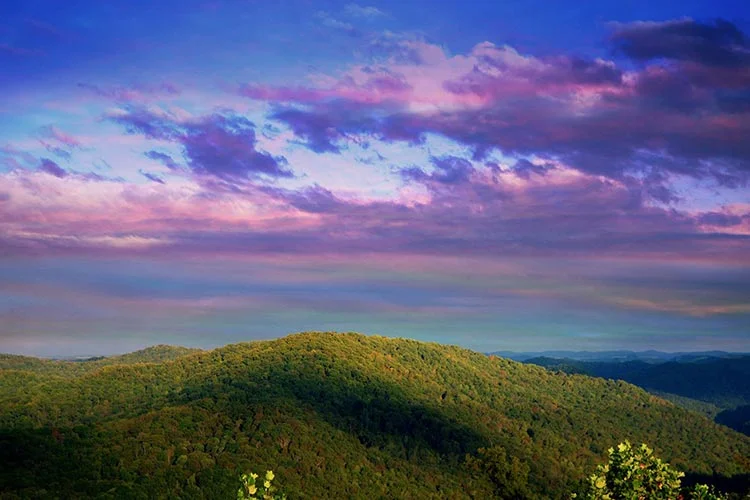
Photo courtesy of Kaye Willis.
It’s no secret Kentucky is a hotspot for outdoor adventure. So it’s a good feeling to know about the state’s under-the-radar locations — the ones where foot traffic isn’t quite as heavy — before the rest of the world finds out.
Allow us to introduce you to Prestonsburg. Whether you’re chasing more technical terrain or looking for a brisk hike with a breathtaking view, this historic town will be your new, favorite hidden gem.
Preston’s Station was the first town established in eastern Kentucky in 1797. Brave, adventurous men and women settled this new frontier, walking the footpaths of these mountains and paddling downstream in the waters of the Levisa Fork River. Present-day Prestonsburg — located 65 miles southeast of the Red River Gorge, 120 miles from Lexington, 136 miles from Bristol, Tennessee, and about 75 miles from Huntington, West Virginia — is a relatively new hub for hikers, bikers and paddlers, with plenty to explore.

Photo credit: Michael Wallace for Print & Pixel.
Day One Options: Breakfast at Billy Ray’s
The spot in Prestonsburg for a home cooking carb-load. Open for breakfast, lunch and dinner, Billy Ray’s is known in these parts for salmon patties and meat-and-three lunch specials. Launch access point for the Levisa Fork of the Big Sandy River is located directly behind the restaurant. There is plenty of parking available and it’s free.
Sugarcamp Mountain Trails: Choose Your Own Adventure
About 20 total miles of trails begin on reclaimed mountaintop and descend into Jenny Wiley State Resort Park. The Sugarcamp Trails system officially opened to the public in July 2017. The project was more than three years in the making, made possible by a collaboration between a team of dedicated volunteers, the city of Prestonsburg and Jenny Wiley State Resort Park. It is a multi-use trail that includes a network of trails for bikers, hikers and horseback riders. It is recommended that riders are at least up to an intermediate skill level to tackle most trails on the mountain, though there are several hiking and biking routes which are accessible to all ages and skill levels. The Sugarcamp Trails website provides a map of the trail system with links to detailed descriptions, technical features and current trail conditions. Be sure to do some research before you head out so that you’re prepared. Read more about all of the adventures you can have on Sugarcamp Mountain.

Photo credit: Michael Wallace for Print & Pixel.
Dinner at Lizzie B’s Cafe Bakery
Lizzie B’s is home of 23 Brewing Company and some of the best spinach and artichoke dip. After a day of literal running around, there are healthy options like mahi mahi and salmon, or you can indulge in a hamburger on a homemade bun. Homemade desserts are made daily and live local music is usually playing in the evenings. Check the restaurant’s Facebook page for the latest updates.
Live music at May Lodge
Have a drink on the patio at the state park’s May Lodge, where local bands play from 6-9 p.m. each week. Dinner is also available. If you’re staying at the lodge, getting back to your room is an easy walk.

Photo credit: Michael Wallace for Print & Pixel.
Day Two Options: Levisa Fork Paddlefest
The fourth Saturday of each month, from May to September, kayakers and canoers launch into the Levisa Fork of the Big Sandy River and make the 16.4-mile trek down river. The voyage begins at 8 a.m. in downtown Prestonsburg, behind Billy Ray’s Restaurant. Participants can bring their own kayak or canoe, or rentals are available. The scenic floating trip lasts four to six hours, depending on how fast the river is moving. Lunch is served once you reach the end of your expedition in Paintsville.
Registration is $10, which includes lunch and shuttle service from Paintsville back to your vehicle in Prestonsburg. To register, call (606) 886-1341.
Dairy Cheer
If you want a dose of east Kentucky nostalgia, stop here. Though Ashland was the original home of the Dairy Cheer, this location in Prestonsburg is one of three remaining locations. In the early 1960s, someone in the Dairy Cheer kitchen discovered how much better a burger could be if you smashed the meat down on the grill with a No. 10 bean can and the “smashburger” was born. Retro charm chasers love to stop for milkshakes and French fries, or their soup beans and cornbread — a mountain staple.

Photo credit: Michael Wallace for Print & Pixel.
Guided Elk Tours, September-March
Jenny Wiley State Resort Park hosts guided elk tours from September through March. You can choose between a red-eye, early morning tour or go out later in the day. The elk herd was reintroduced into its native Kentucky habitat in 1997 by the Kentucky Department of Fish & Wildlife. These powerful herbivores make their home in the scenic mountains that surround Prestonsburg. Reservation price includes transportation to the viewing site and continental breakfast for morning tours. To make reservations call (606) 889-1790. Special group tours are also available.
Dinner at Pig in a Poke
Who says Kentucky don’t know ‘cue? Pig in a Poke is a Prestonsburg original, serving all the usual suspects like pulled pork, beef brisket and ribs. We all know barbecue is only as good as its sides — fresh hand-shredded cabbage for coleslaw, special recipe baked beans, and homemade batter for fried pickles.

Mountain Arts Center
Catch a show at the MAC. See a national musical touring act or discover your new favorite local artist. The MAC also has family friendly mountain comedy, weekly Front Porch Pickin’ open mic and is also home to the legendary Billie Jean Osborne’s Kentucky Opry. Read about Prestonsburg’s role in the Kentucky music revolution.
Where to Stay
Stay in a quiet room at May Lodge or, if you prefer to sleep under the stars, campsites are also available. Campsites include electric and water, a dump station and also includes access to shower facilities and restrooms. There is a small grocery store on site. The campground opens for the season on April 1. For reservations call (606) 889-1790.
German Bridge Campground
German Bridge is located near the headwaters of Dewey Lake and is a prime location for horseback riders. Facilities include a 20-stall barn. Electric and water hook ups are available as well as sites for primitive camping. Shower facilities and restrooms are also available. Call (606) 874-1150 to reserve.
Hotels:
Local Outfitters & Watercraft Rentals
Pro-Fitness
1243 S. Lake Drive
Prestonsburg, KY 41653
(606) 886-8604
Jenny Wiley State Resort & Park
75 Theatre Court
Prestonsburg, KY 41653
(606) 889-1790
Legends Outfitters
606 Beach Road
Louisa, KY 41230

Sugarcamp Mountain Bike Trails
Need a little sweetness? Hit the trails at Sugarcamp Mountain
This post first appeared on the Prestonsburg Tourism website.

Prestonsburg is a relatively new hub for hikers, bikers and paddlers and there is plenty to explore. One of the things that makes Prestonsburg worth the drive is the Sugarcamp Mountain Trail system. About 20 total miles of trails begin on reclaimed mountaintop and descend into Jenny Wiley State Resort Park.
If you’re looking for a challenge, here’s why the Sugarcamp Mountain Trails will be your new favorite place to explore.
Sugarcamp Mountain Trails
The Sugarcamp trails officially opened to the public in July 2017. The project was more than three years in the making — a collaboration between a team of dedicated volunteers, the city of Prestonsburg and Jenny Wiley State Resort Park. It is a multi-use network that includes intermediate trails for bikers, hikers and horseback riders.
The project began as a labor of love, stemming from already existing, unofficial bike trails in the state park.
“We were just a bunch of guys out there riding,” said Josh Turner, chairman of the Sugarcamp Trail committee, and they decided to improve what was already there. “There’s 12 to 13 miles of single-track trail that we did ourselves.”
Prestonsburg Councilwoman and mountain biker Brittainy Branham, added, “It’s well worth it. You feel such a sense of accomplishment once you see these trails done and get to ride on them and see other people enjoy them. It’s totally worth it.”
What to Expect
The main trailhead is located at the top of Sugarcamp Mountain Road near Stonecrest Golf Course, and provides access to the upper portion of the trail system. It is a good starting place for bikers looking for an intense and challenging downhill track with technical areas to navigate. Arrowhead Point Trailhead is located in the state park near the campground and connects to the other trails, depending on how intense you want your trek to be.
The main trail artery is a six-mile multi-use track that connects to the infamous Jenny Wiley trail and is criss-crossed by various bike paths. It’s recommended that riders are at least up to an intermediate skill level to tackle most trails on the mountain, though there are several hiking and biking routes accessible to all ages and skill levels. The Sugarcamp Trails website provides a map of the trail system with links to detailed descriptions, technical features and current trail conditions. Be sure to do some research before you go so you’re prepared.
If you’re looking for an initiation into the trail system, begin with Reclamation Loop or the Briar Pit, both of which have easier inclines and easily navigable trail features including a jump, bridge and a berm. Both also connect to the multi-use trail, which is helpful when finding your way around and provides an outlet to other, more challenging trail options.
Fern Gully is the only way to reach the upper trail system if you began your journey at the lower trailhead. It’s a route that runs through a hollow which tends to hold water, making the trail surface slippery and causing you to trudge up the steep, climbing turns.
The Bluff’s location lends it a backwoods feel and has spectacular views of Dewey Lake. The single track trail requires bikers and hikers to navigate some demanding terrain and climb steep slopes. It contains several segments, the most well-known being the Rainbow Connection. It’s a popular spot for photos because of the Native American bent tree marker that you can walk or ride underneath.
It’s hard to say which Sugarcamp trail is the most complex, but 9 Toe is definitely one of the more difficult. It is accessed through the easier Switchback Trail, which makes for a good warm-up ride. With a labyrinth of rock gardens and tree roots around which to maneuver, it barely allows bikers to catch their breath before the next set of challenges.
The Escalator gets its name for the crazy zig-zag singletrack that contains a series of switchbacks down the mountainside. It’s the one that a lot of bikers talk about because it’s can be deceptive at times. The grassy trail goes down the side of Sugarcamp Mountain — but don’t get sidetracked by the incredible views. The turns on the trail can be tricky and will require some presence of mind.
Prestonsburg local Chace Caudill regularly makes videos of his Sugarcamp adventures and biking tips on his YouTube page. Tag along for the ride:
If all these trails are child’s play, then it’s time for a spirit journey on Feathered Indian. This all-downhill trail has earned a double black diamond difficulty rating because of the intricate, technical features that challenge even the most daring, experienced bikers. Feathered Indian begins at the top of the mountain right past the Sugarcamp Trailhead and immediately confronts bikers with rock features and abrupt drops. It continues downhill and eventually flattens out, but don’t let that fool you. There are still rock gardens to steer through and plenty of obstacles that require attention. The trail courses through one of the most scenic areas on the mountain, past caves and stunning rock cliffs. During this time of year, brave bikers get an extra payoff because native plants will be blooming.
The volunteer trail committee is dedicated to constantly checking trail conditions and working on each track to make it an even better experience for visitors.They recently received a grant to build a training course, so that novice bikers have the access to a practice space that will test their skills before hitting the complicated tracks that wait on the mountain.
Upcoming Events
361° Adventures will host the first of its 2018 Unbridled Adventure Race Series Saturday, May 5, 2018, on the Sugarcamp Mountain Trails. The series is a partnership between Kentucky State Parks and the Kentucky State Parks Foundation. For the past four years, the competitive adventure race offers cash and awards to participants who bike, hike and paddle their way through the Kentucky wilderness, with only a compass, map and instructions. Participants can be solo or compete in teams of up to four people. For more information, visit the event page here.
Guided hikes with Prestonsburg Mayor Les Stapleton. Meet the mayor at the Sugarcamp Mountain Trailhead for a guided hike each Sunday during the summer. Visit the Sugarcamp Trails Facebook page for announcements about 2018 dates and times.
Sugarcamp Shuttle Service: On selected weekends during the summer and fall, Jenny Wiley State Resort Park offers shuttle services from their campground to the Sugarcamp Mountain Trailhead. A city truck transports the bikes up the mountain, and participants meet up with their wheels on the mountaintop. Again, check their Facebook page for announcements.

Who was Jenny Wiley?
Who was Jenny Wiley?
This post first appeared on the Prestonsburg Tourism website. It has been somewhat modified since first published.
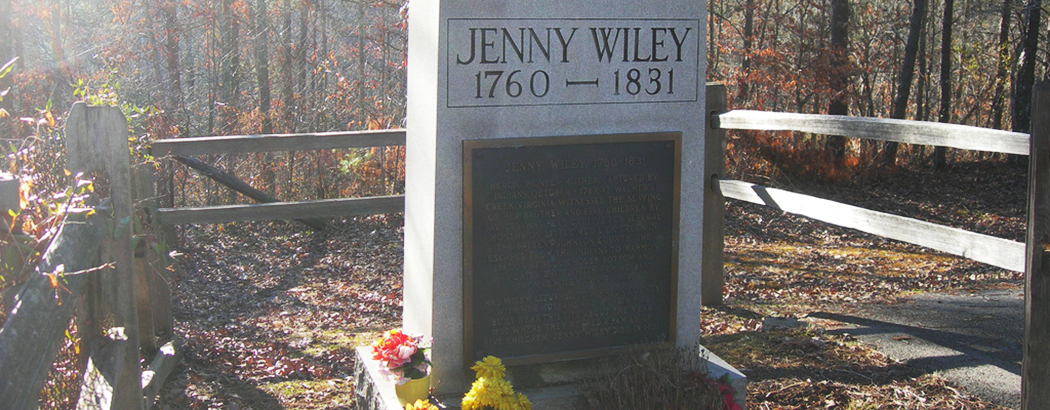
Courtesy of Print & Pixel.
Jenny Wiley’s capture by and ultimate escape from a band of Native Americans seems nearly impossible to believe. Though in the early days of young America, it was not all that unusual due to the constant feuding between the new settlement communities and the Native Americans who were defending their territories and resources. It was “an eye for an eye” system of actions and consequences with the indigenous communities.
The attack
On a rainy day in October, Jenny Wiley sat in her cabin weaving cloth while her four children played on the dirt floor nearby. Her husband, Tom, left hours ago, weighed down with ginseng to sell at the trading post and he wouldn’t be back until after dark. Her teenage brother was staying with the family, so Tom felt better about leaving his young family alone.
Jenny’s brother-in-law was working in the field nearby and heard a series of hoots in the surrounding woods. He thought it odd to hear hoot owls during the day and knew immediately what it meant. He ran as fast as he could to warn his brother’s vulnerable family that there were men lurking in the nearby woods. Jenny, who was then pregnant with her fifth child, took a gamble. She thought surely they wouldn’t attack until it got dark outside, so she stayed at the cabin a little longer, hurriedly finishing her chores.
Unfortunately, the band of 11 (two Cherokee, three Shawnee, three Wyandots, and three Delaware) didn’t waste any time and were on her doorstep in broad daylight. Bursting in, the band scalped and killed Jenny’s brother and three children right before her eyes. In the midst of the chaos, she clutched the 1-year-old in her arms and during the chaos, she heard the attackers say a name: “Harmon.”
The band mistakenly attacked the Wileys’ cabin, looking for revenge directed at another settler named Tice Harmon, who recently killed two Cherokee.
She tried to get them to understand their mistake: TOM WILEY’S CABIN! TOM WILEY! The group realized their error and considered their options. They decided to take Jenny and her young child with them for now. The older Shawnee in the band wanted Jenny to replace a daughter he recently lost.
Captivity
They then burned her cabin to the ground and took pregnant Jenny and her remaining child into the wilderness. Over the next few weeks, they mercilessly trudged through the dense forests of Virginia, Kentucky and Ohio and back again. Jenny was mentally and physically exhausted and had trouble keeping up. She and her child continually slowed the group, which was trying to stay one step ahead of the settler’s search party. They eventually killed her young child because of it. Later, Jenny prematurely delivered her fifth child in captivity, and obviously exhausted, struggled to keep the frenetic pace. She, again, had to watch in horror as her last child was brutally murdered.
During the months of her captivity, Jenny learned their language and was valued for her weaving skills. Life wasn’t easy because her captors treated her as a slave, though she did teach a few of their womenfolk how to weave cloth. Exactly how long she was kept prisoner is up for debate, but by most accounts, she escaped her captors and was found the next year in the spring of 1790, at Harmon’s Station, near Louisa. She was eventually reunited with her husband, and they went on to have five more children together. Surprisingly, Tom and Jenny came back to the same general area—Johnson County—right outside of Pikeville where she lived out the rest of her days. A marker stands near her grave and pays tribute to Jenny’s incredible story of frontier life.
Her resilience in the face of unsympathetic captors, as well as her courageousness in the face of her grief and terror, is astonishing. The people that settled this land had to be strong, mustering a force as mighty as the rocks jutting out of the ground. Jenny Wiley embodies the spirit of our landscape and the strength of heart it took to survive here.
Dewey Lake State Park opened its gates in 1954, eight years after construction on the Dewey Reservoir began. Just a few years later, there was a name change to highlight the area’s famous captive: Jenny Wiley State Resort Park. More than 9,000 acres of wilderness lure visitors and locals alike, to search for the most spectacular views in eastern Kentucky. Visit this outstanding park and take in a performance at the Jenny Wiley Amphitheatre as you explore history in the Star City.

Prestonsburg Elk Tours

Photo by Yours Truly.
The big blue school bus pulled up outside the May Lodge at the Jenny Wiley State Resort and Park, bright and early. Well, the early part is right but it wasn’t bright outside, and there was no sign of a sunrise yet. It was long before we were all really awake, to be honest. We were a small group of seven but were eager to find a seat and make our way.
There was an autumn chill in the air and the fog hung heavy above the treetops. Our journey to see the elk had begun.
Just 45 minutes earlier, the group inhaled breakfast sandwiches and strong coffee, fuel for our early morning adventure. The road snaked through miles of wilderness, past a few houses here and there, and finally a gas station, which was the last chance for a bathroom break for a few hours.
Our destination was Martin County, where some of the best locations are to view the repopulated elk herd. As the bus rumbled along the backroads, the sun slowly began to peek out from behind the gracefully arched mountaintops.
Our guides, Park Interpreter Rodney Gardner, and driver, Ken Idle, threw out tidbits of information that kept our minds occupied during the drive. “Just a couple of mountains over is Loretta Lynn’s home place,” Ken pointed out.
The tour itself can be as unpredictable as the elk, Rodney explained. Viewing is best in the fall and winter, beginning with the mating season in September and October. “If it’s too hot outside, the herd will stay in the woods.”
By the 1880s, the elk’s habitat was compromised by human settlement and over-hunting, which sadly wiped out the entire population in Kentucky. In 1997, a little more than a century later, the Kentucky Department of Fish & Wildlife reintroduced 1,500 elk into the state. Today the herd is 11,000 strong and its territory spans a 16 county-wide area of free, roaming space all the way from Martin to McCreary counties.
The bus made its way to an office building on top of the mountain. By now, the morning sky was shades of pink, orange and yellow, and the fog still clung to the air. We gathered in the empty parking lot, cameras at the ready, and surveyed the surrounding fields. Rodney began to squeeze the elk call in his hand. The sound it made was a cross between a dog’s squeaky toy and a large bird. Someone in the group heard an answer call from a deep distance. “They could be miles away,” Rodney said. “Females want to hear a nice, strong bugle [from a bull], and a nice set of antlers is what she notices next.”
The dense fog continued to make visibility an issue, so Ken and Rodney decided to press on to the next location to give the sun a chance to burn through. Our trusty driver jokingly told us to keep our eyes peeled so “I can do my job and stay on the blacktop.”
There was one false alarm when we drove past a field dotted with square hay bales. The early morning fog played tricks on our eyes because at first glance it looked just like a field full of elk laying in the grass. It could happen to anybody.
The morning wore on and the sun rose higher, increasing visibility only a little. We drove down what looked like a neighborhood cove and circled around to a stop. The waking mountain, wrapped in early morning stillness with its welcoming chorus of birds was something almost magical. Rodney got his call out again and it echoed through the air. All of a sudden, a lone cow (female), emerged from the grove of trees. She looked over at us for a few minutes and then began to graze. Her silhouette cut an awe-inspiring sight in the pink, raspy-looking fog that lingered on the field. She gave us enough time to snap a few pictures and then was gone, back into the safety of the woods.
"Within minutes, we all heard a long, slow whistle pierce the air: a bugle. The bull answered twice. The sound was haunting."
Ken then drove us to the Big Sandy Airport, a location the herd visits regularly. We gathered on the airplane taxiway and Rodney began calling. Within minutes, we all heard a long, slow whistle pierce the air: a bugle. The bull answered twice. The sound was haunting.
Later that day, Rodney and Ken took another group out and were able to get within 10 feet of a bull and “his harem” as Rodney calls it. It’s all a game of chance.
I can’t speak for everyone else, but for me, this tour was an inspiring look at the mysteries of a creature in its natural habitat and the thrill of a chance encounter, which is appropriate for the circumstances. After all, the world belongs to the elk again and their home is preserved and restored. I feel lucky just to have caught a glimpse, and I am satisfied to know they are thriving here once more.
Prestonsburg elk tour dates in October:
Saturday, Oct. 7
Sunday, Oct. 8
Saturday, Oct. 14
Sunday, Oct. 15
To make a reservation for your own elk tour, contact the folks at Jenny Wiley State Resort & Park and they will get you all set up.
Phone: (606) 889-1790
Website: http://parks.ky.gov/parks/resortparks/jenny-wiley/events.aspx
Email: trinity.shepherd@ky.gov

Mississippi Hospitality in the Tar Heel State

Photo by Anna Kline.
This article first appeared in DeSoto Magazine, May 2012. All rights reserved.
"Y'all ready to do some fishin'?" says Greenwood, Mississippi native, and chef Neal Mitchell. It is a chilly, overcast day with the sun peeking out behind the clouds. Mitchell and his business partner, Brandon Hughes, drive the winding road along the East Fork River, which flows through the mountains of Brevard, North Carolina. With their fishing gear in tow, they discuss the best spot to pull over and cast their lines. These longtime friends are daily in search of the best location to fly fish for trout.
A shared passion for food and the outdoors brought these friends together -- along with Brandon's wife and home cook extraordinaire, Emily. It was all the inspiration needed for their business collaboration, East Fork Guides. The East Fork River is a tributary of the larger French Broad River which runs through the area and runs right through Brandon and Emily's backyard.
How did three Mississippians end up in the Tar Heel State?
The trio's history began in the Mississippi Delta. Neal and Emily went high school together in Greenwood. Though Brandon lived in Kentucky at the time, he frequently visited his family's farm in nearby Sunflower County.
Lives converged at the legendary Giardina's Restaurant in The Alluvian Hotel, where they waited tables and learned valuable kitchen secrets. The three friends quickly bonded over their shared passions. Brandon eventually went on to enroll in the Veterinary Medicine Program at Mississippi State, and he and Emily married. Meanwhile, Neal perfected his culinary craft as a Viking-trained chef.
Once Brandon completed veterinary school, the pull to live in the mountains was strong. They soon began to look at houses in the mountains of western North Carolina. "We'd been here before and really loved the area," Brandon said.
Last August, Brandon and Emily pulled up stakes after he completed his residency in Birmingham, moving 30 miles southwest of Asheville in Brevard. Neal was not far behind and arrived about six months later.
Brevard is in Transylvania County, the "Land of Waterfalls." Transylvania County has the unique distinction of being a designated a rain forest. It is a lush, green wonderland with over 200 hundred natural waterfalls and trails to explore. Where there's water, there are fish.
The friends quickly settled into a daily routine of waking up, fly fishing for a few hours, and then headed off to work. Their vision for East Fork Guides is one that includes the food culture and hospitality of their home state with the freedom of western North Carolina's wilderness. They cater to small groups because the experience is more personable and can easily be tailored to suit your cravings, so to speak.
Their guided adventures can be as hands-on or as hands-off as you want. Depending on your skill level and what type of experience you'd like to have, Brandon admits, "I'd almost prefer someone who doesn't have that much experience because every catch is amazing and exciting!"
Brandon, Emily, and Neal study the rivers in the area. Each location has a distinct ecosystem, whether it is one mile or five miles down the road. The river systems contain different varieties of insects, water temperatures, and currents that affect how, when and if the trout bite. Trout are intelligent, stealthy fish that hide beneath the rocks. They only bite if a familiar bug appears on the water, which is why fly fishers create their own lures, tailor-made to the fishing area. The fish will not bite for anything other than an expertly cast fly.
The nearby Davidson River Hatchery manages the rivers in the area and the East Fork is a delayed harvest area. That means from April to September there is a daily limit on how many trout one can catch each day. During the off-season months, from October until the following April, the hatchery re-stocks the rivers.
The guides can coordinate every step of the process from finding lodging to helping acquire local permits and licenses to cooking your catch in their kitchen. That is unless you'd rather have your catch sizzle over an open flame under the stars.
After they agree on a go-to fishing spot, Brandon pulls the car over. He and Neal pull their waders up over their clothes and secure their fishing vests. They take out the tackle boxes, decide on what flies they'll use, and set off with fishing nets and fly rods in hand. They wade into the clear, rushing water and begin casting lines. "On the East Fork, there's not as much pressure. The fish aren't as big, but they are easier to catch," Brandon explains. It doesn't take long for them to get their first bite.
A few choice fishing spots are worth the hike, but plenty of locations are just off the main road. "The stocked, fishable part of the East Fork is 2.8 miles," Brandon points out. "On any given day, there can be up to 10 to 15 people at a time in sections of the river."
After wading through the river for a couple of hours, Emily delivered a lunch of chicken salad sandwiches. Once we'd eaten our fill, Neal and Brandon drove over to another location nearby and began to fish in front of a raging waterfall. "The hard part once we get to fishing is getting us away from it," Neal jokes.
Once we were done fishing for the day, Brandon drove us back to his house where Emily got dinner started. She and Neal worked like a well-oiled machine in the kitchen, talking about how they stayed up late the night before preparing recipes for supper. Dinner included smoked trout dip, fresh vegetables, veal sliders, and catfish cakes drizzled with hot sauce cream. As they cooked, stories spilled out about food, life, Giardina's and fishing.
Neal, Brandon, and Emily plan to expand their services to wild game hunting expeditions. Right now, they are happily dedicated to sharing their passion for fly fishing, food, and entertaining friends. In true Mississippi style, no one is a stranger at their table.

From Grain to Glass: 23 Brewing Company
From Grain to Glass: 23 Brewing Company
This post first appeared on the Prestonsburg Tourism website.

Prestonsburg brewery carries the tradition forward with its own craft beer
Mike Slone was never satisfied drinking the average American beer. He opted for more unusual brews if he had the choice, and, as the craft beer trend began to grow in the United States, there was more to choose from than ever. But his interest didn’t stop there. He wanted to brew a beer of his own.
Slone bought a home-brewing kit at Liquor Barn in Lexington, which served to ignite his passion. “I love to experiment — that’s one of my favorite things about brewing is making new recipes,” he said. “That’s one of the most exciting things to me.”
Slone’s mother owned several area bars while he was growing up, and his love of cooking and the science behind it translated perfectly to the science and art of brewing beer. When he began working in the kitchen at Lizzie B’s Restaurant, he crossed paths with another beer aficionado, owner Tim Branham. Slone and Branham’s mutual appreciation and passion for craft beer put east Kentucky’s first brewery, 23 Brewing Company, in motion.
Slone was then put in charge of all of the beer orders for the restaurant. But his penchant for unusual beer took a little getting used to for some customers. “Slowly but surely everybody started trying it and liking it,” he said, and like-minded beer drinkers appreciated his taste. Soon, the restaurant realized there was a higher demand for craft beer on tap.

The art of brewing
In his spare time, Slone continued to brew at home, taking on more risky experiments. He and Tom began brewing small batches while trying out flavors and various styles of beer. Slone even visited breweries in region, such as southern beer capital Asheville, North Carolina, to hone his skills and learn more about the methods of commercial brewing.
The term “craft beer” means that it is brewed in the traditional (non-mechanized) way in smaller quantities, which allows for more control and experimentation. This, in turn, creates a more individualized flavor. At one time in America, “every village had its own brewery or brewer,” Slone said. Just as they did throughout recorded history, local taverns and pubs drew friends together to unwind with a pint of the brewer’s tastiest ale.
The brewery carries forward a centuries-old process of small-batch brewing, and just as the brewery name implies, celebrates its roots. Named for famed Country Music Highway U.S. 23, the fledgling brewers usually make at least three batches at time, depending on ingredient availability. From time to time, local farmers donate their fresh hops to the brewery. Slone and Branham also experiment with other local flavors.
“You’ve got to be bold and experiment,” Slone said. “When we first decided to do the brewery, we were home brewing, we were testing out batches in Tim’s apartment, and we ended up making a really good IPA out of paw paws and we haven’t been able to make it yet since we actually started professionally brewing.”
Paw paws’ flavor is similar to a mango or papaya, which balances the flavor of a hoppy IPA. Last year’s paw paw crop was not as good as they had hoped, so they’ll have to wait for this year’s incoming harvest. Slone said he also plans to venture into new brewing territory with ingredients such as coffee and smoked grains. And, he also wants to try his hand at brewing different styles, such as the German wheat beer Hefeweizen and the darker British ESB, which means Extra Special/Stronger Bitter (though it really doesn’t taste bitter).
23 Brewing Company’s flagship beer is the Hillbilly Highway Cream Ale, a light-bodied beer in the lager family, brewed with barley and corn. Cream ales were the first truly American beer that came to prominence in the late 1800s. It’s called a cream ale because, like milk or cream, it is better when consumed sooner rather than later. Other options on tap are 23’s Cold Camp Milk Stout, called such because the lactose in the beer does not break down in the fermentation process and lends the dark beer its sweetness, and the Front Brake IPA, known for its more bitter, hoppy aftertaste.
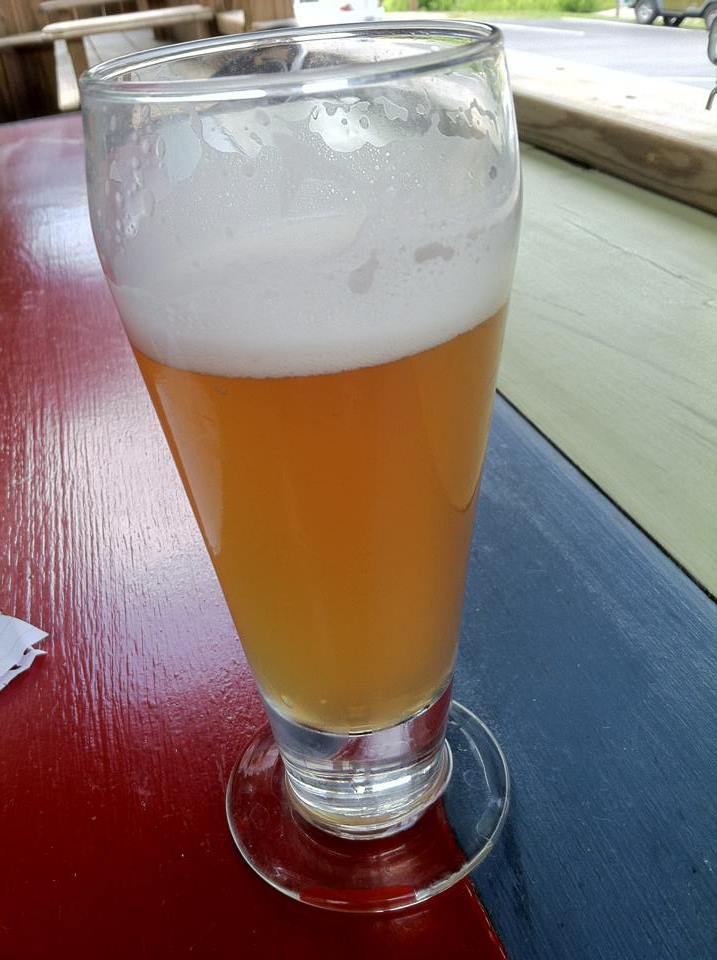
At any given time, Lizzie B’s Restaurant has other regional craft beers on tap to give customers a taste of what is being made in the area. Country Boy Brewing’s American brown ale called Shotgun Wedding is a favorite, as is the old stand-by Alltech’s Kentucky brown Bourbon Barrel Ale. Both are brewed in Lexington. Lizzie B’s also offers a couple of Cincinnati-made beers like Psychopathy IPA, a hoppy beer with floral and citrus notes brewed by Madtree Brewing Company, and Rhinegeist’s Bubbles, a fruity, tart rosé ale.
It’s easy to see why Lizzie B’s might quickly run out. It can be difficult to keep up with demand — both a blessing and a curse — because brewing beer is not a speedy process. “Lighter styles like the cream ales we do, typically to go from grain to glass it takes about 10 to 14 days,” Slone said. “Whereas if you’ve got a darker beer it’ll take a little bit longer because you want the flavors [to have] a chance to meld together and all that. And also alcohol percentage plays a role in that as well, as well as your yeast. You know, if you’re doing like a big imperial stout, you’re looking at a month of fermentation plus probably couple more weeks of aging.
“They go pretty quick, especially in the summer and fall,” Slone said.
Raise a pint
After a day of hiking, biking and exploring, sit out on the patio with a thoughtfully crafted artisanal beer in hand. As you watch the sun set over U.S. 23, taste the tradition of small-batch brewing crafted right here in Prestonsburg.
For updates on their latest brewing experiments, follow 23 Brewing Company on Facebook Instagram and Twitter.
To find out what’s currently on draft, call Lizzie B’s Cafe & Bakery: 606-886-2844. Lizzie B’s has live music weekly, and daily restaurant specials. We recommend the spinach and artichoke dip to share, followed by a hamburger and a side of sweet potato fries. With all the homemade pastries, cookies and cheesecakes available, try not to fog up the dessert case.
To satisfy your thirst for more craft breweries in the area, visit Kentucky’s Brew Trail.

Prestonsburg's Stonecrest Golf Course
Prestonsburg golf course inspires with views of Appalachians
This post first appeared FEBRUARY 2018, on the Prestonsburg Tourism website.

Courtesy of Stonecrest Golf Course
The game of golf is a calculated risk and reward system, where nature’s unpredictable terrain challenges human patience and skill. It begins with executing the perfect tee shot. The fluid downswing swish, the quick clip where driver meets ball. In an instant the ball is airborne.
All eyes follow the ball’s trajectory as it soars in an arc through the air, descends to the ground with a thud, bounces a few times and rolls to a resting place on the green.
Today is different, though. You aren’t playing any typical golf course. Nowhere else in Kentucky can you fine-tune your technique on 300 acres of an expertly designed and maintained mountaintop golf course. Surrounded by breathtaking views of the Appalachian Mountains, it would be all too easy to get distracted, score a double bogey and stay over par for the rest of the game.
A top-ranked experience
It’s safe to say, from tee shot to final putt, Stonecrest Golf Course in Prestonsburg has cornered the market on one of the most unique golfing experiences in Kentucky.
The course was designed and built by Chris Crissman, Jack Sykes and Russ Cochran. Crissman and Sykes also designed courses in Abingdon, Virginia, and Bristol, Virginia, and Cochran is a 2009 inductee of the Kentucky Golf Hall of Fame. Their project was completed in 2001, overseen by the City of Prestonsburg, and continues to leave an impression on everyone who visits. For three years in a row Stonecrest has received top rankings on Golf Advisor, which bases a course’s position on player reviews. It was listed as one of the Top 10 Courses in Kentucky in 2014 and 2015, and was also included in the Top 25 Courses under $50 in the U.S. in 2016.
Stonecrest is a championship-level layout on the plateaus of the reclaimed mountaintop and plays to a par 72. The course will have its challenges for beginning and experienced golfers alike, but is easily accessible to all skill levels. Brad Reynolds, the superintendent of Stonecrest, thoughtfully oversees course maintenance.
“The golf course itself gives you all aspects for a round of golf,” Reynolds said. “We have numerous sets of tees for different challenges. You know, one day, you can play 7,000 yards — or 6,000 yards, then you’re playing a totally different golf course.”
Brad Reynolds knows grass. A graduate of Betsy Lane High School, he went on to earn an associate’s degree in turf grass management from Alice Lloyd College and graduated with a bachelor’s degree in horticulture with an emphasis in turf grass from Eastern Kentucky University. He put in time at Marriott’s Griffin Gate Golf Course in Lexington, the Cherry Blossom Golf Course in Georgetown, and Lincoln Homestead State Park Golf Course in Springfield, among others. In 2013, he received an offer to return to Floyd County to oversee the grounds at Stonecrest. Reynolds and his team carefully maintain the bentgrass course. “We try to be above and beyond an everyday facility,” he said.
Though it requires more overall maintenance, bentgrass is hardy and never loses its color even during the winter. The seasoned golfer will appreciate the softer, carpet-like surface, which allows for smoother play and ease of motion for the ball.
Reynolds’ attention to detail is a matter of pride: “Our number one goal is to provide the best, the best golf course possible for the golfing experience. Our main focus here is the game of golf — we strive to be the best golf course in the state.”
It is easy to get swept away by the stunning view. Players might occasionally hear a wild turkey gobble in the distance or even the bugle of an elk echoing in the valley below. When the weather is good, the course sees up to 200 people a day and on average there are 24,000 rounds of golf played annually.
“It’s crazy. You can’t describe [the course] to a person or show them until you see it in person,” Reynolds said. With its unparalleled views, what is the most talked about and most photographed hole on the course? “Hole 13. Yeah, hole 13 is pretty much our signature hole. When you’re on the back tee box, you can see Virginia and West Virginia.”

Courtesy of Stonecrest Golf Course.
Mingle on the Mountaintop
Once the final putt is made and the game stats are recorded, make your way to Stonecrest’s lounge and grill. The full-service kitchen and bar will serve up a mean hamburger to the famished and satisfy your thirst for fine Kentucky bourbon. Reynolds suggests visitors take a moment to enjoy the stunning view from the back deck of the clubhouse. “You can look over the ridgetops, and basically see as far as you can see.”
Visit Stonecrest any time of the year to maintain edge for your golfing game. The facility offers an array of amenities onsite, from the one-stop pro shop for game-time necessities, club repair and lessons to a practice green and driving range. Stonecrest hosts state-level golfing tournaments for high school and college golfers, and smaller championship events. For those who are interested in a mountaintop view for their party, business meeting or wedding, Stonecrest offers a wide range of options for renting the facility, including full-service catering for events.
Upcoming Events at Stonecrest
April 27, 2018: Stonecrest hosts The Jordan Light Foundation golf tournament annually. The Jordan Light Foundation is a non-profit that supports families and children in crisis who need assistance covering costs of travel and medical assistance that insurance does not cover. Usually about 100 patrons register for the event, making up 25 to 30 teams. Call the clubhouse at (606) 886-1006 to register.
Course Stats and Pricing
Back Tee Stats
Par: 72
Yardage: 7,011
Slope: 124
Rating: 70.8 | Bent grass
Monday-Friday, $38 for 18 holes; Saturday-Sunday, $50 for 18 holes. Fees include Proshot GPS-enabled golf cart.
For more information or to schedule a round, call the Stonecrest Pro Shop at (606) 886-1006 or visit them online.
In between golf games, fIll up your tank with local craft beers and homemade fare at Lizzie B’s Cafe Bakery, or watch local songwriters weave stories into songs during our Tuesday night songwriters series.

Delta Bistro: Homemade...Straight From the Heart

This story about The Delta Bistro was first published in DeSoto Magazine, March 2010. All rights reserved.
Like so many highly regarded Mississippi cooks, Taylor Bowen Ricketts, chef and proprietor of Delta Bistro in Greenwood, is herself "homemade" in the very best sense of the word. Ricketts declares proudly, "A lot of the food I cook is a. Southern, and b. inspired by my family."
Ricketts was born in Oxford and grew up in Jackson, learning culinary traditions at home in her family's kitchen. It wasn't until she went back Oxford for college — for painting, religion, and philosophy — that she discovered a passion for the restaurant business. She began waiting tables, which, Ricketts says, "kind of got me interested and I was good at it." Her next restaurant experience, at a vegetarian restaurant, changed her point of view drastically. with a menu that changed frequently, Ricketts says, "I was able to create with food for the first time." The opportunity to be involved with menu revisions opened new doors for what she calls "an obsession."
She and her husband, Darby, then went on to help establish several landmark restaurants in Oxford, such as Proud Larry's, Yocona River Inn, and City Grocery, where she was working with her husband and chef John Currence. Ricketts explains, "I got to see that from the ground up. It was a good experience in learning how to open a restaurant."
Rickett's culinary experience came to the attention of Viking founder Fred Carl, Jr. He invited her to come to Greenwood to run the Delta Fresh Market, a gourmet food store and lunch spot. After four years, there wasn't a consistent customer base to sustain both the Market and restaurant, so Ricketts and Viking decided to make a few changes. Delta Bistro opened in 2009 in a downtown location around the corner from the Alluvian Hotel.
The restaurant is in a renovated turn-of-the-century cotton grading facility, complete with massive skylights once used to inspect and grade cotton. The airiness, coupled with a brightly painted ceiling, provides a nice contrast to the dark masonry walls. Both Ricketts and her husband are artists, and their work is displayed throughout the space. The renovated restaurant uses some of the original's interior furniture. "Most of the tables and such came from the Delta Fresh Market," Ricketts points out. "We kind of wanted to have a new start when we moved, but we did bring some things with us to the new location...just to know we're still what we always have been...with a new hairdo."
The white partitions, with hanging glass standing int he middle of the restaurant, help maintain a longstanding Greenwood tradition à la Giardina's and Lusco's. Both landmark restaurants have Prohibition-era roots, whose private booths afforded diners the seclusion to indulge in their brown bag beverage of choice. Delta Bistro continues that tradition for a $2 corkage fee for wine, and the partitions give diners a little privacy in a town where everyone knows everyone else.
Perhaps the Bistro's most unusual inclusion is its herb garden, which is about 20 feet by 2 feet. The builders "thought [she] was crazy," when Ricketts asked them to put in a small plot for such a purpose. The garden, however, has been successful, yielding asparagus, a variety of herbs, and tomatoes to supply the kitchen. This supply, in part, allows Ricketts to create the Bistro's menu with completely fresh ingredients. "Everything is made from scratch," she says. "[We] don't limit ourselves with ingredients, we change the menu seasonally, and daily specials change. Four or five menu items are changed one to two times a day. There's lots of variety and options for your palate."
Delta Bistro's menu is a true art piece and one that Ricketts created with thoughtfulness and flair. It mixes Southern nouveau with the ease of home-cooked comfort food. Her family recipes hold court on the menu. They include her grandmother's pimento cheese, lemon pie, and Caesar salad dressing, a vinaigrette "that [her] grandmother always made." Her grandfather had a special Comeback sauce recipe, which she uses on the Comeback Reuben. Ricketts creates dishes from what she knows, saying, It means a lot to me to be able to carry that tradition with me when I come to work every day."
The Delta Bistro is located on 117 Main Street in Greenwood, Mississippi. Visit them online here.

Mississippi Culinary Trail

Excerpt from the Mississippi Culinary Trail content
The Mississippi Culinary Trail
Mississippi is considered a foodie’s paradise and we can tell you a million reasons why! The Mississippi Culinary Trail showcases the state’s true flavor. Each of the five regions has its own delicacies like hot tamales, slug burgers and comeback sauce. Whether you are a first-time visitor or a road trip junkie who has been through a million times – pull up a chair, put a napkin in your lap and get ready for an unrivaled eating experience.
The Culinary Trail itineraries work their way around the state highlighting each region’s restaurants, cooks and food traditions that highlight Mississippi’s distinctive cuisine.
THE DELTA – Juke Joints, Hot Tamales & Mississippi Catfish
You don’t forget your first descent into the Delta. Whether you take the back roads from Hernando on Highway 304 or Highway 61 from Memphis: one minute your car winds through the tree-dotted landscapes of the hills and the next it levels out into flat farmland as far as the eye can see. As diverse as the crops that grow here and the music that made it famous, the Mississippi Delta is a melting pot of cultures – from African to Italian to Asian – the people here make this part of the state different from any other. And in no place is the Delta’s diversity more apparent than in its restaurants. Each dish is a prime example of how delicious histories fuse together for the ultimate culinary experience.
One such example is the hot tamale, called so because of its orangey-red color and spicy taste. Its origins began around the turn of the 20th century when migrant Hispanic laborers worked in the cotton fields during autumn cotton picking season alongside African-American hired hands. A cornmeal mixture called "masa" encased the meat inside, keeping it insulated. This ensured a warm lunch for hungry workers at lunchtime. There is also a Tamale Trail through Mississippi, read more about it here.
THE CAPITAL RIVER – Soul Food, Super burgers and Comeback Sauce
Mississippi’s Capital River Region is a delicious blend of old and new. From a mighty river and antebellum mansions to glittering downtowns with exciting nightlife, the restaurants here boast menus featuring soul food, authentic ethnic dishes and modern culinary delights. Personalities like Cool Al and places called Fat Mama’s are why the eclectic heritage of Mississippi is one of its most celebrated treats. It’s the tastiest history lesson you’ve ever had.
THE PINES – Choctaws, Catfish Alley and Family Cafés
This region acquired its name because of the prevalence of the Longleaf Pine Tree. The densely populated wooded bluffs and National Forests make for scenic driving. Outdoorsmen love this area because of the easy access to wilderness camping and hunting on what is considered some of the most beautiful terrain in the state. At one time cotton was king in this region, too, but it was predominately the railroad lines exporting lumber from sawmills that helped industrialize the area.
The small towns of the Pines make for big flavors. With barbecue and bakeries, cheese and cheesecakes, the tastes of this region take their influences from their earthy Native American heritage as well as the vital railroad lines that brought lumber, cotton and other goods into the area. Family-owned restaurants are a staple of this region and when you can stroll down a street known as “Catfish Alley,” you know you’ll find good cookin’!
THE HILLS – Grills, Groceries & Drive-Ins
The characters in Southern fiction gather around tables laden with their favorite dishes – platters of fried green tomatoes, pots of collard greens with a skillet of cornbread, slabs of barbecue pork ribs and slugburgers. Literary references are direct inspiration from the first-hand eating experience of lovingly crafted home-cooked meals. Even today, a meal in the Mississippi Hills doesn't just feed the body it ministers to your soul.
THE COAST – Shrimp, Blowflies & Purple Parrots
Naturally, the Mississippi Gulf Coast has a different feel to it than the rest of the state, but it remains undeniably “Mississippi.” The Coast offers the tourist a little of everything: golf, gambling, art, architecture and, of course, great food. Years ago, immigrants from all over the world—Croatian, Vietnamese and French—came to the region in search of employment in the seafood industry. This delicious blend of cultures has seasoned the cuisine here with a flavor you won’t find anywhere else.

Venice in the Age of Canaletto
This article originally appeared in DeSoto Magazine, February 2010. All rights reserved.
During any given year, many important exhibits come and go at the Memphis Brooks Museum of Art, yet the chance to showcase one of its permanent pieces is especially poignant when shown within the context of its creation.
Venice in the Age of Canaletto is a collaboration between the Brooks Museum of Art and the John and Mable Ringling Museum in Sarasota, Florida, each of which has a Canaletto in its permanent collection. Ringling's former assistant curator, Alexandra Libby, and Dr. Stanton Thomas, assistant curator at the Brooks Museum, collaborated and co-coordinated the exhibit during its three-year-long project assembly.
The Grand Canal from Campo di San Vio, an oil-on-canvas painting by Giovanni Antonio Canal (Canaletto's real name), is part of the Brooks Museum's permanent collection and is an impressive example of what the artist did best: scenes of Venice's famous waterway, the Grand Canal.
The Canal was Canaletto's favorite artistic subject and one that he could render with life, light, and a sense of realism often lacking in other works in other works of the era. Thomas says, "Canaletto's works — they kind of beguile you — as if they are photographs...and what we know of the decorative arts and the works of other painters...they are much more fantastical [than Canaletto's art]." Canaletto is best known for his portrayal of urban Italian life, depicting scenes of simple people going about their daily lives against the vast backdrop of ancient Roman buildings and landscapes. His "vedute," or view paintings, stand out because of their muted colors, contrasting greatly with other richly-colored, sumptuous creations of the eighteenth-century Venetian art. Thomas says, "One of the unique things about this exhibition is it is the first time, I guess outside of Venice, but really in a scholarly manner, that anyone's looked at Canaletto within the completely broad spectrum of the visual arts of Venice."
The most important component to the exhibit is what Thomas calls a "modern complement to the more traditional way of approaching the city." During the 1700s, Venice was the epicenter of lively culture and extravagant living, which consistently drew European tourists. "People would get on a gondola and they would go up and down the Grand Canal," says Thomas. "[It is] such a great way to see the sights, to see other people, and to experience the city as a tourist, maybe for the first time."
Upon viewing the exhibit for the first time, visitors will not only see a set of 1730s-era prints replicating the experience of traveling along the Grand Canal but most importantly, they are able to experience, first-hand, what it is really like to ride on the water up and down that great waterway. Filmmaker Ralph Leiberman helped create this experience by setting up two high-resolution video cameras on gondolas, shooting a continuous gondola ride, from one end of the Canal to the other. "It doesn't just capture the video image, but also the ambient sound. You have the sounds of the church bells ringing, the water sloshing up and down the gondola," Thomas explains. For those who have never been to Venice, the video footage, projected onto a huge single wall, acts as the introductory process to immediately immerse viewers into Venetian life.
Venice in the Age of Canaletto is a well-conceived, multi-faceted experience for museum-goers. It includes examples of what Thomas calls "pastel, confectionary-looking" gilded furniture, delicate porcelain objects, and mythological and religious paintings. It also features a pale blue and gold damask-covered room emulating the private interiors in which many of these painting were originally displayed, "recreating the luxury and why people went there [Venice]," Thomas explains.
A dazzling example of that decadent era comes in the form of a table decoration made of opaque white and colored glass entitled "Dessert Decoration in the Form of a Glass Garden," and it's just that. In the middle is a glass fountain, complete with glass flowerbeds and balustrades which, during that time, would have set up for the dessert course of a meal. "Cakes and sweetmeats would have been interspersed among that," Thomas points out. It gave guests the experience of walking through a garden and sharing "that sense of wonder, excitement and awe" when browsing the confections on the table.
Chief curator Marina Pacini is thrilled about the collaboration between the museums. "I love the fact that Stanton has, with his fabulous colleague, Alexandra Libby, put [Canaletto's work] in this bigger, wider context. It's such a rich group of objects that tell a wonderful story."
The experience would not be complete without an extensive, fully illustrated catalog that includes essays by art historians and photographs of works within the exhibit, which is available for purchase at the Museum store.
The comprehensive Venice in the Age of Canaletto opens Sunday, February 14, 2010, with a wide variety of events, including featured speakers, an Italian Opera series, Canaletto-themed Art for Lunch, and guided tours. For more information, visit Brooks Museum of Art online or call 901-544-6200.

The Canton Movie Museum
This article originally appeared in Portico Jackson Magazine November 2009. All rights reserved.
The Canton Movie Museum lovingly houses mementos from the days of filming My Dog Skip.
With pages of notes strewn across the desktop in front of an old typewriter, it is as if Willie Morris stepped away mere minutes ago after having typed the words, "I came across an old photograph of him not long ago...taken more than forty years before, even as a grown man, I would admit I still missed him." A faded black and white photograph of Old Skip is on display nearby.
At the corner of Union and Center, in downtown Canton, is a space affectionately referred to as the My Dog Skip Museum. The site, dedicated to Morris and the movie based on his beloved book, features props and sets used in the Canton movie shoot during the hot summer months of 1998. Just as Faulkner devotees explore Rowan Oak and Welty enthusiasts tour her Pinehurst Street home in Jackson, Morris fans can delve into a slice of his life within the walls of Canton's Movie Museum.
"There was something in the air of a small town in the Deep South then, something spooked-up and romantic, which did funny things to the imagination of its bright boys," Willie wrote in My Dog Skip. That rings true for present-day boys, girls and even adults who visit the museum. It is a time capsule, a child's world full of memories with plenty of wonder, excitement, and nostalgia literally from floor to ceiling.
"Everybody wants to touch and feel Hollywood," says Jo Ann Gordon, executive director of the Canton Film Office. Gordon is a former elementary school teacher who still nurtures her desire to educate children and the community. Gordon and her staff, including museum curator Bille Jean McMullen, do so for guests from around the world by giving guided tours through the movie museum and around the neighborhood sites where filming took place. But even more than experiencing a slice of Hollywood, visitors get to absorb romanticized Mississippi and become closer to the characters about which Willie Morris wrote.
The museum's towering green door creaks open to a world frozen in time. Each corner holds its own vignette recalling scenes from Morris' 1940s childhood superimposed on the big screen.
On one side of the museum are poignant scenes with plush stuffed Jack Russell terriers placed at important points to showcase Skip's tear-jerking visit to the veterinarian, the birthday scene with the dog carrier on the table, and even Skip's stuffed, on-screen stand-in.
Billie Jean divulges details of befriending Willie, tales of the production process and the realities of life during World War II, which make for an insightful and heartfelt tour. She points out which props were donations from local households and which are replicas, recalling, "What we did to help them — they made up lists that we put up in all the churches and around: If you have any of these items in your attic, in your storage rooms — would you donate them or either let us borrow them?"
The most exciting piece in the museum is the looming crypt of the Witch of Yazoo which Morris describes as "the resting place of the demon who had burned the town down in 1904, which was marked now with a heavy chain, with one link missing where she had escaped." In actuality, there is no real crypt for the Witch of Yazoo, only a cemetery marker, yet the production team matched his written description verbatim with incredible attention to detail, standing far above the rest, not only in stature but also in infamy.
On the other side of the room hang blown-up newspaper articles about the author which serve as a paper trail to the real-time replica of his office, complete with more photographs of Skip, and various high school memories strewn around. Nearby, a living room with leather chairs evokes scenes of when Morris entertained guests until all hours of the night or as Billie Jean more aptly says, "where he would be holdin' court."
The museum continues to breathe life into the vivid memories, the life and works of a remarkable writer, recalling the wistful words, "He really laid buried in my heart." A famous last line that many might say is true of both Skip and Willie Morris.
To set up a tour of the Film Museum, contact the Canton Film Office, 601-859-1307 and for more information, visit them online here.

A still from My Dog Skip.

Losing Our Religion

This article was first published in DeSoto Magazine, May 2010. All rights reserved.
Religion has long been at the center southern culture, and that's undoubtedly true of Mississippi. As settlers began forming communities across the state, churches were some of the first buildings constructed. Congregations began meeting in homes, but as the communities grew, the importance of having a physical church home —that served as a central meeting place and a safe place for religious worship — became increasingly important.
Expansion meant that congregations often outgrew their churches. Church buildings were rebuilt, oftentimes on the very same sites. Sometimes they were renovated to suit modern sensibilities. Others, like Our Lady of the Gulf Catholic Church (Bay St. Louis), were demolished by "acts of God" — fires, tornadoes, or hurricanes. These natural disasters left congregations without spiritual homes, forcing church members to start anew. Others were simply abandoned, unwanted. Transitional ebb and flow in local communities also brought necessary and sometimes inevitable changes to buildings, some of which are local landmarks.
"It has been a matter of interest and a matter of concern to me," says Richard Cawthon, author of Lost Churches of Mississippi (University Press of Mississippi, $35). "Landmark buildings, once they have been destroyed, kind of disappear from people's memories. They are not the buildings you see when you drive down the street, so unless you happen to remember them from childhood or see pictures of them in a history book or at the local museum...you may not be aware that they even existed." Lost Churches of Mississippi is an extensive, 200-page collection of photographs, postcards and architectural blueprints that look into the heart of religious communities across the state, showcasing the elegant, the simple, and the ornate structures where religious groups made their early homes.
Lost Churches acquaints the reader with not only the Protestant and Catholic churches that dot the state's landscape but also the lesser-known Jewish synagogues and temples (which many Mississippians might not realize are a part of the state's religious heritage). Many of these churches were built by mail-order plans or by the same architects, and as the book illustrates, other church buildings of the same design can be found in other areas statewide and across the country.
Cawthon credits his piquing interest in churches to the visits to his grandmother's house during his childhood in Louisiana. During those visits, he explored the church next door to her home for hours. This interest ultimately led to him becoming the chief architectural historian at the Mississippi Department of Archives and History in 1985. For almost 20 years, he gathered inspiration for his book during his daily photographic research and travels across the state.
Lost Churches' photographs uphold the memories of budding congregations and give some insight into the early life of a local community. Cawthon's hope is to draw attention to architecture that people take for granted, giving them "an awareness that there is a rich legacy in the architecture of Mississippi of buildings that no longer survive...there are many fascinating and interesting buildings that have been lost in the state."
There are many examples in our own memories of changed or abandoned churches that have seemingly lost their purpose now, where congregations have moved on to other locations. Cawthon hopes the book will motivate readers to "look beyond what their eyes see on a day-to-day basis and remember that there have been fascinating buildings from the past as well as in the present."
Many churches as taken for granted and many more structures could find their way into a future Lost Churches volume.
One can think of many such places like the ghost town of Rodney, where the church ruins remain of the Rodney Presbyterian Church — where a cannonball from a Civil War skirmish is still stuck in the wall over its front door or the abandoned town of Rocky Springs, whose Methodist in the midst of the woods that is the only remaining legacy of a once vibrant and prosperous town.
Other churches have been restored and drastically renovated, so they have missed their chance for inclusion in the book for now. St. Cecelia's Catholic Church in Friars Point was on the path to demolition but it was bought and restored.
Another such example not listed in Cawthon's book is the old Hernando United Methodist Church, which sat across the street from Hernando Baptist on Center Street. All passersby have seen for the past 25 years at that location are townhomes occupied by local residents. The home next door, that was the former Sunday School and nursery was turned into a dentist's office. The newer church, located on Mount Pleasant Road, is ever-growing.
"So many of those buildings are [architecturally] appealing and interesting and have such interesting stories," Cawthon says. "They are worthy of attention and worthy of appreciation."
The book's postcards and photographs capture more than just churches. The photographs offer a time capsule of earlier Mississippi life, with 1930s Model T's lining the street, town folk standing in Victorian-era clothing, and many old building facades.
Though Lost Churches provides a record of the life of these historic buildings, it doesn't tell the full story or the legends surrounding them. In particular, the First Baptist Church in Yazoo City is a structure, which succumbed to flames in 1904, is associated with the well-known tale. The fire that engulfed the entire city was rumored to have been caused by the infamous Witch of Yazoo, whose tale was later made famous by author Willie Morris in his book, My Dog Skip.
Indeed, one book alone cannot begin to tell the full story of these lost landmarks because many of these details exist in people's memories or as a box of photographs in the attic. For all the work put into Lost Churches, the recapturing of this heritage must happen with the help of its readers.
Church buildings hold very special and specific memories for a town and their destruction seems to undermine a sense of cohesiveness and unification among community members. Yet, with help and documentation, these changes can at least be preserved. Cawthon hopes that his book will motivate readers "to find out more about the history of their communities." He encourages them to share their photos and historical knowledge with the Mississippi Department of Archives and History because they are "always trying to gather information from local communities to help preserve local history."
Lost Churches in Mississippi is in stores May 1, 2010 and can also be found on Amazon.com.

Lunch in the Capital City

This article was first published in Portico Jackson Magazine, June 2011. All rights reserved.
Restaurants are rapidly popping up in the Capital City, and there are many options for the age-old question, "What do we want to eat for lunch?" No matter what part of Jackson you happen to roll through, there is a restaurant for any and every inclination. Whether it's the perfect lunch spot to meet friends and clients, or a grab-and-go kind of day, here's a guide to help make your decision a little easier.
Keifer's
Keifer's is the place in town for a gyro. Skip the tzatziki sauce, unless you are particularly attached to it, and go for the feta dressing. It's delicious with everything. You can even dip your cottage fries in it. And speaking of cottage fries, the sliced, whole-potato-French-fry spectacular is best shared with a friend. Two locations: downtown and on the edge of Belhaven. Both are great for take-out orders. 705 Poplar Boulevard and 120 N. Congress Street.
Brent's Drugs
Brent's Drugs is a step back in time and so is the menu with its laundry list of sandwich options and salads. But let's not kid ourselves: the reason we walk through those doors is to sit in the retro diner booths (or at the counter to watch the lunchtime action) and fill out our order ticket for a hamburger, crinkle-cut fries, and chocolate milkshake. 655 Duling Avenue.
Cherokee Inn
The Cherokee is a Jackson institution, dimly lit, but packed with a lunch crowd. Each day has a different home-cooked lunch special at the ready. If Comeback sauce isn't immediately brought to the table, be sure to ask for some. Spread a little on a cracker to take the edge off your wait, or order some fried pickles for starters. Out of all the blue plate specials, you can't beat the roast beef on Thursdays. 1410 Old Square Road.
Mimi's Family and Friends Restaurant
If you're looking for something a little to the left of regular blue plate specials, Mimi's is your best choice. Its atmosphere is just as colorful and eclectic as the food. Fresh, made-to-order lunch specials like chicken enchiladas, smoked barbecue on Cuban bread or red beans and rice are just a few of the options. Try the salad sampler with honey chicken salad (a family recipe), tuna salad, and bleu cheese egg salad. If you like the pickle on your plate, don't forget they are homemade and you can buy a jar to take home. 3139 North State Street.
Walker's Drive-In
Walker's on the Fondren strip is a meet, greet and be seen kind of place during the bustling lunch hour. Walker's has affordable meat and three specials, and great soup, salad, sandwich combinations. But since we're talking about Walker's, you know it's not going to be any run-of-the-mill option. For something a little different, try the fried green tomato BLT, the chili-crusted tuna salad, or the grilled veggie sandwich. 3016 North State Street.
Steve's Downtown Deli & Bakery
Watch the specials like a hawk and make sure Steve's Senegalese Peanut soup is on tap for the day. It's the clear stand-out on the menu. They make a lot daily for good reason because it's a popular dish and it often sells out quickly. Other lunch specials include dishes like chicken pot pie, lasagna, chicken and black bean tacos with fresh cantaloupe salsa, or veggie quiche. Don't forget about the salads, either. Steve's special vinaigrette dressing is too good to pass up. 125 South Congress Street.
Tony's Tamales
Tony's Tamales is an easy drive-thru option, and if you're factoring in healthy options, don't even think twice. Tony makes his tamales with turkey, and you know only because I just told you. Tamales aren't the only thing on the menu worth having. The tacos, filled with meat, lettuce, tomatoes and shredded cheese will hit the spot. Between you and me, he also makes a mean hamburger. 230 West Woodrow Wilson Avenue.
Lumpkin's BBQ
Who doesn't love it when lunch is done right? Known for their soul food buffet that offers a spread of beef brisket, catfish, chicken, and myriad veggies, the Lumpkins family uses their own recipes as the foundation to feeding and educating people about healthy ways to eat. Their "waste not" philosophy helps people stay mindful about how much they eat, taking no more than they can stomach. 182 Raymond Road.