
Jeri Katherine Howell: "Woman"
I had the pleasure of collaborating with Jeri Katherine Howell on an artist bio for her new album. She and I were in the same Kentucky Community Scholars course and have crossed paths in the Kentucky music scene for several years now.
I have always admired her voice and her music. Her newest release, “Woman,” is absolutely fantastic. It's available on Bandcamp right now and will be globally released on May 23, 2025, on all major streaming platforms.

Jeri Katherine Howell’s latest release, Woman, features nine lush Americana originals that document the pleasures and pains of a life in bloom. It pushes its way up through the cracks of life’s deep shifts, and lures the listener to stay in love with the world despite its challenges.
The subject matter collides head-on with a lifetime of contradictions defined by the flesh-and-blood expansion of a human being—specifically a woman’s frame of reference—where acceptance is met with a surrender of epic proportions, embracing life for exactly what it is: a beautiful mess. The album cover image captures the artist in motion, powerfully mirroring the movement of her body, alongside a collection of songs that signify the unraveling of society’s imposed boundaries.
The lead single and title track is a celebration of Howell’s identity and a deconstruction of the label itself. “Woman” is an invitation into the work of loving ourselves wholly every day,” the songwriter says. Manifested in lyrics such as, “Wrap your love in lace and wildflowers/leave it on your porch in the moonlight/wake up, sweet woman, your time has come/to walk out that door, walk out that door/and claim your love,” these ideas give voice to that journey.
“These songs, for me, were a balm,” Howell says, and provided the means to get closer to herself in the purest form, and most importantly with the unlearning of a world swimming in stereotypes and assumptions about women: what they can and can’t do and be—and ultimately, say. “I get a lot of strength and affirmation in my identity as a woman, in my family, and as a Kentucky artist,” Howell says, “and we are so much more than how the world may label us.”
The songs on the album emerged over a five-year period, marking a pivotal phase of personal growth, challenged by a series of major life events. Loss defined her journey just as much as her inevitable evolution did, and she found form and meaning in the undefined space beyond life’s predictable parameters.
After being uprooted from her family farm, she also experienced profound grief in the loss of two close friends and a family member. Life as she knew it turned on its head. She chose to confront herself and intergenerational struggles with mental health and addiction the only way she knew how: through her art.
Howell courageously steps into her voice as the lead producer. Despite covering the difficult topics of profound loss, the songs are delightful in their ingenuity, subtly crafted and arranged with precision. Each song has its own nuances and personality, proving that it has the authenticity to stand on its own and find a home with the listener. Howell plays with form and song structure to find a natural ease between subject matter and depth of melodic expression.
“Her” documents the move from the country to the city and the search to reconnect not only with the natural world, but to discover herself in the balance. Drawing from a well of Appalachian soundscapes, the track is punctuated by the delicate voicing of banjo, fiddle, bass, guitar, and harmonies. Its lyrics capture a current of contradiction and healing that culminates in vivid images, like “cloaked in oak, witch hazel, and pine…plants she grew to heal and hide” and “she speaks kestrel screams to the sky.” The end-of-song instrumental breakdown provides an emotional release, that feeling of being home in your body again.
“Rest” is another standout track whose chorus would turn over in her head when she needed consoling while processing the grief of friends who died young. Howell completed the song with them in mind, to mother herself, to connect with them, and to heal. “Rest, now child/won’t you rest?/lay down, child/won’t you rest?” while Howell’s voice lilts over the gentle guitar and fiddle accompaniment. Another stirring feature of the song is the rushing water of a Franklin County, Kentucky creek added to the mix, which Howell recorded herself and bookends the song for full effect.
The arrangements reflect the progression of her musical ear—after all, she began performing at festivals and venues at the tender age of thirteen. Howell knows how to fuse her developing sensibilities—and sensitivity—to the natural world to claim her artistry in a way that only an award-winning songwriter could procure.
With validation from being chosen as the Winner of the Songwriting Contest at Nicholas Jamerson’s Sleeping in the Woods Festival, to bringing home an Honorable Mention from the coveted Rocky Grass Folk Festival Songwriter contest in 2024 alone, Howell burns bright as these ideas are amplified from pen to paper to stage. Her instincts are finely tuned.
Subtly buried in soft ground of “Still Me” are compelling lyrics: “there’s still a you-sized hole/in the left side of my heart/I’d like to feel it crumble/in and fill with dirt/so I can plant some seeds/let it blossom with all the colors of me,” where the listener can feel their heart grow back around the scar of misalignment.
“We Got Lost,” which reflects Howell’s travels, carrying worlds in her head, is sung with lovely trills and surprising turns of phrase in English, French, and Spanish. Phrases like “even though I know someday this will end / I’m always in love” on “Always in Love” and “caught your gaze and looked down / we both pretended to be strangers in our hometown” on “Thinking and Loving” prove she is a wordsmith for catharsis of the highest caliber.
“I want to embrace how each of us are beautifully complex and difficult to label,” says Howell, “and that we will dynamically change our whole lives, just like the Earth, just like these complex relationships between species.”
Howell often experiences strong emotions as bold colors, which translates effortlessly in an infectious melodic refrain in “Cheyenne:” “She leads me places I would never go/places that I would not find on my own/and when i think about her I feel purple and green” as a surge of bass, drums and playful vocal harmonies joyfully celebrate the love in the relationship between life forms, vocally experimenting with bends and soars as she sings her dog’s name.
Over the course of a year, Howell recorded Woman uplifted by a crew of long-time collaborators and friends at Teal Turtle Studio in Frankfort, Kentucky. She shines forward on guitar and lead vocals with engineer and co-producer Marcus Brothwell steering an undercurrent of organ, bass, and harmony vocals. Ellie Ruth Miller (fiddle) and Don Rogers (electric guitar) craft key characters with their instruments throughout the album. Fiona Palensky (drums, harmony vocals) and Nathan Link (bass, harmony vocals) inject grounding energy that makes you sway. Nat Colten (banjo, harmony vocals) and Jasmine Fouts (harmony vocals) enhance the collective sound.
Her clear and distinctive voice is a sweet taste that lingers long after the last track is done—an allure that tempts the listener to return, press play, and wade back into the deep. The emotional depth of this album is subtle because its approach to the subject matter is so lovingly held, authentic in its accessibility, and compelling in its final form. The songs celebrate the extraordinary ordinary moments, the consolations that comfort us in the in-between times of transition and accompany our steps as we emerge into altogether new territory.
“In many ways, the album as a whole is a gift to myself that I choose to share with you,” confides the songwriter. Howell bares her soul—and its movement through a world of healing, loss, love, and self-liberation. Woman illustrates a path to rediscovery, and Howell deftly provides a light to lead the way.
Jeri Katherine Howell has also received recognition from the Kentucky Foundation for Women and Music to Life (a nonprofit founded by Noel “Paul” Stookey of the ’60s folk group Peter, Paul, and Mary and his daughter, Liz) for using her music and teaching artistry to build community and drive social change. Her work continues to inspire women and encourages artistic expression as a means of authentically sharing one’s story. She is an artist worth paying attention to, one with whom the listener can grow, no matter their identity, alongside songs that inspire their own way forward.

PREMIERE: Sinner Friends — "Rita" on Bluegrass Pride

This article first appeared on Bluegrass Pride, April 15, 2020. Click here for the real thing.
BLUEGRASS PRIDE EXCLUSIVE: There’s good news and there’s bad news.
The good news is that Sinner Friends are releasing a single, “Rita,” off their highly-anticipated full-length album that is out today via Bristol, Virginia’s Bigtone Records.
Alright, there is no bad news. But, if you consider that the heart of country music is just bad news gospel music, then press play and hand me your best bad news any day of the week.
Multi-instrumentalists Grace van’t Hof and Conner Vlietstra—better known as Sinner Friends—launch their album, Bad News Gospel out into the world.
Sinner Friends crafted an album that stands out not only as an homage to the power of the past but also to the testament of two very talented tunesmiths, present tense. Sinner Friends stand on the shoulders of the forebears of early American music to release this collection of songs.
“Rita” waltzes out of a memory as van’t Hof captures the embarrassment and rush of complex emotions after an encounter with a beautiful pedicurist. After sharing the experience with her fellow human, the bubble pops and van’t Hof is left with longing from a chance meeting so seemingly inconsequential—yet, so hard to leave behind.
“I had the surprising experience of feeling intense love-like emotions when I went to get a pedicure and was startled by the kindness and gentleness of this beautiful stranger, Rita. I got flustered and kept apologizing and tripping over my words as she patiently walked me through the appointment. After I left feeling a little like I’d left part of my heart behind in the foot bath, I wrote about that surprise in this number about how much it hurts to split up, even when you know from the first moment that a relationship isn’t meant to be.”
Accompanying van’t Hof is Sinner Friend Connor Vliestra on a steady rhythm guitar and harmony vocals. Vliestra follows van’t Hof’s lead vocals with precision and conviction and to keep it all in the family, van’t Hof circles back to sing the high harmony part. Katelyn Lowe adds a reassuring voice on accordion which lends a midwestern country flavor. van’t Hof and Lowe are both Michigan natives and share that regional bond. Engineer and owner of Bigtone Records, Jon Atkinson, rounds out the sound on upright bass.
Intrigued? You should be. Listen to Rita as many times as you think necessary and then once more to avoid painful regret.
Sinner Friends’ Bad News Gospel is available now at the Bigtone Records and the Sinner Friends online store.

Artist Bio: Aaron Boyd
I feel that Aaron’s bio kinda speaks for itself. And, it speaks volumes about who he is and what you’ll hear. If you get to see him live, DO IT. If you get to meet him in person, DO IT. Even if it’s just to hear the Southern drawl to beat all Southern drawls. He’s a great dude making great music. www.musicaaronboyd.com —AK
With its slow rock and steady rumble, Aaron Boyd’s debut album, "Until the End", will shake your soul to its foundations. The Stanton, Kentucky native writes from a place that only a fortunate few with the gift of a second chance can do.
His songwriting serves as an honest ledger of accounts that rings with the thunder of a Southern rock ballad and skids along the asphalt with a dull, satisfying pain. Ever checking his rear view mirror, Boyd’s gruff Southern drawl delivers us from a world of demons into the arms of hope,
lingering ahead.“I think a lot of folks can relate to some of the loss and struggles I’ve written about,” Boyd says, “and maybe a few people can take something away from it.” It is a testament to Boyd’s delivery that his material translates to audiences so well.
We’ve been there.
Boyd is an experienced and gifted instrumentalist, drums being his first language. He spent time on the road with fellow Kentuckian Justin Wells, which gave him knowledge and inspiration on how he wanted his songs to take shape. Boyd’s time drumming in Wells’ band inspired his own personal approach to transforming a musical passion into a career. Beyond that, he also draws inspiration from
the music of Jason Isbell, Blaze Foley, The Steel Woods and John Prine.And, with all that in mind, Boyd rips a page out of the American songbook and charges ahead with a vision all his own.
Recorded at The Sneak Attack Recording Co. in Lexington with Jason Groves at the helm, Boyd unleashes a wall of Kentucky sound that rises up from the shoulders of roots country and cloaks itself in the grind of alternative rock.
"Until the End" embraces the collaborative spirit that defines the current Kentucky music scene.
Not only does the recording feature an all-star band, with musicians Trenton Jenkins (The Jenkins Twins) on lead guitar, Aaron Francis on bass, Colin Vice on cello, Josh Anglin on drums, and Boyd himself on baritone guitar; but also, a special appearance by friend, songwriter and masterful guitarist Josh Nolan.
Over the past two years, Boyd has received coveted invitations to open for songwriters like John R. Miller, Arlo McKinley, Short & Company and has also performed at regional festivals including Kickin’ It On the Creek and Huntington Music and Arts Festival. He has landed upcoming appearances on Red Barn Radio and Festival of the Red, and will embark on his first solo tour through the midwest this summer—a testament to his strengths as a performer and songwriter.
With its carefully crafted lyrics and timeless sound, "Until the End" will swallow you whole.

Josh Nolan: Kind Heart to Follow
My friend, Josh Nolan, has this voice, this presence. He’s a killer songwriter and instrumentalist who asked me to write a little something for him on the event of his upcoming May 2019 release, Kind Heart to Follow.

As genres fall to the wayside and “Americana” is the buzzword for independent American music, Josh Nolan’s sophomore album, Kind Heart to Follow, falls into what Gram Parsons coined as “cosmic American music.” It is a perfect marriage of country and rock and roll, a collection of ideas that are, at the same time, both Southern and deeply universal.
Over time, Nolan’s songwriting and musicality has evolved from his time as a college dropout, a side man in country dance halls and ruckus bar rooms—even from his 2014 debut album, Fair City Lights—to reflect a finely-tuned ear to the subtleties of his craft.
Nolan is a powerhouse multi-instrumentalist, performing on stage and in the studio with contemporaries William Matheny, Short & Co., Sean Whiting, Senora May, and his sister, Chelsea Nolan, to name a few. He has also performed at festivals and venues all across the region, highlights of which include Master Musicians Festival, Well-Crafted Festival, and Kickin’ It On the Creek. He’s shared bills with heroes like Dwight Yoakam and Willie Nelson to Langhorne Slim and Darrell Scott and has opened for the likes of Shooter Jennings and Tyler Childers.
With Kind Heart to Follow, Josh Nolan takes the stage—a frontman in his own right—asking his audience to question everything they think they know and embark on a journey under his wing, so to speak.
Working at his own pace this time around, Nolan recorded and self-produced all 9 tracks of his newest release in his own home studio, with engineer Kenny Miles of Wayne Graham at the helm. Though Nolan is responsible for much of the instrumentation on the album (vocals, electric guitar, bass, dobro, synth and keys), there are other notable musicians who make an appearance on the album including friend and drummer, Josh Anglin, sister and songwriter, Chelsea Nolan, Montana Hobbs of The Local Honeys and drummer Hayden Miles of Wayne Graham.
We all search for words and music that encapsulate a moment in time, that we can use to help narrate our own lives, and Josh Nolan’s Kind Heart to Follow is a powerful contribution to consider for that honor. Blurring the lines between country, rock and roll, and folk music, Nolan gives voice to our questions and longings, supplying a soundtrack that takes the listener beyond the backroads of Kentucky and into a new space of musical contemplation and possibility.

Musician's Bio: Sinner Friends
My friend, Grace van’t Hof, is an incredible banjo player, singer and songwriter. We met several years ago when we both lived in Asheville, NC. I was so excited when she asked me to write a bio for her new band project, Sinner Friends. They are currently recording a new album and it’s a MUST that you catch them live!

Sinner Friends: Grace van’t Hof & Conner Steven Vlietstra.
Grace van’t Hof and Conner Steven Vlietstra are Sinner Friends.
Disciples of vintage country and old-time gospel music, Sinner Friends tread their own path to confront the contradictions that dwell in the space between Saturday night and Sunday morning.
Van’t Hof and Vlietstra share a special kinship that captures the essence of blood harmonies, good fellowship and bad influence.
The duo raise their voices in the redemptive power of song, smash stereotypes and hold accountable a world in which sinners do good, and saints, without doubt, behave badly.
If it’s considered a strength to laugh at yourself then Sinner Friends has a pow’rful message to share. Who better to bring these ideas to light than two Sinner Friends so well-acquainted with both sides?
With a repertoire of timeless country and enduring gospel classics as well as skillfully-written original tunes, Sinner Friends slyly confront lives lived in misstep and question the inconsistencies of this earthly walk with humor and conviction in equal measure. The two connect to the true spirit of these styles with sweet strains of van’t Hof’s masterful playing on banjo and ukulele, complimented by Vlietstra’s gifts on acoustic guitar and banjo.
Hate the sin all you want, but, you’ll love the Sinner Friends.

The Stars Come Out At Night: Jenny Wiley Amphitheatre
This post first appeared JUNE 2018, on the Prestonsburg Tourism website.

It was the summer of 1964, and as the house lights came up, the first notes from the overture of South Pacific drifted into the treetops. The first production at Jenny Wiley Amphitheatre came to life.
Now in its 54th year, the Jenny Wiley Amphitheatre is one of the longest-running outdoor theaters in the United States, and, in turn, has established itself as one of the premier regional venues for professional live theater.
Located in Jenny Wiley State Resort Park, the open-air stage seats around 750 people and blends into its surroundings, creating “a communal experience for actor and audience alike,” said Casting Director Joey Murray. This summer will be Murray’s 11th production with the Jenny Wiley Theatre.
These days, Murray works alongside Managing Theater Director Darryl Willard. Willard is now in his seventh year at Jenny Wiley Theatre, serving the last three as managing director following a four-year stint as technical director.
Their collaboration conveys the excitement and dedication to live theater and, ultimately, to their audiences.
“I don’t think there’s anything as nice as when it’s beautiful out, and you’ve got a great show going, and the audience is full,” Willard said.
“Both Darryl and myself are deeply committed to custom theater unlike anything anyone has ever seen before. How can we tell the story in a way that the audience is going to want to see it, and also surprise and challenge them?” Murray said.
This year’s productions are a small town challenged by rock-n-roll in Footloose and the quirky retro-inspired comedy, Hairspray.
Murray and Willard share a deep commitment to their craft, from the casting to set design, and provide a place of growth to rising theater talent, which Murray describes as a “matchmaking” process. Their combined experience creates a chemistry between cast and crew members that contributes to the performance magic onstage.
“For instance,” Murray said, “the summer productions have become an amalgamation of New York talent, apprentices from all the top musical theater university programs from around the country and also some local talent. So, that alone — the marriage of bringing in all these different people from different backgrounds and different walks of life and different goals and experiences — that is in and of itself a feat to get all those people together.”
Jenny Wiley Theatre sets a gold standard for stage productions and continues to uphold that tradition with its live five-piece orchestra and professional staff. The first step in the process begins with the input by JWT board members. The committee chooses two recognizable, family-friendly shows to produce. With that decision made, Willard and Murray then begin to look at options for cast and crew.
Though plans are set months in advance, they conduct auditions in the spring. Roughly 70 percent of the company is cast through a “cattle call” audition, and the remaining 30 percent from the “cream of the crop” of the local talent pool.
“You often wouldn’t know who’s who — whether they are local talent or casted from New York City — our kids are part of a professional production. And that’s the point, that’s what we’re trying to do,” Willard said.
“We audition in three places,” Willard explained. “We do a local audition, obviously, for our local people. We do an audition at Southeastern Theatre Conference, where we get most all of our interns and college-age crew, and there is an audition in New York.”

The value of regional theater
Regional theater is an important stepping stone for rising designers, actors and other personnel.
“It’s a really important turning point for any director to get to direct regionally, to test your work outside of New York City theater. To get your work to be as relatable to as many people from different backgrounds as possible, is special.”
Murray, who is directing Footloose this summer, exudes appreciation for his experiences at JWT.
“I am so grateful,” he said. “I can’t get over all the different types of shows that I’ve gotten to direct. I’ve gotten to refine my craft as an artist there, and with Darryl at the helm, his eye for design and for up-and-coming artists is impeccable, I’d like to think. What has been amazing about Darryl, his vision for the theater — he’s been committed to the next generation of theater. That means bringing in young up and coming directors from New York, choreographers and the next generation of designers. And, he is really good at grooming them and giving them the freedom to build their own brand.”
During the rest of the year, Willard emphasizes JWT’s mission to serve the region as an educational facility through its Footlights Youth Theatre summer camps, workshops and productions in Pikeville. Willard nurtures local talent from the ground up with the help of his wife, Kim, who serves as the educational director.
The Footlights youth workshops take place at Jenny Wiley Theatre’s main campus in Pikeville. The amphitheater in Prestonsburg was the primary production location for 50 years until 2014, when the cities of Prestonsburg and Pikeville established a mainstage indoor theater and educational facility. The two locations help expand the theater’s outreach.
Footlights summer camps provide children in eastern Kentucky the in-depth opportunity to learn the craft of theater from the pros. Participants learn every phase of producing a live stage production, from acting to behind-the-scenes roles, with hands-on experience and ample performance opportunities year-round.
“We have a great student this year, Payton Trout. He started [in Footlights] and is going to play Corny Collins,” Willard said. The character Corny Collins is the host of a TV dance show in Hairspray. It’s an exciting opportunity for a local actor to be featured in a major role, Willard said, and is a testament to long-term development of homegrown talent.
A one-of-a-kind experience
Once every role is cast, and each design element is in place, cast and crew arrive in Prestonsburg and settle into the cabins provided at Jenny Wiley State Resort Park. They begin the rigorous schedule of back-to-back eight-hour work days, with rehearsals scheduled 10 days before opening night. Though it sounds intense, the entire company is used to the demands of a face-paced production schedule.
Murray initially didn’t realize what a legacy the theater company had, but soon came to appreciate how important it was to both his career and its importance to the region. “You get to be a part of a town’s history,” he said.
Live theater is its own animal, which Willard describes as an “old school” experience because there are an infinite number of variables the performers and technical staff must constantly manage on any given night. That’s why Willard and Murray make sure the people they hire are prepared and, ultimately, have a good sense of humor.
“Outdoor theater is just so beautiful,” Murray said. “Why the amphitheater is so special — you talk about on your toes, unpredictable — the theatre has no roof. And so, you’re performing under the, I guess, goodwill of Mother Nature because you just don’t know what’s going to happen.”
The 2017 production of Tarzan was an excellent example, he said. “To do a show outside without the back wall, looking straight into the forest — you didn’t know where the sound effects began and nature started. It was magical. And then you’ll see a bird fly by, and there’s bugs and there’s things [in the air] — it was a magical show to do outside, I don’t think I had ever experienced anything quite like it.”

A community effort
In January, the amphitheater was temporarily closed to repair substantial electrical and structural damage from its year-round exposure to the elements. Now that repairs are complete, production is underway for the summer season. As performers and crew look forward to the shared energy and excitement of these live productions, returning members anticipate the warmth and welcome they receive when in Prestonsburg.
Actress Alison Nusbaum has performed in three shows at the main stage in Pikeville and looks forward to her third summer at the amphitheater, playing the role of Ethel in Footloose. Despite the fact that performing outdoors comes with its own set of challenges — from wearing heavy costumes in the 90-degree heat to dodging bugs onstage — Nusbaum cannot hide her affection for the community and her “Kentucky family.”
“One of the reasons I continue to go back to that theater is that I really enjoy the fact that they use local actors,” she said.
It gives Nusbaum and other company members the chance to connect and mentor fledgling artists. The opportunity to learn by doing was something she didn’t have in high school. For Nusbaum, teaching others is a fulfilling way to help define her craft and contribute to the evolution of young theatre students.
“I learned just as many things as they did,” Nusbaum said.
The programs at Jenny Wiley Amphitheatre create a special bond between the community and the company members, where shared support acts as fuel for growth and progress in the region.
This year, the community will celebrate its support of theater arts with an evening gala July 7 that coincides with the finale of Footloose.
Footloose runs from June 15 to through July 7. Hairspray is in production from July 20 to August 11. Shows begin at 8:15 p.m. unless there is a brief weather delay. Purchase tickets on the Jenny Wiley Theatre website or call (877) 225-5598. Tickets are $13 for youth, $18 for adults.
For get the latest news about upcoming shows and educational camps and workshops, visit the theater’s website or follow JWT on Facebook.

Kristofer Lee Bentley, Sundy Best and the Kentucky music revolution
This post first appeared JANUARY 2018, on the Prestonsburg Tourism website.

After just a few minutes of conversation with Kristofer Lee Bentley, it is evident there’s just something about him. You get that feeling he is on an extraordinary journey. It’s doubtful those who have met him would dispute this statement: he is an east Kentucky oracle — a musical medium if you will.
Bentley is one-half of the Prestonsburg duo, Sundy Best. With his partner, Nick Jamerson, their debut CD Screen Without a Door came out to much acclaim in June 2012. The songs they wrote and the videos they shot celebrated their eastern Kentucky roots. It’s safe to say Sundy Best is a significant contributor to the Kentucky music revolution.
With the likes of Sturgill Simpson and Chris Stapleton, who won GRAMMYs in 2016 and 2017, and now, with Tyler Childers burning up the asphalt and the airwaves, a new generation of artists are bringing more attention to the hallowed halls of Kentucky-born-and-bred music. All eyes are riveted on The Bluegrass State. Oxford American Magazine manifested this revolution by releasing a Southern Music Issue dedicated to Kentucky in November. Bentley’s response to all this attention comes as a gentle reminder: “The whole state of Kentucky, the music is so rich … it’s been shown time and time again. We always know there’s going to be something coming from Kentucky.
“Now, we’re just turning our attention to the abundance that we have, the surplus that we have. And in music, man, it’s everything we could ever want right at home,” Bentley said.
This philosophy drives him, and is what he infuses into his ongoing musical projects. His confidence in Kentucky’s most precious natural resource — its music community — keeps him busy, keeps him inspired and keeps him happy.
After releasing four albums and several videos on CMT, appearing at the Austin City Limits Festival, among others, hitting the country music charts, and performing on the Grand Ole Opry stage, Sundy Best needed a break. It gave Kris and Nick the opportunity to explore on their own.
“It was like, [we were] searching for something,” Bentley said. The one thing we were longing for was community and family. Let’s just pause and breathe and re-evaluate and have a fresh start.”
From this place, Bentley found a renewed sense of inspiration for music, and it gave him a newfound energy and purpose. He sees his role in the music community as a facilitator. Not only does he work on his own projects, but he also helps bring the dreams of other musicians into reality.
“…It shouldn’t be you against me, me against you, but we should see what we can create together,” he explained. “…Hey, we don’t have to go anywhere to pursue [music] … let’s just do it right here, and we’ll all do it together … if we have our friends, family and our cousins, that’s half the county. That’ll fill up a room right there, right? So, let’s just get back to doing it for the right reasons.”
Coming Home
After all the touring and new experiences outside of Prestonsburg, “… there comes a time when you’re like, OK, all this I’ve stored up — now where am I going to take it?” Bentley said he admires those who are content to stay put and remain rooted in their communities. Though, wanderlust was a necessary part of his own evolution, it was important for him to connect the dots and share his experiences, while maintaining a balance between exploration and home.
“We were all led here,” he said. “It wasn’t pretty getting here, but it’s all good.”
Being away from home was what helped him create music. “And it was that soul side of me that was longing, that was crying out in any form it could,” Bentley said.
During the two-year hiatus from Sundy Best, he began playing open mics. While singing and playing guitar by himself for the first time, he found his voice. A self-described “backward and bashful” guy, he never sang any vocals in Sundy Best, preferring to focus on playing the Cajon (a box-shaped percussion instrument from Peru). He opted to let his partner do all the singing, even though he was constantly writing music.
As Bentley began to test the solo waters, he also reached out to other musicians to collaborate.
Community and Collaboration
“The hills are singing,” he said with a grin. “I’m very much invested in what’s happening [in Prestonsburg] now. I’m through there all the time. I’m also in Lexington a lot and throughout the state playing music … getting to meet a lot of people and getting to discover so much talent … you discover something and then you want everybody else to discover what you’ve just discovered. It’s never-ending. It’s so fun.”
In 2017, both Bentley and Jamerson released solo albums although they still play shows together on a regular basis. Their “Summer of Sundy” residency at The Burl in Lexington last summer brought a growing crowd on Sunday afternoons. Full of old and new tunes, the duo performed sets with other local friends/musicians in an open jam format, which means they let the spirit lead them.
“What we’re discovering is, now it’s exciting times for us because we are developing and crafting our own stuff on the side, but, we’re discovering it can all be incorporated through what we do together,” Bentley said, “So, it’s beautiful that we have that platform that we were creating the whole time and weren’t aware of it. Wow, what a gift.”
The Revival, a 2-disc album, is Bentley’s first solo release. It’s a fun, raucous roots rock album, perfect for back road rambles, and just as good for escaping on the open highway. Area musicians Brother Smith are his backing band for these tracks and bring their soul-infused horn section to the table. That dynamic sets this project apart, channeling deep soul music influences. The listener can hear a renewed sense of Bentley’s energy and vision reflected in the songs.
Bentley has a lot of plans up his sleeve, and the main focus is continued collaboration with other Kentucky musicians. Last month, he was in the Mountain Arts Center recording studio again laying down tracks on a new project with rising singer/songwriter Chelsea Nolan and bass player Andy Brown. This album will include both Nolan and Bentley’s original tunes and include special guest appearances by more local musicians, such as 2017 International Blues Challenge Semi-finalist Jason Short and Chelsea’s brother, songwriter and musician Josh Nolan. He is also organizing more shows this year, including another residency at The Burl, a CD release party on March 3 for his newest album releases, and an all-acoustic Van Morrison tribute show April 20.
Kristofer Lee Bentley drives home a powerful message that transcends what the world thinks they know about Kentucky: “We know what we have. We know who we are.”
For those who have been in tune with the exceptional musical resources here in Kentucky, they think it’s about time for all this recognition. Bentley shares their sentiment. “If no one knows about it, it’s just a matter of time, and we all know that.”
Hungry for more? There are plenty of opportunities to see live music in Prestonsburg. Discover your new favorite local songwriter with our weekly Tuesday Night Songwriters Scene events. Also, don’t forget to check out The Mountain Arts Center’s line-up of shows that include local rising talent from the region and big-name touring acts.

48 Hours in Prestonsburg: Blue Ridge Outdoors Magazine
This article originally appeared on Blue Ridge Outdoors Magazine online, March 2018.
48 Hours in Prestonsburg, Kentucky
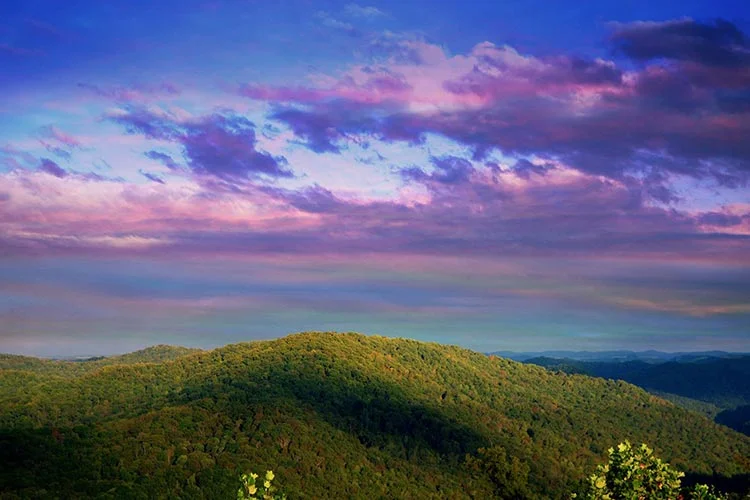
Photo courtesy of Kaye Willis.
It’s no secret Kentucky is a hotspot for outdoor adventure. So it’s a good feeling to know about the state’s under-the-radar locations — the ones where foot traffic isn’t quite as heavy — before the rest of the world finds out.
Allow us to introduce you to Prestonsburg. Whether you’re chasing more technical terrain or looking for a brisk hike with a breathtaking view, this historic town will be your new, favorite hidden gem.
Preston’s Station was the first town established in eastern Kentucky in 1797. Brave, adventurous men and women settled this new frontier, walking the footpaths of these mountains and paddling downstream in the waters of the Levisa Fork River. Present-day Prestonsburg — located 65 miles southeast of the Red River Gorge, 120 miles from Lexington, 136 miles from Bristol, Tennessee, and about 75 miles from Huntington, West Virginia — is a relatively new hub for hikers, bikers and paddlers, with plenty to explore.

Photo credit: Michael Wallace for Print & Pixel.
Day One Options: Breakfast at Billy Ray’s
The spot in Prestonsburg for a home cooking carb-load. Open for breakfast, lunch and dinner, Billy Ray’s is known in these parts for salmon patties and meat-and-three lunch specials. Launch access point for the Levisa Fork of the Big Sandy River is located directly behind the restaurant. There is plenty of parking available and it’s free.
Sugarcamp Mountain Trails: Choose Your Own Adventure
About 20 total miles of trails begin on reclaimed mountaintop and descend into Jenny Wiley State Resort Park. The Sugarcamp Trails system officially opened to the public in July 2017. The project was more than three years in the making, made possible by a collaboration between a team of dedicated volunteers, the city of Prestonsburg and Jenny Wiley State Resort Park. It is a multi-use trail that includes a network of trails for bikers, hikers and horseback riders. It is recommended that riders are at least up to an intermediate skill level to tackle most trails on the mountain, though there are several hiking and biking routes which are accessible to all ages and skill levels. The Sugarcamp Trails website provides a map of the trail system with links to detailed descriptions, technical features and current trail conditions. Be sure to do some research before you head out so that you’re prepared. Read more about all of the adventures you can have on Sugarcamp Mountain.

Photo credit: Michael Wallace for Print & Pixel.
Dinner at Lizzie B’s Cafe Bakery
Lizzie B’s is home of 23 Brewing Company and some of the best spinach and artichoke dip. After a day of literal running around, there are healthy options like mahi mahi and salmon, or you can indulge in a hamburger on a homemade bun. Homemade desserts are made daily and live local music is usually playing in the evenings. Check the restaurant’s Facebook page for the latest updates.
Live music at May Lodge
Have a drink on the patio at the state park’s May Lodge, where local bands play from 6-9 p.m. each week. Dinner is also available. If you’re staying at the lodge, getting back to your room is an easy walk.

Photo credit: Michael Wallace for Print & Pixel.
Day Two Options: Levisa Fork Paddlefest
The fourth Saturday of each month, from May to September, kayakers and canoers launch into the Levisa Fork of the Big Sandy River and make the 16.4-mile trek down river. The voyage begins at 8 a.m. in downtown Prestonsburg, behind Billy Ray’s Restaurant. Participants can bring their own kayak or canoe, or rentals are available. The scenic floating trip lasts four to six hours, depending on how fast the river is moving. Lunch is served once you reach the end of your expedition in Paintsville.
Registration is $10, which includes lunch and shuttle service from Paintsville back to your vehicle in Prestonsburg. To register, call (606) 886-1341.
Dairy Cheer
If you want a dose of east Kentucky nostalgia, stop here. Though Ashland was the original home of the Dairy Cheer, this location in Prestonsburg is one of three remaining locations. In the early 1960s, someone in the Dairy Cheer kitchen discovered how much better a burger could be if you smashed the meat down on the grill with a No. 10 bean can and the “smashburger” was born. Retro charm chasers love to stop for milkshakes and French fries, or their soup beans and cornbread — a mountain staple.

Photo credit: Michael Wallace for Print & Pixel.
Guided Elk Tours, September-March
Jenny Wiley State Resort Park hosts guided elk tours from September through March. You can choose between a red-eye, early morning tour or go out later in the day. The elk herd was reintroduced into its native Kentucky habitat in 1997 by the Kentucky Department of Fish & Wildlife. These powerful herbivores make their home in the scenic mountains that surround Prestonsburg. Reservation price includes transportation to the viewing site and continental breakfast for morning tours. To make reservations call (606) 889-1790. Special group tours are also available.
Dinner at Pig in a Poke
Who says Kentucky don’t know ‘cue? Pig in a Poke is a Prestonsburg original, serving all the usual suspects like pulled pork, beef brisket and ribs. We all know barbecue is only as good as its sides — fresh hand-shredded cabbage for coleslaw, special recipe baked beans, and homemade batter for fried pickles.

Mountain Arts Center
Catch a show at the MAC. See a national musical touring act or discover your new favorite local artist. The MAC also has family friendly mountain comedy, weekly Front Porch Pickin’ open mic and is also home to the legendary Billie Jean Osborne’s Kentucky Opry. Read about Prestonsburg’s role in the Kentucky music revolution.
Where to Stay
Stay in a quiet room at May Lodge or, if you prefer to sleep under the stars, campsites are also available. Campsites include electric and water, a dump station and also includes access to shower facilities and restrooms. There is a small grocery store on site. The campground opens for the season on April 1. For reservations call (606) 889-1790.
German Bridge Campground
German Bridge is located near the headwaters of Dewey Lake and is a prime location for horseback riders. Facilities include a 20-stall barn. Electric and water hook ups are available as well as sites for primitive camping. Shower facilities and restrooms are also available. Call (606) 874-1150 to reserve.
Hotels:
Local Outfitters & Watercraft Rentals
Pro-Fitness
1243 S. Lake Drive
Prestonsburg, KY 41653
(606) 886-8604
Jenny Wiley State Resort & Park
75 Theatre Court
Prestonsburg, KY 41653
(606) 889-1790
Legends Outfitters
606 Beach Road
Louisa, KY 41230

Who was Jenny Wiley?
Who was Jenny Wiley?
This post first appeared on the Prestonsburg Tourism website. It has been somewhat modified since first published.
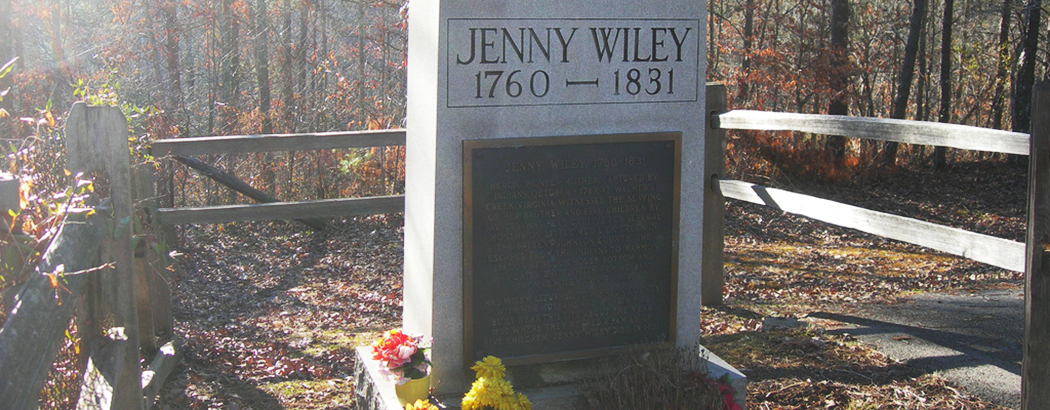
Courtesy of Print & Pixel.
Jenny Wiley’s capture by and ultimate escape from a band of Native Americans seems nearly impossible to believe. Though in the early days of young America, it was not all that unusual due to the constant feuding between the new settlement communities and the Native Americans who were defending their territories and resources. It was “an eye for an eye” system of actions and consequences with the indigenous communities.
The attack
On a rainy day in October, Jenny Wiley sat in her cabin weaving cloth while her four children played on the dirt floor nearby. Her husband, Tom, left hours ago, weighed down with ginseng to sell at the trading post and he wouldn’t be back until after dark. Her teenage brother was staying with the family, so Tom felt better about leaving his young family alone.
Jenny’s brother-in-law was working in the field nearby and heard a series of hoots in the surrounding woods. He thought it odd to hear hoot owls during the day and knew immediately what it meant. He ran as fast as he could to warn his brother’s vulnerable family that there were men lurking in the nearby woods. Jenny, who was then pregnant with her fifth child, took a gamble. She thought surely they wouldn’t attack until it got dark outside, so she stayed at the cabin a little longer, hurriedly finishing her chores.
Unfortunately, the band of 11 (two Cherokee, three Shawnee, three Wyandots, and three Delaware) didn’t waste any time and were on her doorstep in broad daylight. Bursting in, the band scalped and killed Jenny’s brother and three children right before her eyes. In the midst of the chaos, she clutched the 1-year-old in her arms and during the chaos, she heard the attackers say a name: “Harmon.”
The band mistakenly attacked the Wileys’ cabin, looking for revenge directed at another settler named Tice Harmon, who recently killed two Cherokee.
She tried to get them to understand their mistake: TOM WILEY’S CABIN! TOM WILEY! The group realized their error and considered their options. They decided to take Jenny and her young child with them for now. The older Shawnee in the band wanted Jenny to replace a daughter he recently lost.
Captivity
They then burned her cabin to the ground and took pregnant Jenny and her remaining child into the wilderness. Over the next few weeks, they mercilessly trudged through the dense forests of Virginia, Kentucky and Ohio and back again. Jenny was mentally and physically exhausted and had trouble keeping up. She and her child continually slowed the group, which was trying to stay one step ahead of the settler’s search party. They eventually killed her young child because of it. Later, Jenny prematurely delivered her fifth child in captivity, and obviously exhausted, struggled to keep the frenetic pace. She, again, had to watch in horror as her last child was brutally murdered.
During the months of her captivity, Jenny learned their language and was valued for her weaving skills. Life wasn’t easy because her captors treated her as a slave, though she did teach a few of their womenfolk how to weave cloth. Exactly how long she was kept prisoner is up for debate, but by most accounts, she escaped her captors and was found the next year in the spring of 1790, at Harmon’s Station, near Louisa. She was eventually reunited with her husband, and they went on to have five more children together. Surprisingly, Tom and Jenny came back to the same general area—Johnson County—right outside of Pikeville where she lived out the rest of her days. A marker stands near her grave and pays tribute to Jenny’s incredible story of frontier life.
Her resilience in the face of unsympathetic captors, as well as her courageousness in the face of her grief and terror, is astonishing. The people that settled this land had to be strong, mustering a force as mighty as the rocks jutting out of the ground. Jenny Wiley embodies the spirit of our landscape and the strength of heart it took to survive here.
Dewey Lake State Park opened its gates in 1954, eight years after construction on the Dewey Reservoir began. Just a few years later, there was a name change to highlight the area’s famous captive: Jenny Wiley State Resort Park. More than 9,000 acres of wilderness lure visitors and locals alike, to search for the most spectacular views in eastern Kentucky. Visit this outstanding park and take in a performance at the Jenny Wiley Amphitheatre as you explore history in the Star City.

From Grain to Glass: 23 Brewing Company
From Grain to Glass: 23 Brewing Company
This post first appeared on the Prestonsburg Tourism website.

Prestonsburg brewery carries the tradition forward with its own craft beer
Mike Slone was never satisfied drinking the average American beer. He opted for more unusual brews if he had the choice, and, as the craft beer trend began to grow in the United States, there was more to choose from than ever. But his interest didn’t stop there. He wanted to brew a beer of his own.
Slone bought a home-brewing kit at Liquor Barn in Lexington, which served to ignite his passion. “I love to experiment — that’s one of my favorite things about brewing is making new recipes,” he said. “That’s one of the most exciting things to me.”
Slone’s mother owned several area bars while he was growing up, and his love of cooking and the science behind it translated perfectly to the science and art of brewing beer. When he began working in the kitchen at Lizzie B’s Restaurant, he crossed paths with another beer aficionado, owner Tim Branham. Slone and Branham’s mutual appreciation and passion for craft beer put east Kentucky’s first brewery, 23 Brewing Company, in motion.
Slone was then put in charge of all of the beer orders for the restaurant. But his penchant for unusual beer took a little getting used to for some customers. “Slowly but surely everybody started trying it and liking it,” he said, and like-minded beer drinkers appreciated his taste. Soon, the restaurant realized there was a higher demand for craft beer on tap.

The art of brewing
In his spare time, Slone continued to brew at home, taking on more risky experiments. He and Tom began brewing small batches while trying out flavors and various styles of beer. Slone even visited breweries in region, such as southern beer capital Asheville, North Carolina, to hone his skills and learn more about the methods of commercial brewing.
The term “craft beer” means that it is brewed in the traditional (non-mechanized) way in smaller quantities, which allows for more control and experimentation. This, in turn, creates a more individualized flavor. At one time in America, “every village had its own brewery or brewer,” Slone said. Just as they did throughout recorded history, local taverns and pubs drew friends together to unwind with a pint of the brewer’s tastiest ale.
The brewery carries forward a centuries-old process of small-batch brewing, and just as the brewery name implies, celebrates its roots. Named for famed Country Music Highway U.S. 23, the fledgling brewers usually make at least three batches at time, depending on ingredient availability. From time to time, local farmers donate their fresh hops to the brewery. Slone and Branham also experiment with other local flavors.
“You’ve got to be bold and experiment,” Slone said. “When we first decided to do the brewery, we were home brewing, we were testing out batches in Tim’s apartment, and we ended up making a really good IPA out of paw paws and we haven’t been able to make it yet since we actually started professionally brewing.”
Paw paws’ flavor is similar to a mango or papaya, which balances the flavor of a hoppy IPA. Last year’s paw paw crop was not as good as they had hoped, so they’ll have to wait for this year’s incoming harvest. Slone said he also plans to venture into new brewing territory with ingredients such as coffee and smoked grains. And, he also wants to try his hand at brewing different styles, such as the German wheat beer Hefeweizen and the darker British ESB, which means Extra Special/Stronger Bitter (though it really doesn’t taste bitter).
23 Brewing Company’s flagship beer is the Hillbilly Highway Cream Ale, a light-bodied beer in the lager family, brewed with barley and corn. Cream ales were the first truly American beer that came to prominence in the late 1800s. It’s called a cream ale because, like milk or cream, it is better when consumed sooner rather than later. Other options on tap are 23’s Cold Camp Milk Stout, called such because the lactose in the beer does not break down in the fermentation process and lends the dark beer its sweetness, and the Front Brake IPA, known for its more bitter, hoppy aftertaste.

At any given time, Lizzie B’s Restaurant has other regional craft beers on tap to give customers a taste of what is being made in the area. Country Boy Brewing’s American brown ale called Shotgun Wedding is a favorite, as is the old stand-by Alltech’s Kentucky brown Bourbon Barrel Ale. Both are brewed in Lexington. Lizzie B’s also offers a couple of Cincinnati-made beers like Psychopathy IPA, a hoppy beer with floral and citrus notes brewed by Madtree Brewing Company, and Rhinegeist’s Bubbles, a fruity, tart rosé ale.
It’s easy to see why Lizzie B’s might quickly run out. It can be difficult to keep up with demand — both a blessing and a curse — because brewing beer is not a speedy process. “Lighter styles like the cream ales we do, typically to go from grain to glass it takes about 10 to 14 days,” Slone said. “Whereas if you’ve got a darker beer it’ll take a little bit longer because you want the flavors [to have] a chance to meld together and all that. And also alcohol percentage plays a role in that as well, as well as your yeast. You know, if you’re doing like a big imperial stout, you’re looking at a month of fermentation plus probably couple more weeks of aging.
“They go pretty quick, especially in the summer and fall,” Slone said.
Raise a pint
After a day of hiking, biking and exploring, sit out on the patio with a thoughtfully crafted artisanal beer in hand. As you watch the sun set over U.S. 23, taste the tradition of small-batch brewing crafted right here in Prestonsburg.
For updates on their latest brewing experiments, follow 23 Brewing Company on Facebook Instagram and Twitter.
To find out what’s currently on draft, call Lizzie B’s Cafe & Bakery: 606-886-2844. Lizzie B’s has live music weekly, and daily restaurant specials. We recommend the spinach and artichoke dip to share, followed by a hamburger and a side of sweet potato fries. With all the homemade pastries, cookies and cheesecakes available, try not to fog up the dessert case.
To satisfy your thirst for more craft breweries in the area, visit Kentucky’s Brew Trail.

Delta Bistro: Homemade...Straight From the Heart

This story about The Delta Bistro was first published in DeSoto Magazine, March 2010. All rights reserved.
Like so many highly regarded Mississippi cooks, Taylor Bowen Ricketts, chef and proprietor of Delta Bistro in Greenwood, is herself "homemade" in the very best sense of the word. Ricketts declares proudly, "A lot of the food I cook is a. Southern, and b. inspired by my family."
Ricketts was born in Oxford and grew up in Jackson, learning culinary traditions at home in her family's kitchen. It wasn't until she went back Oxford for college — for painting, religion, and philosophy — that she discovered a passion for the restaurant business. She began waiting tables, which, Ricketts says, "kind of got me interested and I was good at it." Her next restaurant experience, at a vegetarian restaurant, changed her point of view drastically. with a menu that changed frequently, Ricketts says, "I was able to create with food for the first time." The opportunity to be involved with menu revisions opened new doors for what she calls "an obsession."
She and her husband, Darby, then went on to help establish several landmark restaurants in Oxford, such as Proud Larry's, Yocona River Inn, and City Grocery, where she was working with her husband and chef John Currence. Ricketts explains, "I got to see that from the ground up. It was a good experience in learning how to open a restaurant."
Rickett's culinary experience came to the attention of Viking founder Fred Carl, Jr. He invited her to come to Greenwood to run the Delta Fresh Market, a gourmet food store and lunch spot. After four years, there wasn't a consistent customer base to sustain both the Market and restaurant, so Ricketts and Viking decided to make a few changes. Delta Bistro opened in 2009 in a downtown location around the corner from the Alluvian Hotel.
The restaurant is in a renovated turn-of-the-century cotton grading facility, complete with massive skylights once used to inspect and grade cotton. The airiness, coupled with a brightly painted ceiling, provides a nice contrast to the dark masonry walls. Both Ricketts and her husband are artists, and their work is displayed throughout the space. The renovated restaurant uses some of the original's interior furniture. "Most of the tables and such came from the Delta Fresh Market," Ricketts points out. "We kind of wanted to have a new start when we moved, but we did bring some things with us to the new location...just to know we're still what we always have been...with a new hairdo."
The white partitions, with hanging glass standing int he middle of the restaurant, help maintain a longstanding Greenwood tradition à la Giardina's and Lusco's. Both landmark restaurants have Prohibition-era roots, whose private booths afforded diners the seclusion to indulge in their brown bag beverage of choice. Delta Bistro continues that tradition for a $2 corkage fee for wine, and the partitions give diners a little privacy in a town where everyone knows everyone else.
Perhaps the Bistro's most unusual inclusion is its herb garden, which is about 20 feet by 2 feet. The builders "thought [she] was crazy," when Ricketts asked them to put in a small plot for such a purpose. The garden, however, has been successful, yielding asparagus, a variety of herbs, and tomatoes to supply the kitchen. This supply, in part, allows Ricketts to create the Bistro's menu with completely fresh ingredients. "Everything is made from scratch," she says. "[We] don't limit ourselves with ingredients, we change the menu seasonally, and daily specials change. Four or five menu items are changed one to two times a day. There's lots of variety and options for your palate."
Delta Bistro's menu is a true art piece and one that Ricketts created with thoughtfulness and flair. It mixes Southern nouveau with the ease of home-cooked comfort food. Her family recipes hold court on the menu. They include her grandmother's pimento cheese, lemon pie, and Caesar salad dressing, a vinaigrette "that [her] grandmother always made." Her grandfather had a special Comeback sauce recipe, which she uses on the Comeback Reuben. Ricketts creates dishes from what she knows, saying, It means a lot to me to be able to carry that tradition with me when I come to work every day."
The Delta Bistro is located on 117 Main Street in Greenwood, Mississippi. Visit them online here.

Mississippi Culinary Trail

Excerpt from the Mississippi Culinary Trail content
The Mississippi Culinary Trail
Mississippi is considered a foodie’s paradise and we can tell you a million reasons why! The Mississippi Culinary Trail showcases the state’s true flavor. Each of the five regions has its own delicacies like hot tamales, slug burgers and comeback sauce. Whether you are a first-time visitor or a road trip junkie who has been through a million times – pull up a chair, put a napkin in your lap and get ready for an unrivaled eating experience.
The Culinary Trail itineraries work their way around the state highlighting each region’s restaurants, cooks and food traditions that highlight Mississippi’s distinctive cuisine.
THE DELTA – Juke Joints, Hot Tamales & Mississippi Catfish
You don’t forget your first descent into the Delta. Whether you take the back roads from Hernando on Highway 304 or Highway 61 from Memphis: one minute your car winds through the tree-dotted landscapes of the hills and the next it levels out into flat farmland as far as the eye can see. As diverse as the crops that grow here and the music that made it famous, the Mississippi Delta is a melting pot of cultures – from African to Italian to Asian – the people here make this part of the state different from any other. And in no place is the Delta’s diversity more apparent than in its restaurants. Each dish is a prime example of how delicious histories fuse together for the ultimate culinary experience.
One such example is the hot tamale, called so because of its orangey-red color and spicy taste. Its origins began around the turn of the 20th century when migrant Hispanic laborers worked in the cotton fields during autumn cotton picking season alongside African-American hired hands. A cornmeal mixture called "masa" encased the meat inside, keeping it insulated. This ensured a warm lunch for hungry workers at lunchtime. There is also a Tamale Trail through Mississippi, read more about it here.
THE CAPITAL RIVER – Soul Food, Super burgers and Comeback Sauce
Mississippi’s Capital River Region is a delicious blend of old and new. From a mighty river and antebellum mansions to glittering downtowns with exciting nightlife, the restaurants here boast menus featuring soul food, authentic ethnic dishes and modern culinary delights. Personalities like Cool Al and places called Fat Mama’s are why the eclectic heritage of Mississippi is one of its most celebrated treats. It’s the tastiest history lesson you’ve ever had.
THE PINES – Choctaws, Catfish Alley and Family Cafés
This region acquired its name because of the prevalence of the Longleaf Pine Tree. The densely populated wooded bluffs and National Forests make for scenic driving. Outdoorsmen love this area because of the easy access to wilderness camping and hunting on what is considered some of the most beautiful terrain in the state. At one time cotton was king in this region, too, but it was predominately the railroad lines exporting lumber from sawmills that helped industrialize the area.
The small towns of the Pines make for big flavors. With barbecue and bakeries, cheese and cheesecakes, the tastes of this region take their influences from their earthy Native American heritage as well as the vital railroad lines that brought lumber, cotton and other goods into the area. Family-owned restaurants are a staple of this region and when you can stroll down a street known as “Catfish Alley,” you know you’ll find good cookin’!
THE HILLS – Grills, Groceries & Drive-Ins
The characters in Southern fiction gather around tables laden with their favorite dishes – platters of fried green tomatoes, pots of collard greens with a skillet of cornbread, slabs of barbecue pork ribs and slugburgers. Literary references are direct inspiration from the first-hand eating experience of lovingly crafted home-cooked meals. Even today, a meal in the Mississippi Hills doesn't just feed the body it ministers to your soul.
THE COAST – Shrimp, Blowflies & Purple Parrots
Naturally, the Mississippi Gulf Coast has a different feel to it than the rest of the state, but it remains undeniably “Mississippi.” The Coast offers the tourist a little of everything: golf, gambling, art, architecture and, of course, great food. Years ago, immigrants from all over the world—Croatian, Vietnamese and French—came to the region in search of employment in the seafood industry. This delicious blend of cultures has seasoned the cuisine here with a flavor you won’t find anywhere else.

Venice in the Age of Canaletto
This article originally appeared in DeSoto Magazine, February 2010. All rights reserved.
During any given year, many important exhibits come and go at the Memphis Brooks Museum of Art, yet the chance to showcase one of its permanent pieces is especially poignant when shown within the context of its creation.
Venice in the Age of Canaletto is a collaboration between the Brooks Museum of Art and the John and Mable Ringling Museum in Sarasota, Florida, each of which has a Canaletto in its permanent collection. Ringling's former assistant curator, Alexandra Libby, and Dr. Stanton Thomas, assistant curator at the Brooks Museum, collaborated and co-coordinated the exhibit during its three-year-long project assembly.
The Grand Canal from Campo di San Vio, an oil-on-canvas painting by Giovanni Antonio Canal (Canaletto's real name), is part of the Brooks Museum's permanent collection and is an impressive example of what the artist did best: scenes of Venice's famous waterway, the Grand Canal.
The Canal was Canaletto's favorite artistic subject and one that he could render with life, light, and a sense of realism often lacking in other works in other works of the era. Thomas says, "Canaletto's works — they kind of beguile you — as if they are photographs...and what we know of the decorative arts and the works of other painters...they are much more fantastical [than Canaletto's art]." Canaletto is best known for his portrayal of urban Italian life, depicting scenes of simple people going about their daily lives against the vast backdrop of ancient Roman buildings and landscapes. His "vedute," or view paintings, stand out because of their muted colors, contrasting greatly with other richly-colored, sumptuous creations of the eighteenth-century Venetian art. Thomas says, "One of the unique things about this exhibition is it is the first time, I guess outside of Venice, but really in a scholarly manner, that anyone's looked at Canaletto within the completely broad spectrum of the visual arts of Venice."
The most important component to the exhibit is what Thomas calls a "modern complement to the more traditional way of approaching the city." During the 1700s, Venice was the epicenter of lively culture and extravagant living, which consistently drew European tourists. "People would get on a gondola and they would go up and down the Grand Canal," says Thomas. "[It is] such a great way to see the sights, to see other people, and to experience the city as a tourist, maybe for the first time."
Upon viewing the exhibit for the first time, visitors will not only see a set of 1730s-era prints replicating the experience of traveling along the Grand Canal but most importantly, they are able to experience, first-hand, what it is really like to ride on the water up and down that great waterway. Filmmaker Ralph Leiberman helped create this experience by setting up two high-resolution video cameras on gondolas, shooting a continuous gondola ride, from one end of the Canal to the other. "It doesn't just capture the video image, but also the ambient sound. You have the sounds of the church bells ringing, the water sloshing up and down the gondola," Thomas explains. For those who have never been to Venice, the video footage, projected onto a huge single wall, acts as the introductory process to immediately immerse viewers into Venetian life.
Venice in the Age of Canaletto is a well-conceived, multi-faceted experience for museum-goers. It includes examples of what Thomas calls "pastel, confectionary-looking" gilded furniture, delicate porcelain objects, and mythological and religious paintings. It also features a pale blue and gold damask-covered room emulating the private interiors in which many of these painting were originally displayed, "recreating the luxury and why people went there [Venice]," Thomas explains.
A dazzling example of that decadent era comes in the form of a table decoration made of opaque white and colored glass entitled "Dessert Decoration in the Form of a Glass Garden," and it's just that. In the middle is a glass fountain, complete with glass flowerbeds and balustrades which, during that time, would have set up for the dessert course of a meal. "Cakes and sweetmeats would have been interspersed among that," Thomas points out. It gave guests the experience of walking through a garden and sharing "that sense of wonder, excitement and awe" when browsing the confections on the table.
Chief curator Marina Pacini is thrilled about the collaboration between the museums. "I love the fact that Stanton has, with his fabulous colleague, Alexandra Libby, put [Canaletto's work] in this bigger, wider context. It's such a rich group of objects that tell a wonderful story."
The experience would not be complete without an extensive, fully illustrated catalog that includes essays by art historians and photographs of works within the exhibit, which is available for purchase at the Museum store.
The comprehensive Venice in the Age of Canaletto opens Sunday, February 14, 2010, with a wide variety of events, including featured speakers, an Italian Opera series, Canaletto-themed Art for Lunch, and guided tours. For more information, visit Brooks Museum of Art online or call 901-544-6200.

The Canton Movie Museum
This article originally appeared in Portico Jackson Magazine November 2009. All rights reserved.
The Canton Movie Museum lovingly houses mementos from the days of filming My Dog Skip.
With pages of notes strewn across the desktop in front of an old typewriter, it is as if Willie Morris stepped away mere minutes ago after having typed the words, "I came across an old photograph of him not long ago...taken more than forty years before, even as a grown man, I would admit I still missed him." A faded black and white photograph of Old Skip is on display nearby.
At the corner of Union and Center, in downtown Canton, is a space affectionately referred to as the My Dog Skip Museum. The site, dedicated to Morris and the movie based on his beloved book, features props and sets used in the Canton movie shoot during the hot summer months of 1998. Just as Faulkner devotees explore Rowan Oak and Welty enthusiasts tour her Pinehurst Street home in Jackson, Morris fans can delve into a slice of his life within the walls of Canton's Movie Museum.
"There was something in the air of a small town in the Deep South then, something spooked-up and romantic, which did funny things to the imagination of its bright boys," Willie wrote in My Dog Skip. That rings true for present-day boys, girls and even adults who visit the museum. It is a time capsule, a child's world full of memories with plenty of wonder, excitement, and nostalgia literally from floor to ceiling.
"Everybody wants to touch and feel Hollywood," says Jo Ann Gordon, executive director of the Canton Film Office. Gordon is a former elementary school teacher who still nurtures her desire to educate children and the community. Gordon and her staff, including museum curator Bille Jean McMullen, do so for guests from around the world by giving guided tours through the movie museum and around the neighborhood sites where filming took place. But even more than experiencing a slice of Hollywood, visitors get to absorb romanticized Mississippi and become closer to the characters about which Willie Morris wrote.
The museum's towering green door creaks open to a world frozen in time. Each corner holds its own vignette recalling scenes from Morris' 1940s childhood superimposed on the big screen.
On one side of the museum are poignant scenes with plush stuffed Jack Russell terriers placed at important points to showcase Skip's tear-jerking visit to the veterinarian, the birthday scene with the dog carrier on the table, and even Skip's stuffed, on-screen stand-in.
Billie Jean divulges details of befriending Willie, tales of the production process and the realities of life during World War II, which make for an insightful and heartfelt tour. She points out which props were donations from local households and which are replicas, recalling, "What we did to help them — they made up lists that we put up in all the churches and around: If you have any of these items in your attic, in your storage rooms — would you donate them or either let us borrow them?"
The most exciting piece in the museum is the looming crypt of the Witch of Yazoo which Morris describes as "the resting place of the demon who had burned the town down in 1904, which was marked now with a heavy chain, with one link missing where she had escaped." In actuality, there is no real crypt for the Witch of Yazoo, only a cemetery marker, yet the production team matched his written description verbatim with incredible attention to detail, standing far above the rest, not only in stature but also in infamy.
On the other side of the room hang blown-up newspaper articles about the author which serve as a paper trail to the real-time replica of his office, complete with more photographs of Skip, and various high school memories strewn around. Nearby, a living room with leather chairs evokes scenes of when Morris entertained guests until all hours of the night or as Billie Jean more aptly says, "where he would be holdin' court."
The museum continues to breathe life into the vivid memories, the life and works of a remarkable writer, recalling the wistful words, "He really laid buried in my heart." A famous last line that many might say is true of both Skip and Willie Morris.
To set up a tour of the Film Museum, contact the Canton Film Office, 601-859-1307 and for more information, visit them online here.

A still from My Dog Skip.

Honky Tonk Heaven

This article was first published June 2006. You can read it here.
After just the first few chords, it feels like the band, Juanita Family and Friends, are old friends. The Portland, Oregon sweethearts will perform at Hal & Mal's Restaurant on Wednesday, June 7. There's no better reason to skip Wednesday-night church than to attend this honky-tonk revival.
Lead singer Lana Rebel has a voice that is sweet and lonesome like Loretta Lynn with a side-helping of Iris Dement. The band is a tightly oiled machine. Song after song, the engine revs up and gets warmer. It's parts work separately and in total harmony: Dylan Reilly on bass, James Curley on guitar and mandolin, John Schier on the drums, and JT Halmfilst on the lap slide, guitar and backing vocals. They have crisscrossed the country, playing rock venues, roadhouses, parties, crawfish boils, festivals, rodeos, radio stations and street corners.
I asked Rebel how they capture the classic country/western sound, not being southerners themselves. She said they "try harder" at cultivating the sound which is a hoot seeing as she and several members met while playing in a metal band. However, outsiders sometimes have the objective ear it takes to re-create a sound and spice it up with originality.
Juanita Family and Friends have originality in spades. With songs such as "Let's Get Drunk and Watch TV," "Burn Your House Down" and "Cocaine Eyes," you experience heartbreak, and it stings like a fresh wound. Their classic honky-tonk sound veers toward a little gospel and rock—with a psychedelic edge. Rebel has an easy demeanor even as she croons with a "restless heart," while the boys play with conviction. Rebel mesmerizes with her lilting voice and stories of performing at a rodeo where "cowgirls were ripping Wrangler patches off of cowboys' butts."
Other lyrics are more soulful: "You're going down with me / Come on down with me / I don't wanna face my losin' ways alone."
Rebel says they work hard to promote themselves. "I have an agenda," she says. "I want to make sure I don't have to go back to my day job, and I want to make sure the band doesn't have to go back to their day jobs either."
The hard work is paying off with some promising opportunities. They recently returned from touring in the UK and Ireland. Their first stop was London, where BBC radio invited them to record a session.
While they were across the pond, I asked Rebel to answer a few more questions.
Where are you right now, and where are you headed next?
Ireland. We're in Cork, staying with Phil from Los Langeros. We're going back to London tomorrow.
How was the BBC recording session?
It was the absolute coolest thing I've ever done. It aired May 30. The studio was amazing, and the engineers were like white wizards of rock 'n' roll. It was the most painless recording session imaginable, and the equipment is probably the nicest stuff we will ever see in our lives. It sounded great. We're all very excited about how it came out.
When hearing you guys perform, it does feel as though we're all old friends … so easy and comfortable. You seem to have a sixth sense with this style of music. What are some sources of inspiration and influences for your songwriting?
The most important influence on me was Willie Nelson. I saw him when I was a kid and my dad was working as a crew member for the filming of "Honeysuckle Rose" out in Texas. I've been in love ever since. Of course, I'd be nowhere without my Hank Williams. The first song I taught myself was "Your Cheatin' Heart," playing along to the record player. I also love Lefty Frizell. He has some of the greatest love songs—that's definitely a big influence on my songwriting.
Does the band collaborate on the arrangements, or is it just you?
Those guys will help me a bit with arrangements, for sure. But they are very respectful of my original vision for each song. They know me and my style well enough to help push each song to be the best we can get it to be.
Juanita Family and Friends play Hal & Mal's on Wednesday, June 7, at 8:30 p.m. Free. If you miss the show, check out their self-titled album at cdbaby.com/cd/juanitafamily.

Losing Our Religion

This article was first published in DeSoto Magazine, May 2010. All rights reserved.
Religion has long been at the center southern culture, and that's undoubtedly true of Mississippi. As settlers began forming communities across the state, churches were some of the first buildings constructed. Congregations began meeting in homes, but as the communities grew, the importance of having a physical church home —that served as a central meeting place and a safe place for religious worship — became increasingly important.
Expansion meant that congregations often outgrew their churches. Church buildings were rebuilt, oftentimes on the very same sites. Sometimes they were renovated to suit modern sensibilities. Others, like Our Lady of the Gulf Catholic Church (Bay St. Louis), were demolished by "acts of God" — fires, tornadoes, or hurricanes. These natural disasters left congregations without spiritual homes, forcing church members to start anew. Others were simply abandoned, unwanted. Transitional ebb and flow in local communities also brought necessary and sometimes inevitable changes to buildings, some of which are local landmarks.
"It has been a matter of interest and a matter of concern to me," says Richard Cawthon, author of Lost Churches of Mississippi (University Press of Mississippi, $35). "Landmark buildings, once they have been destroyed, kind of disappear from people's memories. They are not the buildings you see when you drive down the street, so unless you happen to remember them from childhood or see pictures of them in a history book or at the local museum...you may not be aware that they even existed." Lost Churches of Mississippi is an extensive, 200-page collection of photographs, postcards and architectural blueprints that look into the heart of religious communities across the state, showcasing the elegant, the simple, and the ornate structures where religious groups made their early homes.
Lost Churches acquaints the reader with not only the Protestant and Catholic churches that dot the state's landscape but also the lesser-known Jewish synagogues and temples (which many Mississippians might not realize are a part of the state's religious heritage). Many of these churches were built by mail-order plans or by the same architects, and as the book illustrates, other church buildings of the same design can be found in other areas statewide and across the country.
Cawthon credits his piquing interest in churches to the visits to his grandmother's house during his childhood in Louisiana. During those visits, he explored the church next door to her home for hours. This interest ultimately led to him becoming the chief architectural historian at the Mississippi Department of Archives and History in 1985. For almost 20 years, he gathered inspiration for his book during his daily photographic research and travels across the state.
Lost Churches' photographs uphold the memories of budding congregations and give some insight into the early life of a local community. Cawthon's hope is to draw attention to architecture that people take for granted, giving them "an awareness that there is a rich legacy in the architecture of Mississippi of buildings that no longer survive...there are many fascinating and interesting buildings that have been lost in the state."
There are many examples in our own memories of changed or abandoned churches that have seemingly lost their purpose now, where congregations have moved on to other locations. Cawthon hopes the book will motivate readers to "look beyond what their eyes see on a day-to-day basis and remember that there have been fascinating buildings from the past as well as in the present."
Many churches as taken for granted and many more structures could find their way into a future Lost Churches volume.
One can think of many such places like the ghost town of Rodney, where the church ruins remain of the Rodney Presbyterian Church — where a cannonball from a Civil War skirmish is still stuck in the wall over its front door or the abandoned town of Rocky Springs, whose Methodist in the midst of the woods that is the only remaining legacy of a once vibrant and prosperous town.
Other churches have been restored and drastically renovated, so they have missed their chance for inclusion in the book for now. St. Cecelia's Catholic Church in Friars Point was on the path to demolition but it was bought and restored.
Another such example not listed in Cawthon's book is the old Hernando United Methodist Church, which sat across the street from Hernando Baptist on Center Street. All passersby have seen for the past 25 years at that location are townhomes occupied by local residents. The home next door, that was the former Sunday School and nursery was turned into a dentist's office. The newer church, located on Mount Pleasant Road, is ever-growing.
"So many of those buildings are [architecturally] appealing and interesting and have such interesting stories," Cawthon says. "They are worthy of attention and worthy of appreciation."
The book's postcards and photographs capture more than just churches. The photographs offer a time capsule of earlier Mississippi life, with 1930s Model T's lining the street, town folk standing in Victorian-era clothing, and many old building facades.
Though Lost Churches provides a record of the life of these historic buildings, it doesn't tell the full story or the legends surrounding them. In particular, the First Baptist Church in Yazoo City is a structure, which succumbed to flames in 1904, is associated with the well-known tale. The fire that engulfed the entire city was rumored to have been caused by the infamous Witch of Yazoo, whose tale was later made famous by author Willie Morris in his book, My Dog Skip.
Indeed, one book alone cannot begin to tell the full story of these lost landmarks because many of these details exist in people's memories or as a box of photographs in the attic. For all the work put into Lost Churches, the recapturing of this heritage must happen with the help of its readers.
Church buildings hold very special and specific memories for a town and their destruction seems to undermine a sense of cohesiveness and unification among community members. Yet, with help and documentation, these changes can at least be preserved. Cawthon hopes that his book will motivate readers "to find out more about the history of their communities." He encourages them to share their photos and historical knowledge with the Mississippi Department of Archives and History because they are "always trying to gather information from local communities to help preserve local history."
Lost Churches in Mississippi is in stores May 1, 2010 and can also be found on Amazon.com.

Lunch in the Capital City

This article was first published in Portico Jackson Magazine, June 2011. All rights reserved.
Restaurants are rapidly popping up in the Capital City, and there are many options for the age-old question, "What do we want to eat for lunch?" No matter what part of Jackson you happen to roll through, there is a restaurant for any and every inclination. Whether it's the perfect lunch spot to meet friends and clients, or a grab-and-go kind of day, here's a guide to help make your decision a little easier.
Keifer's
Keifer's is the place in town for a gyro. Skip the tzatziki sauce, unless you are particularly attached to it, and go for the feta dressing. It's delicious with everything. You can even dip your cottage fries in it. And speaking of cottage fries, the sliced, whole-potato-French-fry spectacular is best shared with a friend. Two locations: downtown and on the edge of Belhaven. Both are great for take-out orders. 705 Poplar Boulevard and 120 N. Congress Street.
Brent's Drugs
Brent's Drugs is a step back in time and so is the menu with its laundry list of sandwich options and salads. But let's not kid ourselves: the reason we walk through those doors is to sit in the retro diner booths (or at the counter to watch the lunchtime action) and fill out our order ticket for a hamburger, crinkle-cut fries, and chocolate milkshake. 655 Duling Avenue.
Cherokee Inn
The Cherokee is a Jackson institution, dimly lit, but packed with a lunch crowd. Each day has a different home-cooked lunch special at the ready. If Comeback sauce isn't immediately brought to the table, be sure to ask for some. Spread a little on a cracker to take the edge off your wait, or order some fried pickles for starters. Out of all the blue plate specials, you can't beat the roast beef on Thursdays. 1410 Old Square Road.
Mimi's Family and Friends Restaurant
If you're looking for something a little to the left of regular blue plate specials, Mimi's is your best choice. Its atmosphere is just as colorful and eclectic as the food. Fresh, made-to-order lunch specials like chicken enchiladas, smoked barbecue on Cuban bread or red beans and rice are just a few of the options. Try the salad sampler with honey chicken salad (a family recipe), tuna salad, and bleu cheese egg salad. If you like the pickle on your plate, don't forget they are homemade and you can buy a jar to take home. 3139 North State Street.
Walker's Drive-In
Walker's on the Fondren strip is a meet, greet and be seen kind of place during the bustling lunch hour. Walker's has affordable meat and three specials, and great soup, salad, sandwich combinations. But since we're talking about Walker's, you know it's not going to be any run-of-the-mill option. For something a little different, try the fried green tomato BLT, the chili-crusted tuna salad, or the grilled veggie sandwich. 3016 North State Street.
Steve's Downtown Deli & Bakery
Watch the specials like a hawk and make sure Steve's Senegalese Peanut soup is on tap for the day. It's the clear stand-out on the menu. They make a lot daily for good reason because it's a popular dish and it often sells out quickly. Other lunch specials include dishes like chicken pot pie, lasagna, chicken and black bean tacos with fresh cantaloupe salsa, or veggie quiche. Don't forget about the salads, either. Steve's special vinaigrette dressing is too good to pass up. 125 South Congress Street.
Tony's Tamales
Tony's Tamales is an easy drive-thru option, and if you're factoring in healthy options, don't even think twice. Tony makes his tamales with turkey, and you know only because I just told you. Tamales aren't the only thing on the menu worth having. The tacos, filled with meat, lettuce, tomatoes and shredded cheese will hit the spot. Between you and me, he also makes a mean hamburger. 230 West Woodrow Wilson Avenue.
Lumpkin's BBQ
Who doesn't love it when lunch is done right? Known for their soul food buffet that offers a spread of beef brisket, catfish, chicken, and myriad veggies, the Lumpkins family uses their own recipes as the foundation to feeding and educating people about healthy ways to eat. Their "waste not" philosophy helps people stay mindful about how much they eat, taking no more than they can stomach. 182 Raymond Road.

Star & Micey's Feel-Good Pop

Wednesday, December 16, 2009
This article was first published by The Jackson Free Press, December 16, 2009. Read it online.
At Cups in Fondren, strings of draped Christmas lights glow in front of a whimsical backdrop in shades of blue. Underneath hanging props of clouds and stars, Geoff Smith, Joshua Cosby and Nick Redmond of Memphis' Ardent Records act Star & Miceybegin to perform.
These three troubadours have crisscrossed the Southeast this fall on their first tour in support of "Star & Micey," their self-titled debut album released in October.
Star & Micey are multi-instrumentalists whose intricate harmonies and dynamic melodies are electrifying. Lead singer and primary songwriter Josh Cosby plays acoustic guitar and sings with a lilting Conor Oberst-esque vibrato. He sometimes gets on the floor to pound out a beat on the bass drum.
Geoff Smith can groove out a bass line while singing harmony vocals; or he can play the organ, plink out notes on a glockenspiel and simultaneously keep time with an orange shaker֖the equivalent to patting your head and rubbing your stomach. Nick Redmond churns out guitar licks and sings harmony while playing the harmonica strapped around his neck. And he can play the keys, too.
Friends since middle school, Memphis natives Cosby and Smith have an easy chemistry. They bonded back in the day, as misfits often do.
"He was the cool, poor kid and I was the weird kid no one liked," Smith says. They began to write songs and play music together in high school. Redmond came on the scene in 2008 when he met Cosby at a singer-songwriter night at Neil's Bar & Grill in midtown Memphis.
"It was one of the last places I thought I'd meet someone who would play such a pivotal role in my life," Cosby says. Cosby gave Redmond his self-made CD, but they lost track of each other. Redmond listened to the CD "for the next seven days straight," he says.
Redmond, whose day job is as a recording engineer at Ardent Records, had ears keen enough to know he was on to something and wanted to bring Cosby and Smith into the studio to record. But there was a snag. Cosby wasn't sure he was interested in pursuing music as a career.
"He's the kind of guy who would be happy just playing for himself," Redmond says. Cosby says he was writing songs in the first place to make himself "feel better." Luckily for the music world, the desire to share and inspire people outweighed any initial drawbacks he may have had.
The guys went into the studio and came out with what they thought was a great product. Redmond presented the end result to the "studio brass," as he calls the studio bosses. Redmond said because of the band's adaptability to different genres, the studio bosses weren't sure what to make of it. So, Star & Micey decided to re-record, this time pulling out the big guns. Redmond asked friend, co-worker and Grammy-nominated producer Curry Weber (John Hiatt, North Mississippi Allstars, Beau Soleil) to assist the fledgling band in refining their musical focus. The elements of this collaboration produced a gem of a pop-rock album, and an Ardent Records recording contract.
Redmond also recruited studio manager and Big Star alum Jody Stephens to play drums on the '70s-rock inspired "Nelson," named for the street in Memphis. It's a slow burn of an unrequited love song, with strong, syncopated rhythmic bursts. A delicate blend of harmonies chime in, emphasizing the conflict of emotions: "if it hurts somebody else/even if it hurts myself." Rick Steff (Cat Power, Lucero) played organ on "She's On Fire," a finely crafted balancing act of lyrical pop-rock angst. Cosby's strong falsetto soars over the lulls and the powerful horns-infused crescendos.
Weber's friend, Luther Dickinson (North Mississippi Allstars, Black Crowes), laid down the lead guitar track on "So Much Pain," infusing the feel-good song with Hill Country twang. Despite the underlying sadness fueled by lyrics such as: "I lost all my friendships/they all sailed away/from that deadly storm that/was named after me/so much pain/I caused so much pain." Buoyed by the lively, lighthearted music, the song ends with a sunny pop breakdown, complete with handclaps and a head-bopping refrain of "I just feel so grateful"celebrating the freedom of forgiveness. Each poignant track on the album has a similar story of searching the depths of human connection and love in a musically candid and expressive way.
In the afterglow of its fall tour, Star & Micey recorded a holiday track entitled "Memphis Christmas," and headed on the road again. As their fan base grows, Cosby says the band's aspiration to "meet more people and play for more people" is a genuine thrill.
Star & Micey's third visit to Jackson is Friday, Dec. 18, at the Ole Tavern on George Street at 10 p.m. The band will also play Monday, Dec. 28, at Cups in Fondren. Listen to the band's music at http://www.starandmicey.com.